
How to See South Beach Without Backtracking
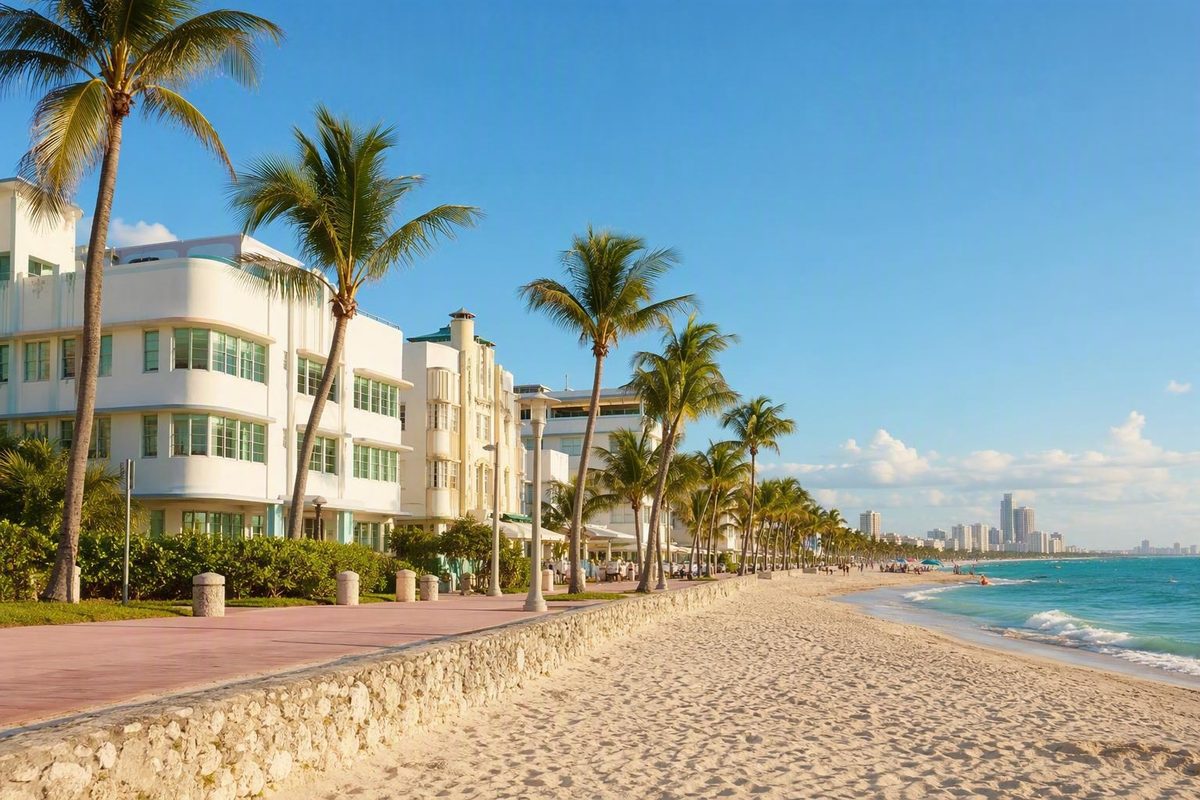
South Beach works better as a sequence of compact visitor zones than as a sprawling Miami checklist. Its beach, architecture, parks, shopping streets, museums, restaurants, and nightlife are close enough to combine—provided you arrange them logically.
For a first visit, concentrate on six areas: Lincoln Road, Española Way, the Art Deco Historic District, Ocean Drive, Lummus Park and the beach, and South Pointe Park. Follow them roughly north to south, then add one deeper experience: beach time, a museum, an architectural tour, shopping, or a long meal.
This approach prevents repeated crossings of the neighborhood and leaves wider-Miami destinations for the separate travel time they require.
Start With the Map: What Counts as South Beach?
South Beach is the southern neighborhood of Miami Beach, generally extending from South Pointe Park north to approximately 23rd Street. Miami Beach occupies a barrier island between Biscayne Bay and the Atlantic Ocean, while the City of Miami is on the mainland. Miami Beach is also a municipality separate from Miami. An independent Miami Beach overview explains the barrier-island setting and municipal distinction.
The local tourism organization divides Miami Beach into South Beach, Mid-Beach, and North Beach, with South Beach ending around 23rd Street and Mid-Beach beginning immediately north of it. The official South Beach neighborhood guide describes these boundaries.
That distinction matters because “Miami,” “Miami Beach,” and “South Beach” are often used as though they mean the same place. They do not:
- South Beach is the southern part of Miami Beach and contains the principal sights covered here.
-
Mid-Beach begins north of the usual South Beach boundary and has its own hotels, beaches, and attractions.
-
Haulover Park is considerably farther north in the Miami Beach area.
-
The Everglades requires a regional excursion.
- Many Biscayne Bay cruises may be marketed to South Beach visitors but depart elsewhere or travel well beyond the neighborhood.
All can be worthwhile additions to a Miami trip. They simply should not be counted as South Beach attractions or inserted casually between Ocean Drive and South Pointe Park.
The most useful mental map has six core zones:
| Zone | Primary reason to visit | Place in the route |
|---|---|---|
| Lincoln Road | Shopping, cafés, galleries, people-watching | Northern starting area |
| Española Way | Pedestrian dining and Mediterranean Revival architecture | Short transition south |
| Art Deco Historic District | Architecture, design history, museum and tour options | Central interpretive area |
| Ocean Drive | Art Deco façades, hotels, restaurants, nightlife and street activity | Main sightseeing corridor |
| Lummus Park and beach | Sand, ocean access, walking, cycling, fitness and recreation | Directly beside Ocean Drive |
| South Pointe Park | Waterfront paths, green space, pier access and broad views | Southern finish |
The zones overlap. Ocean Drive and Lummus Park run beside one another, while much of Ocean Drive is also part of the architectural experience. One walk can therefore deliver façades, beach views, park space, and people-watching without requiring separate trips.
A practical rule is to walk within one cluster and reserve transit or a short ride for genuinely longer gaps. Miami Finder’s car-free Miami planning guide recommends the same neighborhood-based strategy: choose a suitable base, group nearby activities, and avoid bouncing repeatedly between distant districts.
The Six Core South Beach Attractions and What Each Offers
There is no useful best-to-worst ranking for South Beach attractions. A beach-focused visitor and an architecture enthusiast will value the same places differently. Choose stops according to what you want from the day.
Ocean Drive: façades, street life, dining, and nightlife
Ocean Drive is a street, not the beach itself. Its visitor appeal comes from its Art Deco façades, hotels, restaurants, sidewalk activity, people-watching, and evening venues. The sand lies beyond Lummus Park on the ocean side of the road.
Walk Ocean Drive when you want to study building details, photograph the streetscape, browse menus, or experience the neighborhood’s public energy. The atmosphere changes between morning and evening. Earlier hours put more emphasis on the architecture and the relationship between the buildings and park; later hours emphasize restaurants, illuminated façades, bars, and nightlife.
Decide whether you are primarily there to look, eat, or remain for the evening. Trying to do all three while following a tightly timed sightseeing route can consume more of the day than expected.
Lummus Park and beach: the classic oceanfront combination
Lummus Park is the green beachfront strip between Ocean Drive and the sand. It links the built environment of the Art Deco district with beach access and space used for walking, cycling, volleyball, fitness, and general recreation. Florida’s tourism guide presents South Beach as a mix of beach, parks, architecture, museums, shopping, dining, and nightlife rather than as a single-purpose beach destination. Its South Beach overview provides a broader introduction to these attractions.
Choose Lummus Park when you want to combine:
- The public beach with an architecture walk
- Ocean Drive with a short shoreline break
- Volleyball or exercise with people-watching
- Beachwalk time with access to restaurants
- Colorful lifeguard towers with the surrounding beachfront scene
A pass through the park may occupy only part of a sightseeing outing, but actual beach time changes the schedule. Swimming, changing clothes, renting equipment, or settling on the sand can turn a short stop into a substantial block of the day. Treat “seeing Lummus Park” and “having a beach day” as different commitments.
The Art Deco Historic District: free outdoors, deeper with interpretation
The Art Deco Historic District is both an open-air attraction and a subject that benefits from interpretation. You can walk independently, observe façades, and compare colors, windows, geometric forms, decorative motifs, and building profiles without joining a paid activity.
A guided architectural walk or museum visit adds design and historical context that façades cannot provide on their own. The Art Deco Welcome Center at Ocean Drive and 10th Street is identified as the starting point for guided architectural walking tours, while the associated Art Deco Museum provides an indoor interpretive option. The official neighborhood guide confirms the Welcome Center’s location and tour role.
Architecture enthusiasts should allow more than a quick pass along several buildings. Other visitors may be satisfied with a selected stretch of Ocean Drive and nearby streets. The district works at either depth; the important decision is whether you want casual observation or structured interpretation.
Española Way: dining in a different architectural setting
Española Way is a pedestrian-oriented street associated with Mediterranean Revival architecture, restaurants, and entertainment. It feels different from the broad oceanfront scale of Ocean Drive and the larger retail character of Lincoln Road.
Use Española Way as:
- A meal or café stop between Lincoln Road and the Art Deco district
- A compact architectural contrast to Ocean Drive
- An evening dining option that does not require a nightlife-focused plan
- A short pedestrian detour during a central South Beach overview
Its role is not to duplicate Ocean Drive. Ocean Drive emphasizes the beach-facing Art Deco corridor, hotels, restaurants, and nightlife; Española Way offers a more enclosed pedestrian dining environment with a different architectural vocabulary.
Lincoln Road: shopping, cafés, galleries, and street activity
Lincoln Road is a pedestrian shopping and dining corridor with stores, cafés, restaurants, galleries, entertainment, and people-watching. It is the logical northern anchor for a South Beach route and the most natural place among the six zones for visitors who want to browse rather than simply pass through.
Shopping time is difficult to predict. Someone who wants only to observe the promenade may move on quickly, while a visitor entering stores or stopping for lunch may spend a large part of the day here. Begin at Lincoln Road if shopping is a priority. If it is not, use it as a shorter introductory walk before turning south.
The three principal dining and strolling corridors have distinct roles:
- Lincoln Road has the broadest shopping-and-strolling function.
- Española Way is a compact pedestrian dining and architectural stop.
- Ocean Drive combines façade viewing, hotels, restaurants, street spectacle, and nightlife.
South Pointe Park: paths, green space, pier access, and expansive views
South Pointe Park sits at the southern tip of Miami Beach. It combines landscaped space, waterfront paths, pier access, and perspectives toward the coastline, Fisher Island, PortMiami, Downtown Miami, and the shipping channel. A Greater Miami itinerary describes the park’s position and its coastal, island, port, and skyline views.
Choose South Pointe Park for a slower walk, family recreation, a break on the grass, access to the pier area, or a scenic finish after moving south through the neighborhood. It is especially useful for visitors who want water views without devoting the entire day to sitting on the beach.
Sunrise, sunset colors, passing ships, wildlife, low crowds, and quiet conditions are possibilities rather than scheduled features. Weather, marine traffic, events, and visitor levels can all change the experience.
Lummus Park or South Pointe Park: Choose the Right Waterfront Stop
Both parks connect visitors with the water, but they suit different itinerary goals. If time is limited, choose according to the experience you want rather than treating one as universally superior.
| Consideration | Lummus Park | South Pointe Park |
|---|---|---|
| Setting | Between Ocean Drive and the beach | Southern tip beside the ocean and shipping channel |
| Best paired with | Ocean Drive and the Art Deco district | A waterfront walk or southern route finish |
| Main character | Active beachfront recreation | Landscaped park and broader outlook |
| Typical interests | Beach access, volleyball, cycling, fitness, people-watching | Paths, green space, pier area, family recreation, views |
| Architecture connection | Direct relationship with Ocean Drive façades | Less focused on the Art Deco streetscape |
| Time commitment | Easy to sample briefly; beach time may extend the visit | Better when there is time for a slower walk |
| View possibilities | Ocean, beach, lifeguard towers and Ocean Drive | Coastline, shipping channel, Fisher Island, port and skyline |
Choose Lummus Park if your priorities are the beach, Ocean Drive, visible Art Deco architecture, volleyball, fitness, cycling, or people-watching. Its central location combines several familiar South Beach experiences in one area.
Choose South Pointe Park if you prefer landscaped space, a waterfront path, pier access, family recreation, or a broader perspective across the water. It may offer a change of pace from the central Ocean Drive corridor, although quiet conditions cannot be guaranteed.
A firsthand visitor report lists public toilets, a splash pad, fishing space, exercise areas, and places used for dog walking at South Pointe Park. Because facilities and rules can change, confirm splash-pad operation, fishing access, pet regulations, restrooms, accessibility, and pier conditions through current City of Miami Beach information before setting out. The same report also describes the park’s relationship to the Government Cut shipping channel. Review the reported amenities as a starting point, not as live operational information.
Families should verify whether any water feature is operating and whether available facilities suit the ages and needs in their group. Anglers, dog owners, and travelers with mobility requirements should likewise confirm the rules and current access arrangements that apply to their visit.
If your schedule allows both parks, do not treat them as isolated checklist items. Walk Ocean Drive and Lummus Park together, continue south, and let South Pointe Park serve as the route’s final waterfront chapter.
Architecture, Museums, and Indoor Alternatives
South Beach is not limited to sand and nightlife. Its architecture and cultural venues can support a beach-free day or provide breaks from heat and rain.
Begin with the Art Deco Welcome Center
The Art Deco Welcome Center is a practical starting point for understanding the historic district. Guided architectural tours are identified as beginning there, and the associated Art Deco Museum offers an indoor layer of interpretation.
There are three basic ways to approach the district:
- Independent outdoor walk: Appropriate when you mainly want to see façades and take photographs.
- Museum plus outdoor walk: Useful when you want context without committing to a longer scheduled tour.
- Guided architectural tour: Better when structured interpretation is a priority and you are willing to plan around a departure time.
Do not assume that a tour, museum entry, or particular language option will be available when you arrive. Confirm current hours, fees, tour schedules, reservations, and accessibility arrangements through the operator or venue.
The Wolfsonian–FIU
The Wolfsonian–FIU is in the historic Art Deco District and works well as an indoor anchor during an architecture-focused day. Its central position lets you move between exterior design and an indoor museum without leaving the main sightseeing area.
It is particularly practical in unsettled conditions: walk a selected outdoor segment, spend time inside, then resume the district if the weather becomes comfortable. Check the museum’s current exhibitions, admission arrangements, hours, and visitor services before visiting.
The Bass
The Bass is Miami Beach’s contemporary-art museum in Collins Park. It sits toward the northern end of the broader South Beach area, so it fits most naturally near the start of a north-to-south route or as a separate cultural stop.
Do not add it automatically if your day already includes substantial shopping, beach time, an architectural tour, and South Pointe Park. Museums reward time and attention; choosing one meaningful museum experience is usually more satisfying than rushing through several.
Other cultural options
The Jewish Museum of Florida–FIU and New World Symphony provide further options for visitors interested in history, culture, architecture, music, or performance. The Jewish Museum fits the southern portion of a South Beach route, while New World Symphony is more naturally associated with the Lincoln Road area.
Current exhibitions, performance calendars, admission rules, and building access can change. Treat these venues as options to research rather than fixed itinerary components.
A heat-or-rain framework
For uncomfortable heat or intermittent rain, connect indoor anchors to the geographic route:
- Northern area: Pair The Bass with the beginning of a Lincoln Road visit.
- Lincoln Road area: Use a café, meal, or confirmed New World Symphony program as an indoor block.
- Central Art Deco district: Combine the Art Deco Museum or The Wolfsonian–FIU with short façade walks.
- Southern area: Consider the Jewish Museum of Florida–FIU before continuing toward South Pointe Park.
- Anywhere along the route: Use a café, long meal, or accommodation break to reduce prolonged outdoor exposure.
Heavy rain may make long exposed walks impractical. Keep the order flexible and shorten or remove beach time when conditions do not support the original plan.
A Walkable Half-Day or Full-Day Route
Many central South Beach attractions can be connected on foot, while cycling may suit some longer north-to-south stretches. Practicality depends on the weather, traffic, your starting point, walking ability, and how long you spend at each stop.
Use live directions from your accommodation or arrival point. Hotel-relative estimates do not apply to the neighborhood as a whole, and a route that feels comfortable in mild conditions may be tiring during intense heat or rain.
A two-hour South Beach overview
With only about two hours, remain in the central area rather than attempting the full north-to-south corridor.
A workable outline is:
- Start around the Art Deco Welcome Center. Orient yourself to the district and decide which façades or nearby blocks interest you most.
- Walk a selected stretch of Ocean Drive. Focus on the relationship among the buildings, park, and beachfront.
- Cross into Lummus Park. See the beach, lifeguard towers, and waterfront activity without committing to a full beach session.
- Return inland toward Española Way. Finish with a short walk, drink, snack, or meal as your schedule allows.
This is an overview, not a beach day. Swimming, a seated meal, shopping, or a museum requires either more time or the removal of another component.
A north-to-south half-day route
For a half day, use the geography to limit backtracking.
1. Lincoln Road
Begin with a pedestrian stroll and any priority shopping. If shopping is not central to your trip, keep this segment focused.
2. Española Way
Continue south for its pedestrian setting, Mediterranean Revival character, restaurants, and smaller scale. It can be a meal stop, but a long lunch will reduce the time available later.
3. Art Deco Welcome Center and historic district
Decide whether you want a self-guided look or scheduled interpretation. If you book a tour, make its departure time the anchor around which the rest of the route is arranged.
4. Ocean Drive
Walk the façades without treating every block as mandatory. Pause where the architecture, photography, dining, or street activity interests you.
5. Lummus Park
Move between the park, Beachwalk, and beach access. Keep the stop short if reaching South Pointe Park remains a priority.
6. South Pointe Park
Finish with a slower waterfront walk and pier-area views. If weather, energy, or mobility becomes an issue, use transportation for the final gap instead of forcing the entire route on foot.
How to turn it into a full day
Expand the route by adding one substantial experience, not several distant areas. Suitable choices include:
- Meaningful beach time at Lummus Park
- One museum
- A guided architecture walk
- A relaxed shopping period on Lincoln Road
- A long lunch or early dinner
- A longer Beachwalk or cycling segment
- More time at South Pointe Park
A full day becomes overloaded when it includes substantial beach time, several museums, shopping, a scheduled tour, a long meal, South Pointe Park, and mainland Miami. Transitions, changing clothes, admission procedures, food service, weather delays, and rest stops all consume time.
Walking and cycling tradeoffs
Walking rewards close observation and requires no equipment. Cycling may reduce effort over longer north-to-south distances, but riders must account for traffic, pedestrian density, weather, local rules, and bicycle parking.
Neither mode suits every visitor. Young children, limited mobility, heavy beach gear, or low heat tolerance may make shorter walking sections linked by transit or a ride more practical. The objective is not to complete every mile under your own power; it is to experience each chosen zone without exhausting the day.
For a car-free visit, keep the South Beach portion clustered and use transit or a short ride only when it solves a genuine gap. This follows the same principle as Miami Finder’s neighborhood-based approach: one concentrated area works better than repeated cross-town transfers.
Free Sights, Paid Experiences, and Wider-Miami Excursions
South Beach can support a low-admission-cost day, but “free attraction” does not mean the entire outing is cost-free.
Places generally experienced without an admission charge
Public waterfront areas, exterior architecture, streets, promenades, and parks can generally be experienced without buying an attraction ticket. Common examples include:
- The public beach
- Ocean Drive’s exterior façades
- Lummus Park
- South Pointe Park
- The Beachwalk
- Española Way
- Lincoln Road
- Outdoor portions of the Art Deco Historic District
Tripadvisor’s free-entry listings include Ocean Drive, the Miami Beach Boardwalk or Beachwalk, and South Pointe Park, although its page covers Miami Beach as a whole and its ordering reflects platform data rather than an official assessment. Its free-entry page illustrates the difference between public access and optional paid activities.
Associated expenses can still include:
- Parking
- Transit or rides
- Chair and umbrella rentals
- Bicycle rental
- Food and drinks
- Shopping
- Museum admission
- Guided tours
- Water-sports equipment
- Nightlife cover charges
- Taxes, tips, or booking fees
Decide in advance which conveniences are worth paying for. A public beach outing can become costly if every piece of equipment, meal, and transfer is purchased spontaneously.
Paid add-ons
Paid experiences may include:
- Architectural walking tours
- Food tours
- Bicycle or other guided sightseeing tours
- Nightlife experiences
- Parasailing
- Snorkeling
- Boat trips
- City tours
- Museum admission
- Performances
These are optional layers. Choose an experience that provides something you cannot readily obtain on your own, such as expert interpretation, equipment, structured tastings, transportation, or access from the water.
Commercial booking platforms display a broad market of cruises, water sports, food tours, nightlife, and sightseeing. Their rankings, prices, discounts, ratings, review totals, and availability can change. Some ranking systems also consider commercial performance and supplier commissions rather than visitor value alone. GetYourGuide explains the inputs used in its marketplace rankings.
Compare any paid experience by:
- Exact route
- Duration
- Inclusions and exclusions
- Meeting and ending points
- Transportation requirements
- Group size
- Cancellation terms
- Age, health, or equipment restrictions
- Review volume as well as average rating
- Total cost after fees and optional extras
A high rating based on very few reviews offers limited evidence. More importantly, even a well-reviewed tour may be a poor fit if it departs far from your base or occupies the part of the day you wanted for the beach.
Wider-Miami additions
The following destinations and experiences are not physically in South Beach:
- Wynwood
- Little Havana
- Bayside Marketplace
- Downtown Miami and Brickell attractions
- Haulover Park
- Everglades tours
- Many Biscayne Bay cruise departures and routes
Treat each as a separate excursion requiring transportation and transition time. If one is important, give it its own half day or create an explicit cross-town plan. Do not present it as a quick detour from Ocean Drive.
Choose Attractions by Trip Style
The six core areas provide a framework, not a list of mandatory stops. Match the route to your interests and decide where you want depth.
First-time sightseeing
Use the north-to-south sequence for geographic understanding:
- Lincoln Road
- Española Way
- The Art Deco Historic District
- Ocean Drive
- Lummus Park and the beach
- South Pointe Park
You do not need equal time at all six. A shopper may remain longer on Lincoln Road, a beach visitor may concentrate on Lummus Park, and an architecture enthusiast may devote most of the day to the historic district.
Architecture fans
Build the day around the Art Deco Welcome Center, Ocean Drive façades, and either a guided or self-guided district walk. Add The Wolfsonian–FIU if its current hours and exhibitions fit.
Española Way provides an architectural contrast through its Mediterranean Revival character. The purpose is not simply to collect façades but to notice how the neighborhood’s urban scale, decorative language, and street environments differ.
Photographers
Consider Art Deco façades and colorful lifeguard towers earlier in the day, then broader waterfront perspectives at South Pointe Park later. Light, weather, marine traffic, and crowd levels will vary, so do not build the plan around guaranteed conditions.
Potential subjects include:
- Geometric façade details
- Pastel color combinations
- Hotel signs
- Palm-lined streets
- Lifeguard towers
- Beach and park activity
- Ocean Drive viewed across Lummus Park
- The South Pointe waterfront
- Passing marine traffic, when present
- Distant skyline and island views
Respect restricted areas and other people’s privacy. Avoid blocking paths, bicycle routes, beach entrances, or active businesses while composing photographs.
Families
A family-oriented plan might pair beach time with Flamingo Park recreation or South Pointe Park’s green space and reported splash-pad feature. Lummus Park can suit families seeking direct beach access, but the appropriateness of ocean activity, recreation areas, and walking distances depends on children’s ages and current conditions.
Verify:
- Whether a splash pad or water feature is operating
- Lifeguard locations and coverage
- Beach or swimming advisories
- Restroom availability
- Age or height rules
- Stroller and mobility access
- Equipment policies
- Shade availability
- Pet rules
- Temporary closures
Do not assume that every restaurant, nightlife-oriented part of Ocean Drive, or water activity is suitable for every family.
Shoppers and diners
Use the three pedestrian corridors according to their strengths:
- Lincoln Road: the principal shopping-and-strolling component, with cafés and restaurants.
- Española Way: a compact pedestrian dining environment with Mediterranean Revival architecture.
- Ocean Drive: restaurants and bars within the beachfront Art Deco corridor and its evening street activity.
If food is a major priority, reserve time for one deliberate meal rather than filling the route with repeated unplanned stops. If shopping matters more, begin at Lincoln Road and reduce the later beach or park segment.
Travelers avoiding nightlife
Visit Ocean Drive in the morning or daytime for architecture rather than evening entertainment. Combine it with Lummus Park, the beach, museums, the Beachwalk, South Pointe Park, and an earlier meal.
South Beach does not require clubbing. Its public spaces, architecture, cultural venues, and waterfront routes can fill a day without a late night.
Nightlife-oriented adults
Treat nightlife as a separate evening layer rather than an automatic continuation of daytime sightseeing. Ocean Drive is associated with restaurants, bars, music, and nighttime activity, while other venue-based options operate elsewhere in South Beach and Miami Beach.
Before committing, confirm directly with the venue:
- Minimum age
- Identification requirements
- Dress code
- Cover charge
- Reservation policy
- Entry or re-entry rules
- Event schedule
- Bag restrictions
- Accessibility
- Transportation back to your accommodation
Old promotional pages and marketplace listings may not reflect the rules in effect on your date.
Plan for Heat, Rain, Crowds, and Changing Details
South Beach’s main route is exposed. Starting earlier and carrying water can make extended outdoor sections easier to manage. Breathable clothing, sunglasses, sunscreen, and comfortable shoes are also recommended for hot-weather walking or cycling. A car-free Miami guide specifically advises water, sunscreen, breathable clothing, sunglasses, and comfortable footwear.
Carrying beach gear, shopping bags, or wet clothing will also affect how far you want to walk. Alternate outdoor sections with air-conditioned or shaded anchors such as a museum, café, meal, hotel break, or confirmed performance.
Florida’s hurricane season runs from June through November, although that does not mean a tropical storm will affect any particular visit. Visit Florida identifies the June-through-November season. Check current forecasts and official alerts close to departure rather than drawing conclusions from the month alone.
A flexible rainy-day structure
For changeable weather:
- Select one or two confirmed indoor anchors.
- Keep transfers short and within South Beach.
- Use brief outdoor windows for façades, streets, or the waterfront.
- Keep a café or meal stop available between museums.
- Drop exposed beach time if conditions make it impractical.
- Avoid transferring to mainland Miami solely because a marketplace labels an attraction suitable for rain.
Miami Finder’s rainy-day framework uses this structure: organize the day around indoor anchors, keep neighborhood transfers short, and use outdoor windows only when conditions permit.
Walking and cycling recommendations must remain conditional. Heat, storms, wet surfaces, traffic, cycling rules, pedestrian congestion, and individual mobility can all make an otherwise logical route uncomfortable or unsuitable. A short ride may be more practical than forcing the next leg.
Pre-departure verification checklist
Use responsible municipal, weather, transport, beach, or venue sources to confirm:
- Current weather and official alerts
- Beach and water-quality advisories
- Swimming conditions
- Lifeguard locations and coverage
- Museum and attraction hours
- Admission fees
- Tour and performance reservations
- Accessibility services and entrances
- Parking rates and restrictions
- Transit routes and service notices
- Bicycle availability and applicable rules
- Restroom and splash-pad status
- Pet policies
- Nightlife age and entry requirements
- Major events affecting crowds or roads
- Construction and temporary closures
Operational details should come from the responsible venue or public agency rather than an old hotel estimate, outdated promotion, or unverified marketplace listing.
Frequently Asked Questions
What are the main attractions in South Beach, Florida?
The six core visitor areas are Lincoln Road, Española Way, the Art Deco Historic District, Ocean Drive, Lummus Park and the beach, and South Pointe Park. Together they cover shopping, dining, architecture, beach access, recreation, waterfront views, and evening activity.
Cultural additions include the Art Deco Museum, The Wolfsonian–FIU, The Bass, Jewish Museum of Florida–FIU, and New World Symphony. Select them according to your interests, the weather, and current operating details.
Can you see the principal South Beach attractions in one day without a car?
Many visitors can connect the principal zones on foot, by bicycle, or with a short transit or ride connection. A north-to-south route from Lincoln Road through Española Way, the Art Deco district, Ocean Drive, Lummus Park, and South Pointe Park minimizes unnecessary backtracking.
A one-day plan still requires priorities. Choose one substantial addition—such as beach time, a museum, a tour, shopping, or a long meal—rather than trying to fit all of them alongside mainland Miami.
What are the best-known free things to do in South Beach?
Parking, transportation, rentals, food, shopping, tours, and equipment may still add to the day’s cost.
Is Lummus Park or South Pointe Park better for a first visit?
Choose Lummus Park when you want the beach, Ocean Drive, Art Deco views, volleyball, fitness, cycling, and people-watching in one central area.
Choose South Pointe Park for landscaped space, a slower waterfront walk, pier access, family recreation, and broader views across the shipping channel, coastline, islands, port, and skyline. If time permits, use Lummus Park during the central route and South Pointe Park as the southern finish.
What can you do in South Beach when it rains or becomes too hot?
Use indoor anchors such as the Art Deco Museum, The Wolfsonian–FIU, The Bass, Jewish Museum of Florida–FIU, a café, a long meal, or a confirmed New World Symphony performance. Pair them with short outdoor architecture walks when conditions are comfortable.
Confirm hours, admission, exhibitions, reservations, and accessibility before leaving. Keep the schedule flexible enough to shorten or remove exposed beach and waterfront sections.
South Beach is most manageable when treated as a set of complementary zones rather than an oversized checklist. Choose two or three priorities, follow the neighborhood north to south, and add one paid or indoor experience only when it improves the day. Keep a weather-ready alternative, verify changing operational details, and give Wynwood, Little Havana, Bayside Marketplace, the Everglades, and other wider-Miami destinations the separate travel time they deserve.