
Plan a Waterfront Break at David T. Kennedy Park
Use the official 2400 S Bayshore Dr address and sunrise-to-sunset hours; see confirmed amenities, dog rules, and what remains unknown about parking.
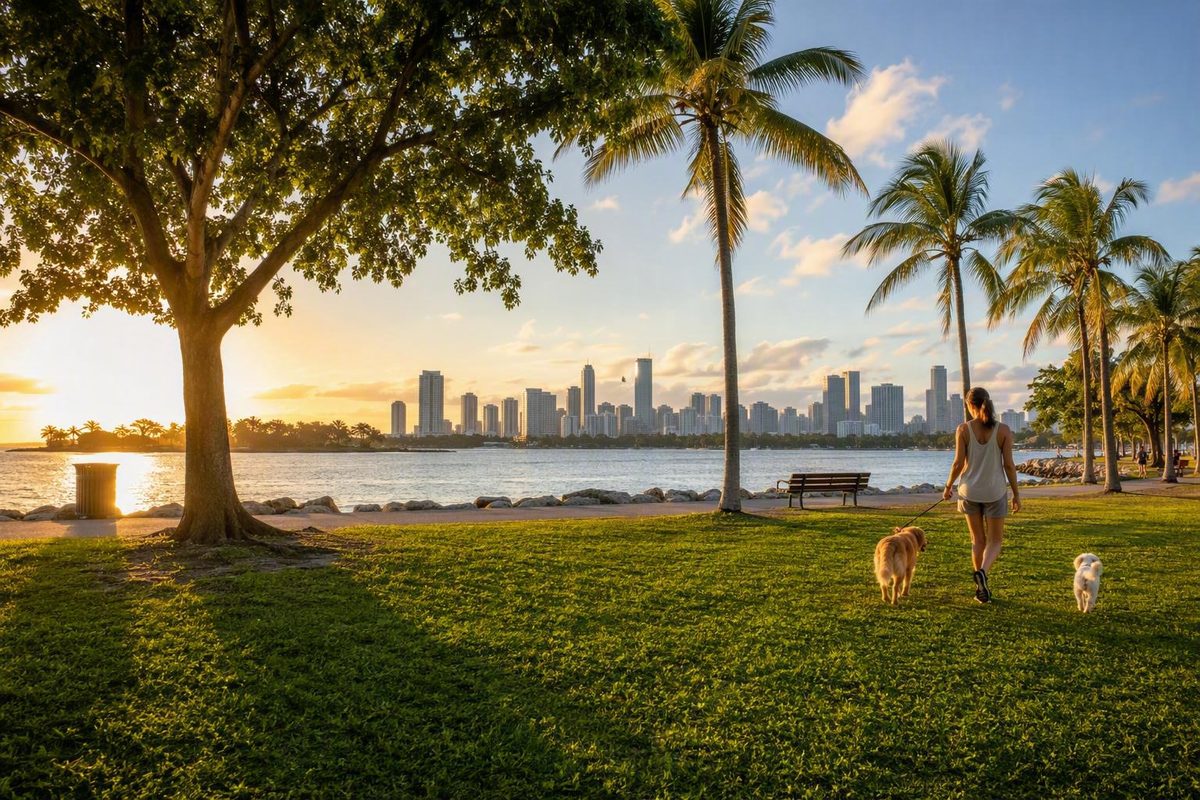
The approximately 20-acre park works well as a flexible outdoor stop. Runners and walkers can combine paths with exercise equipment, families can pair the playground with a picnic, dog owners can use general park space and a designated dog area, and visitors seeking a slower outing can spend time beside the bay. Tourism material describes more than 20 acres, while local reporting calls it a 20-acre park, making approximately 20 acres the most defensible shorthand. (Miami & Miami Beach)
The essentials are straightforward: use the City of Miami address, visit between sunrise and sunset, and choose one main activity. Parking and bathrooms are available, but parking cost, capacity, restrictions, and typical availability are not published in the supplied official information.
Last reviewed September 3, 2026. Official details were checked against the City of Miami park directory. Third-party descriptions are identified as such and were not independently verified through an on-site inspection.
Kennedy Park Miami at a Glance
David T. Kennedy Park is an unstaffed City of Miami waterfront park in Coconut Grove. “Unstaffed” matters: visitors should not assume an employee will be present to answer questions, explain reservations, inspect equipment, or resolve parking issues.
Kennedy Park essentials
- Official name: David T. Kennedy Park
- Address: 2400 S Bayshore Dr, Miami, FL 33133
- Coordinates: 25.73457511, -80.22867798
- Hours: Sunrise to sunset
- Park type: Unstaffed waterfront park
- Parking: Available, but price, capacity, restrictions, and typical availability are not specified
- Bathrooms: Available
- Dogs: Allowed on leash in the general park; a designated dog park is also listed
- Reservations and questions: Parks Administration at 305-416-1300 or parks@miamigov.com
These details come from the City of Miami’s David T. Kennedy Park directory entry.
The official amenity inventory includes bathrooms, bicycle paths, bike racks, parking, picnic tables, a playground, volleyball, outdoor gym equipment, open space, a dog park, and a waterfront setting. The listing also indicates that the facility has a reservation option, although it does not explain which spaces may be reserved.
What is not confirmed
The available official information does not establish:
- Whether parking is free
- How many parking spaces are available
- Current parking limits or restrictions
- A measured walking or running-loop distance
- Drinking fountains, showers, changing rooms, grills, or shelters
- The current layout or equipment inside the dog park
- Current dock access or permission to fish, swim, launch, or approach by boat
- A dependable schedule for any concession vendor
- Reservation procedures, fees, eligibility, or availability
Those gaps do not prevent a casual visit. They simply mean that plans should not depend on an unverified facility or service.
Check the city directory before departure if your visit depends on parking, volleyball, the dog park, a reservation, or another particular amenity. Temporary closures, maintenance work, and posted rules can change after an online guide is published.
What You Can Do at the Park
Kennedy Park supports several types of outings because its official amenities combine active recreation with open waterfront space.
For walking and cycling:
- Bicycle paths
- Bike racks
- Open space
- Waterfront grounds
For exercise and sports:
- Outdoor gym equipment
- Volleyball
- Open areas suitable for informal recreation where posted rules permit it
For families and picnics:
- Playground
- Picnic tables
- Bathrooms
- Parking
- Open space
For dog owners:
- Leashed access in the general park
- A designated dog park
For a slower visit:
- A Biscayne Bay setting
- Open areas
- Space for a picnic or waterfront pause
Walking and running are commonly associated with the park, but the distinction between official and reported information is important. The city lists bicycle paths and open space rather than a measured running course. Miami’s tourism description adds low-impact rubber-asphalt paths and calisthenic stations, but it does not establish a route length or guarantee the current condition of the surface.
Local reporting provides a broader picture of how people use the grounds. A May 2026 community feature observed or reported walking, jogging, biking, outdoor workouts, yoga, dog walking, picnicking, birdwatching, fishing, and volleyball. That account is useful as a snapshot, but one reported day does not establish everyday conditions, official permissions, or operating schedules. (Coconut Grove Spotlight)
Traveler reviews also mention running, exercise, photography, dog walking, picnics, bay views, and relaxation. These reports help illustrate possible uses, but they span different years and reflect individual experiences rather than a current facility inspection. Fishing in particular should not be treated as officially permitted merely because local coverage or a visitor observed it.
Avoid choosing the park based on promises about safety, cleanliness, quiet, crowd levels, or overall quality. Those conditions can vary with time, weather, maintenance, and personal expectations. The more reliable reason to visit is the combination of city-confirmed recreation facilities and a waterfront Coconut Grove location.
A Practical Fitness Plan for Runners, Walkers, and Cyclists
A simple fitness visit can follow three stages:
- Start on the park paths. Walk, jog, or ride at a pace and distance that fit your plans.
- Add an exercise block. Use the outdoor gym equipment or any available exercise stations.
- Finish near the waterfront. Slow down for a cooldown before leaving.
This sequence is deliberately flexible. No official loop length, course difficulty, starting point, slope profile, or surface-condition assessment is available. A walker may spend most of the visit exploring at an easy pace, while a runner may use the paths as the main workout and treat the gym equipment as optional.
Cyclists have two city-confirmed features: bicycle paths and bike racks. Those listings do not establish the continuity, condition, accessibility, or protection level of every route. Assess the setting when you arrive instead of assuming it functions like a dedicated long-distance trail or road-cycling course.
Running paths and exercise stations recur across tourism descriptions, community reporting, and traveler reviews. Tripadvisor contributors have described walking and running routes, exercise stops, outdoor equipment, photography, picnics, and waterfront relaxation. Their reports provide context, not a guarantee of current equipment or path conditions. (Tripadvisor)
If mileage matters, track the distance independently rather than relying on an unofficial loop figure. The evidence does not establish whether every path is suitable for a particular mobility need, training goal, bicycle type, or weather condition.
The official operating schedule is sunrise to sunset. Local reporting has separately mentioned evening lighting around volleyball courts, but lighting does not extend or replace the city’s published park hours. Plan the entire workout—including cooldown and departure—within the official opening period.
Bring personal drinking water and suitable sun or rain protection. That is prudent preparation for an outdoor workout, not a claim that the park lacks water or shade. The official inventory simply does not confirm drinking fountains, showers, changing rooms, or dependable shaded rest areas.
A practical session might look like this:
- Arrive after sunrise.
- Spend a few minutes learning the path layout at an easy pace.
- Continue with a walk, run, or bicycle session.
- Use available outdoor gym equipment without depending on a specific station.
- Cool down near the waterfront.
- Leave sufficient time to exit before sunset.
For a mixed-pace group, agree on a visible meeting place and a return time before separating. The park is unstaffed, so the group should handle its own communication and timing.
Planning a Family Visit or Picnic
Kennedy Park can accommodate a straightforward family outing because the city confirms a playground, picnic tables, bathrooms, parking, open space, and waterfront grounds.
One possible sequence is:
- Begin with playground time.
- Stop at a picnic table for a snack or meal.
- Take a short walk through the open or waterfront portions of the park.
- Return to the playground or finish with a quiet bay-view break.
This is a suggested structure, not an official itinerary. Families can shorten it, reverse the order, or make the picnic the main activity. A modular plan is useful when weather changes or a preferred area is occupied.
Picnic tables are officially listed, but their availability, shade, condition, and proximity to the playground are not guaranteed. Bring a backup option, such as a picnic blanket, if seating is important to the visit.
Do not plan around grills, covered shelters, changing facilities, drinking fountains, food service, accessible play equipment, or guaranteed shade. None of those features is established by the supplied official information.
A compact packing list might include:
- Drinking water
- Food that does not require on-site cooking
- Sun or rain protection
- Wipes or basic cleanup supplies
- A picnic blanket
- A small activity for downtime
- Any child-specific supplies needed for an unstaffed outdoor park
A birthday party, team gathering, class outing, or organized meetup deserves advance confirmation because the city lists an option to reserve the facility without identifying the qualifying spaces or procedures.
For a group event, use the Parks Administration phone number and email in the essentials box. Ask which area is reservable, whether a permit is required, what fees or setup limits apply, how availability is determined, and whether the planned activities or equipment are permitted. A general reservation indicator should not be interpreted as automatic permission to occupy any chosen part of the park.
Dog Rules and the Dedicated Dog Park
The official rule has two parts: dogs are allowed on leash in the general park, and the city separately lists a designated dog park. The City of Miami park directory is the controlling source for that distinction.
Keep dogs leashed on general paths, in open space, around picnic areas, and along waterfront portions of the park. Use the designated dog area only after checking its entrance, posted rules, and current conditions.
A simple dog-owner visit could be:
- Take a leashed walk through the general park.
- Inspect the designated dog-area entrance and posted notices.
- Use that area only if it is open and suitable for your dog.
- Allow off-leash activity only where the posted rules expressly permit it.
- Reattach the leash before returning to the general park.
A pet-travel directory reports that the dog park is fenced and divided into sections for small and large dogs, with picnic tables and agility-type equipment. Those details are not confirmed by the city’s current amenity inventory, so inspect the layout rather than assuming every reported feature remains available. (Jet Set Pets)
The evidence does not establish the dog park’s current surface, maintenance schedule, water access, accessibility, or separate operating hours. Bring water and normal cleanup supplies, and follow signs at the site.
Do not assume that the dog area can be reserved for a private gathering. Contact Parks Administration if access to a particular space is essential or if several owners are arranging an organized event.
Biscayne Bay Views, Sunrise, and the Waterfront Experience
Kennedy Park’s defining feature is its Biscayne Bay location. The city classifies it as waterfront, while tourism descriptions, reviews, local reporting, and historical material repeatedly refer to the bay, boats, trees, and mangroves.
A slow-paced visit could include:
- A waterfront walk
- Photography
- Quiet observation
- A picnic-table break
- Time watching the bay and passing boats
- A cooldown after exercise
- A short outdoor stop during a broader Coconut Grove day
Miami’s tourism page describes benches along the bay as sunrise-viewing spots. That fits naturally with the official sunrise opening, but it does not guarantee an unobstructed view, available seating, clear weather, or a particular sunrise display.
For photography, expect potential variety rather than a promised composition. Depending on weather, maintenance, vegetation, and public access, the scene may include open water, boats, lawns, trees, mangroves, paths, or recreation areas. Remain within clearly public areas and respect any signs or barriers near the water.
Some third-party material refers to wooden docks, fishing, and water access. A 2014 AFAR recommendation, for example, mentioned relaxing on a wooden dock, but it also warned that practical details might have changed. The supplied evidence does not establish the current status of any dock or permission to fish, swim, launch a vessel, or enter by boat. (AFAR)
A.C.’s Icees is also frequently associated with the park in tourism material, older traveler reviews, and local reporting. The frozen-lemonade truck is described as a longstanding landmark and late-afternoon draw, but the available sources do not document a reliable current schedule.
If refreshments are important, bring your own drink or seek current vendor information separately. Plan around the park’s confirmed features and treat the truck as a possible extra rather than a guaranteed service.
Address, Parking, and Reservations: What Is Confirmed
Use the following destination for navigation:
David T. Kennedy Park 2400 S Bayshore Dr Miami, FL 33133
This is the City of Miami address and is corroborated by multiple travel listings, including AFAR’s park entry. (AFAR)
One tourism page instead gives 2200 S Bayshore Dr. The evidence does not establish that the two addresses represent separate public entrances, so use the city’s 2400 address as the primary destination and follow current signs and lawful access instructions when you arrive.
Parking is an officially listed feature. However, the available evidence does not confirm:
- Whether parking is free
- The number of spaces
- Current time limits
- Other restrictions
- How quickly spaces fill
- Which parking area is best for a first visit
An older traveler review described the parking area as small. That is dated anecdotal context, not a current capacity assessment. Allow extra time for a scheduled meetup, workout, or family event, and read all posted signs before leaving your vehicle.
The city also marks the facility as having an option to reserve, but its park directory does not identify reservable spaces or publish procedures, fees, eligibility rules, setup limits, or availability.
When contacting Parks Administration, provide:
- The proposed date
- Approximate group size
- Planned activity
- Expected duration
- The space or amenity you hope to use
- Any equipment you intend to bring
Ask separately about reservation rules, fees, parking implications, setup restrictions, and permitted activities. Do not assume a reservation for one area includes the playground, dog park, volleyball facilities, parking, or every open space.
No specific transit route, pedestrian approach, or park entrance can be recommended from the supplied evidence. Check current directions on the day of travel.
How to Fit Kennedy Park Into a Coconut Grove Day
Kennedy Park works best as the outdoor anchor of a Coconut Grove outing rather than as a guaranteed full-day attraction. Its flexibility is the main advantage: visitors can exercise, walk a dog, use the playground, picnic, play volleyball, cycle, take photographs, or pause beside the bay without building an elaborate itinerary.
A practical first-visit framework is:
- Arrive during official daylight hours.
- Take a short waterfront walk to understand the layout.
- Choose one primary activity.
- Add a picnic or bay-view pause if time and conditions allow.
- Continue elsewhere in Coconut Grove instead of making repeated cross-city trips.
Possible primary activities include:
- A walk or run
- An outdoor workout
- Playground time
- Volleyball
- Cycling
- A dog-park visit
- Photography
- A picnic
Choosing one priority keeps the outing useful even if a secondary amenity is busy, unavailable, or different from its third-party description.
For visitors without a rental car, check the current route independently and leave room for delays or a change of travel mode. Miami Finder’s car-free planning approach recommends grouping a day by neighborhood rather than repeatedly moving between distant districts. Applied here, that means pairing Kennedy Park with other Coconut Grove plans. (Miami Finder)
A modular schedule could look like this:
- Short visit: Waterfront walk and bay-view pause
- Fitness visit: Paths, outdoor gym equipment, and cooldown
- Family visit: Playground, picnic, and short walk
- Dog visit: Leashed walk followed by the designated dog area if conditions permit
- Social visit: One shared activity and a picnic, with advance confirmation for an organized event
Weather should determine how long the outdoor portion lasts. Keep an indoor Coconut Grove alternative available and shorten or postpone the park visit if rain, heat, or other conditions make the original plan impractical. Miami Finder’s rainy-day framework similarly recommends using indoor anchors and treating outdoor time as a flexible window. (Miami Finder)
Do not assume the park has indoor shelter beyond the city-listed bathrooms. Check the forecast and official park information before leaving, especially when the plan depends on a reservation, parking, volleyball, the dog park, a concession, or a third-party-reported waterfront feature.
Why the Park Is Named for David T. Kennedy
David Thomas Kennedy was an attorney and Miami politician who served as mayor from 1969 to 1973. The historical marker at the park credits him with promoting a greener city, supporting shoreline parks, and campaigning for the 1972 “Parks for People” bond program. His successor, Mayor Maurice Ferre, named the park in Kennedy’s honor in 1974. A Florida Heritage Site marker erected in 2021 records this history and carries the identifier F-1165. (Historical Marker Database)
For visitors, the marker adds context without requiring a separate historical itinerary. Look for it during a walk and consider how the present park combines waterfront open space, fitness facilities, play areas, picnicking, and dog-friendly recreation—the types of public uses associated with Kennedy’s parks legacy.
Frequently Asked Questions
What are the official hours for Kennedy Park in Miami?
David T. Kennedy Park is open from sunrise to sunset, according to the City of Miami park directory. Reports of evening volleyball lighting do not change the published operating schedule.
Which address should I use for David T. Kennedy Park?
Use 2400 S Bayshore Dr, Miami, FL 33133. Tripadvisor and several other listings corroborate the city’s primary navigation address. (Tripadvisor)
One tourism listing gives 2200 S Bayshore Dr, but the available evidence does not establish separate entrances at those two addresses.
Are dogs allowed at Kennedy Park?
Yes. The City of Miami allows dogs on leash in the general park and lists a designated dog park. Use that area according to posted rules, and do not assume off-leash access is permitted anywhere else.
Third-party descriptions mention fencing, separate small- and large-dog sections, and agility-type equipment, but the current layout should be checked on arrival.
Does Kennedy Park have parking and bathrooms?
Yes. Both parking and bathrooms appear in the official amenity inventory. The city does not publish parking cost, capacity, restrictions, or typical availability in the supplied listing, so read posted signs and allow flexibility.
Can I reserve space or a facility at Kennedy Park?
The city lists an option to reserve the facility but does not identify the eligible spaces or publish procedures, fees, or availability in the park directory. Contact Parks Administration using the details in the essentials box and confirm the exact space, date, group size, rules, costs, and parking arrangements before organizing an event.
Plan Your Visit
David T. Kennedy Park is most useful as a flexible Coconut Grove stop for active recreation and Biscayne Bay scenery—not as a guaranteed all-day attraction.
Navigate to the city’s 2400 S Bayshore Drive address, visit between sunrise and sunset, and choose one main activity. Parking, bathrooms, bicycle facilities, picnic tables, a playground, volleyball, outdoor gym equipment, open space, a dog park, and waterfront grounds are officially listed. Keep dogs leashed outside the designated dog area, and do not build the outing around unconfirmed parking terms, docks, fishing access, concessions, or reservation arrangements.
For the smoothest visit, keep the rest of the day within Coconut Grove, check the weather and city listing before leaving, and contact Parks Administration when a particular facility or organized gathering is essential to the plan.