
Plan a Miami Beach Day That Goes Beyond the Sand
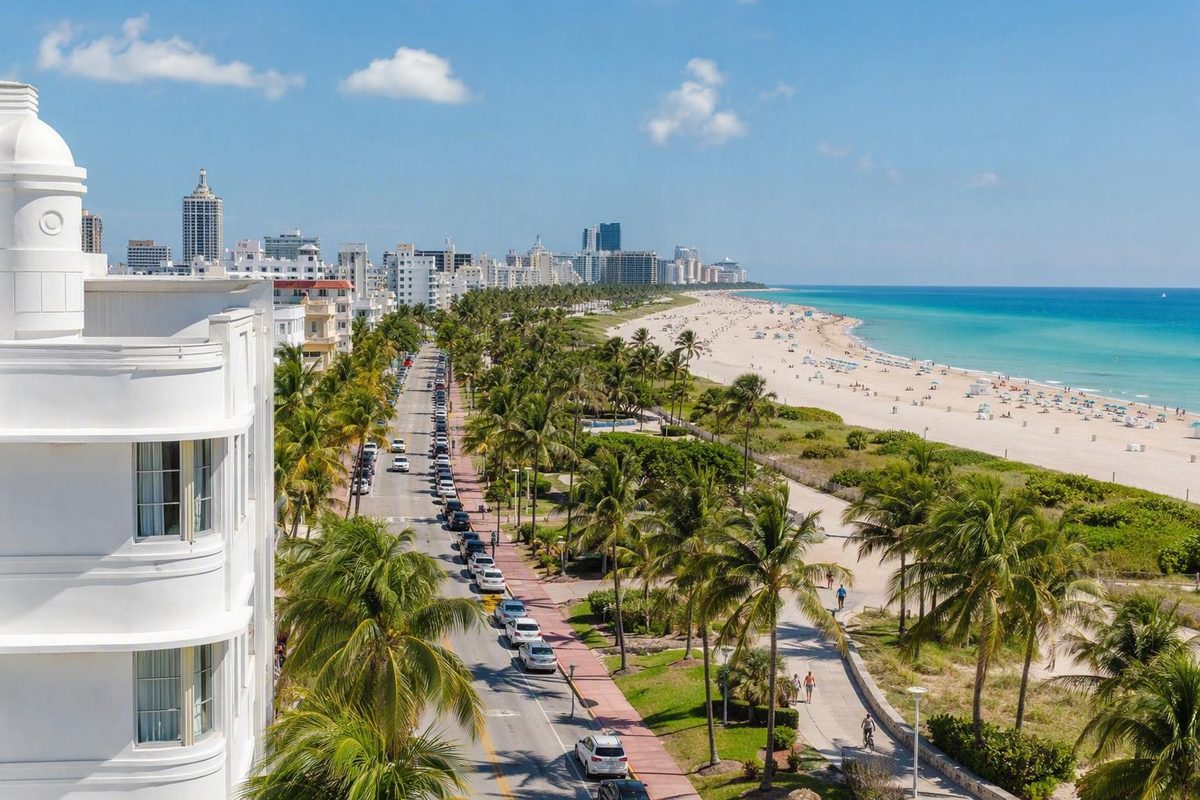
Beach time, parks, Ocean Drive, self-guided Art Deco viewing and the Beachwalk can fill most of a day without an attraction ticket. Keep one indoor stop as backup.
Miami Beach rewards visitors who treat it as a collection of neighborhoods rather than one continuous strip of sand. For the broadest mix of architecture, parks, museums, shopping, dining, and evening activity, begin in South Beach. Choose Mid-Beach when a resort-centered day matters more than sightseeing, or North Beach when you want a generally quieter shoreline-and-park outing.
First, get the geography right. Miami Beach is a separate municipality on a barrier island between Biscayne Bay and the Atlantic Ocean. South Beach is its southern neighborhood—not another city and not a synonym for Miami as a whole. That distinction matters when comparing attractions, hotels, transportation, and excursion times, as the official state tourism guide also treats South Beach as one part of Miami Beach.
The practical advantage is that many worthwhile things to do in Miami Beach sit in compact clusters. Walking handles short South Beach links, the Beachwalk supports longer coastal walks and rides, and the city trolley connects the island’s principal districts. Build at least one indoor stop into the plan so heat or rain changes the order of your day rather than canceling it.
Start Here: The Miami Beach Experiences Worth Prioritizing
For a first visit, prioritize a varied shortlist instead of trying to collect every attraction:
- South Pointe Park for waterfront paths, views, play space, and a relaxed introduction to the island.
- The beach and Lummus Park for sand, exercise, walking, and Ocean Drive people-watching.
- Ocean Drive and the Art Deco Historic District for Miami Beach’s most recognizable architectural experience.
- The Beachwalk for a longer walk, jog, or bicycle ride along the coast.
- Lincoln Road for pedestrian-oriented shopping, cafés, galleries, and dining.
- Española Way for a compact dining or evening stop.
- The Bass for contemporary art.
- The Wolfsonian–FIU for design, objects, and visual culture.
These are practical first-visit highlights that recur across municipal, tourism, and travel coverage, not an objective ranking. A repeat visitor focused on beach time may prefer North Beach, while an architecture enthusiast could spend most of a day around Ocean Drive and the historic district.
By type of experience:
- Beach and parks: South Pointe Park, Lummus Park, the public shoreline, Flamingo Park, and North Shore park space.
- Architecture and culture: Ocean Drive, the Art Deco Historic District, the Art Deco Museum, The Wolfsonian–FIU, The Bass, and Miami Beach’s history and memorial sites.
- Walking and cycling: the Beachwalk, South Pointe paths, Lummus Park, and the pedestrian shopping districts.
- Shopping and dining: Lincoln Road and Española Way, plus restaurants throughout the island.
- Water activities: paddleboarding, jet skiing, cruises, and boat rentals.
- Evening entertainment: dinner, architecture after dark, performances, cruises, bars, or clubs.
The City of Miami Beach describes the Beachwalk as a completed oceanside promenade spanning the city and promotes it for walking, jogging, and cycling. Its official Miami Beach visitor page also directs travelers to parks, transportation information, events, alerts, and beach-condition reports.
The broad cost categories in the table reflect public-access activities and commercial listings rather than guaranteed current prices. Paid tours, rentals, cruises, and other bookable products appear in current Miami Beach activity listings, but their prices and availability are changeable.
| Highlight | Neighborhood | Setting | Broad cost | Good fit for | Plan ahead? |
|---|---|---|---|---|---|
| South Pointe Park | South Beach | Outdoor | No admission for the core park outing | Walkers, couples, families, photographers | Usually minimal; check weather and park conditions |
| Beach and Lummus Park | South Beach | Outdoor | No admission for basic access; rentals cost extra | Beach visitors, active travelers, people-watchers | Check beach conditions and rental needs |
| Ocean Drive and Art Deco district | South Beach | Outdoor, with indoor options | No charge to self-guide; guided tours cost extra | Architecture fans, first-time visitors, photographers | Recommended for a guided tour |
| Beachwalk | Citywide coastal corridor | Outdoor | No charge to walk; bicycle rental costs extra | Walkers, runners, cyclists | Check weather and bicycle availability |
| Lincoln Road | South Beach | Primarily outdoor | No charge to browse; purchases extra | Shoppers, diners, mixed-interest groups | Reserve specific restaurants or performances |
| Española Way | South Beach | Primarily outdoor | No charge to browse; dining and entertainment extra | Couples, diners, evening visitors | Consider restaurant reservations |
| The Bass | Northern South Beach area | Indoor | Admission may apply | Contemporary-art visitors, rain-day planners | Check admission, exhibitions, and hours |
| The Wolfsonian–FIU | South Beach | Indoor | Admission may apply | Design, architecture, and history visitors | Check admission and hours |
| Water activities | Varies | Outdoor | Paid | Active travelers, groups, couples | Yes—verify operator, weather policy, rules, and availability |
| Evening entertainment | Varies | Indoor or outdoor | Variable | Adults, couples, performance and nightlife visitors | Often; verify venue policies and schedules |
These categories are intentionally broad. A no-admission stop can still involve spending on food, equipment, transportation, or parking. Before departure, confirm live venue hours, admissions, event schedules, reservations, and operator availability.
South Beach: Parks, Art Deco, Shopping, and Nightlife
The efficient approach is to move generally from south to north, leaving room for pauses instead of repeatedly crossing the neighborhood.
Begin at South Pointe Park. This is more than a place to look at the water. Its walking areas, waterfront and boat-traffic views, playground, and splash-play facilities allow it to serve as an early walk, a family stop, or a transition into beach time.
From the park, continue toward the beachfront. You do not need to turn this into an endurance walk: choose a comfortable section based on the weather, your energy, and the location of your next stop. If swimming or spending extended time on the sand, consult current beach conditions rather than assuming conditions and services are identical along the island.
Continue through Lummus Park and Ocean Drive. Lummus Park runs beside Ocean Drive, separating the street from the beach. That position makes it useful for walking, exercise, beach access, and people-watching. It also gives mixed-interest groups some flexibility: one person can spend time on the sand while another follows the park or studies nearby architecture.
Ocean Drive is the natural route into the Art Deco Historic District. A self-guided walk lets you move at your own pace and focus on the details that interest you. Notice building forms, pastel colors, decorative motifs, signage, symmetry, and the relationship between the façades and the street. Slowing down for selected buildings usually produces a more coherent experience than rushing through the entire district.
A paid architecture tour adds historical interpretation and can be worthwhile when design is a central interest. The tradeoff is a fixed meeting time and route. Self-guiding offers flexibility; a tour supplies context and reduces the research required before arrival.
The Art Deco Museum, inside the Art Deco Visitor Center at 1001 Ocean Drive, is a logical indoor complement to the street walk. The address is confirmed in published guidance about the museum and historic district, but current admission, exhibitions, opening hours, and tour arrangements should be verified directly.
Add The Wolfsonian–FIU when you want a deeper cultural anchor. It differs from an outdoor architecture walk by focusing attention on objects, design, and visual culture in a curated museum setting. It is particularly useful around midday or whenever the weather makes a long outdoor route uncomfortable. Seeing the historic district does not make the museum redundant: one emphasizes the cityscape, while the other creates an indoor, object-centered experience.
Use Española Way as a transition rather than another major sightseeing project. Its restaurants, shops, outdoor dining, and entertainment make it suitable for lunch, a late-afternoon pause, or the beginning of an evening. The compact setting works well after a museum because it requires little structure: browse, stop for a meal, or continue north.
Finish around Lincoln Road. This pedestrian-oriented district adds shops, cafés, galleries, restaurants, and casual street activity to the South Beach cluster. It works especially well when companions want different things from the same hour—one person can browse while another takes a café break. It is also a flexible endpoint because dinner, shopping, or scheduled cultural programming can extend the day without another major transfer.
Nightlife should be an optional conclusion, not the definition of Miami Beach. A satisfying evening might mean dinner on Española Way, a Lincoln Road café, illuminated Art Deco façades, a performance, or a waterfront walk. If you want a club or late-night venue, verify its location because some places promoted in “South Beach” lists are on the mainland or elsewhere in Miami Beach. Check age and identification requirements, dress code, programming, reservation policy, and cover charges directly with the venue.
A manageable south-to-north sequence is:
- South Pointe Park.
- A selected beachfront segment.
- Lummus Park and Ocean Drive.
- The Art Deco Museum or The Wolfsonian–FIU.
- Española Way.
- Lincoln Road or a chosen evening activity.
Treat that order as a framework, not a race. If weather, mobility, or operating hours complicate the route, remove a stop instead of compressing every activity.
Mid-Beach and North Beach: Slower Alternatives to South Beach
City and destination sources distinguish South Beach, Mid-Beach, and North Beach, but published boundaries vary. Treat their edges as approximate neighborhood transitions rather than exact sightseeing borders.
Mid-Beach is the more resort-oriented choice. A typical day may revolve around the beach, pool, spa, dining, and Beachwalk instead of a long attraction list. That can be an advantage for travelers who want a restorative day within one property and its immediate surroundings rather than a continuous sightseeing schedule.
Do not assume that a hotel’s pool, chairs, umbrellas, spa, beach setup, or other amenities are public or included in every booking. Access may depend on guest status, room type, fees, reservations, or day-pass policies. Confirm the terms with the property before building a day around them.
The Beachwalk is Mid-Beach’s most useful connective experience. It turns the coastal setting into an activity of its own and allows you to choose the distance. Walk a short section before breakfast, make a bicycle ride the day’s main outing, or use the promenade for a coastal break between resort and dining time. Mid-Beach works particularly well when the goal is fewer decisions rather than more landmarks.
North Beach is generally described as quieter and less nightlife-focused. That characterization recurs in travel coverage, but it remains partly subjective and can vary by block, season, event schedule, and time of day. It should not be read as a promise that the area will be empty or silent.
North Shore park space offers an alternative to the denser South Beach scene. Pair the shoreline with walking, green space, or a simple picnic rather than expecting the same concentration of architecture, museums, and shopping found farther south. For a swimming or family outing, confirm current beach conditions, lifeguard coverage, restrooms, accessible approaches, and park facilities through official city information.
Use this decision rule:
- Choose South Beach for the densest combination of parks, architecture, museums, restaurants, shopping, and evening activity.
- Choose Mid-Beach for a resort-centered day with the beach and Beachwalk as the primary activities.
- Choose North Beach for a lower-key shoreline-and-park outing with less emphasis on nightlife.
None is objectively superior. North Beach should not automatically be labeled safer, better for children, or less crowded. Mid-Beach is not necessarily inaccessible, but many prominent amenities belong to private properties. South Beach offers more documented sightseeing choices, yet that density may be unnecessary when the purpose of the day is simply to slow down.
Free and Active Ways to Experience the Coast
Public beach time, parks, Ocean Drive, self-guided Art Deco viewing, the Beachwalk, and browsing pedestrian districts can fill most of a day without buying an attraction ticket. Equipment, food, tours, and shopping determine how inexpensive the outing remains.
For a low-cost coastal route, begin in a park, follow a comfortable stretch of beach or Beachwalk, view the architecture around Ocean Drive, and browse Española Way or Lincoln Road. Add one paid experience—a museum, bicycle rental, architecture tour, or water activity—only if it meaningfully improves the day.
The official term Beachwalk is clearer than “boardwalk,” even though some travel guides still use the latter for parts of the route. The promenade spans Miami Beach and is intended for walking, jogging, and cycling.
Choose your mode according to distance and energy:
- Walking offers the most flexibility and makes it easy to stop for architecture, parks, cafés, and beach access. Heat, rain, distance, and fatigue are its main practical limits.
- A bicycle covers more of the island and turns the Beachwalk into the activity rather than merely a connector. Local rental businesses, Citi Bike, and marked rental kiosks may be options, but inventory, station status, prices, and return terms require a current check.
- The trolley can support a one-way walk or ride by reducing the effort of returning. Review the route map first and make sure the rental arrangement works with the planned endpoint.
Do not assume a bicycle will be available exactly where you need it. Decide whether it must be returned to the same location, whether a bike-share trip can end near your destination, and how you will adapt if weather changes.
Paid water activities expand the possibilities beyond the shoreline. Paddleboarding, jet skiing, sightseeing cruises, sunset cruises, and boat rentals commonly appear in Miami Beach activity listings. Before booking, confirm the actual departure point, total price, cancellation terms, age or identification rules, weather policy, included equipment, and operator availability. An activity marketed as departing “from Miami Beach” may involve a pickup or launch elsewhere.
Parks also serve different purposes:
- South Pointe Park fits walking, waterfront views, boat watching, playground time, and splash play.
- Lummus Park supports beachfront recreation, exercise, beach access, and people-watching beside Ocean Drive.
- Flamingo Park adds pools, a water playground, trails, green space, and sports facilities to a South Beach plan.
These features can support active and family itineraries, but facility schedules and access rules can change. Verify a pool or splash facility before making it the central promise of a child’s day.
Finally, separate access from suitability. The presence of a path does not prove that every section will feel comfortable for every cyclist, and a water-sports listing does not establish beginner suitability. Use current official conditions and operator instructions for decisions involving swimming, cycling, or water activities.
Culture, Family Time, and Indoor Alternatives
Miami Beach’s cultural venues are not interchangeable. Choose by subject and mood instead of trying to fit every museum, memorial, and garden into one day.
-
The Bass focuses on contemporary art and exhibitions. It can serve as a primary museum visit or a midday indoor anchor.
-
The Holocaust Memorial is a place for history and reflection, not a casual substitute for a conventional art museum.
- Miami Beach Botanical Garden provides a garden setting and a gentler outdoor pause near cultural and civic destinations.
Think of these as smaller subgroups rather than one tightly packed museum row. The Art Deco Museum and Ocean Drive naturally belong together. The Bass, Botanical Garden, and nearby civic or cultural stops can shape a separate northern South Beach block. The Wolfsonian can anchor a broader South Beach architecture-and-design day. Select one primary venue and one optional secondary stop rather than assuming every operating schedule will align.
For families, South Pointe Park and Flamingo Park provide alternatives to an uninterrupted beach day. South Pointe combines walking and views with playground and splash-play features. Flamingo Park has been described as offering a water playground, pools, trails, and sports facilities. These amenities can fit family plans, but parents should confirm current age rules, admission arrangements, accessibility, pool schedules, lifeguard coverage, and facility status.
A weather-adaptive day works best with a simple structure:
- Choose one indoor morning or midday anchor, such as The Bass, The Wolfsonian, or the Art Deco Museum.
- Add a meal, café, or shopping stop nearby.
- Keep a short outdoor window for a garden, park, Ocean Drive, or the Beachwalk if conditions improve.
- Retain a second indoor option that can replace the outdoor segment.
This structure is more resilient than scheduling hours of uninterrupted beach time and searching for a fallback only after rain begins. Miami Finder’s rainy-day planning method similarly emphasizes indoor anchors, compact neighborhood moves, and brief outdoor windows. It is an editorial planning framework, not proof that every storm or traveler should be handled identically.
Museums, shopping, long meals, cafés, spas, and indoor performances can all substitute for outdoor time during rain or extreme heat. Before committing to an outdoor-heavy day, review the current forecast, municipal alerts, beach-condition reports, webcams, and relevant venue information. Live conditions should determine the final order.
How to Explore Miami Beach Without a Rental Car
An itinerary confined to Miami Beach can often work without a rental car. The key is not to walk everywhere; it is to assign the right mode to each part of the day.
Use this pattern:
- Walk within a compact South Beach cluster.
- Use the Beachwalk for a north-south recreational segment.
- Cycle when you want the coastal journey itself to be the activity.
- Use the trolley for longer island links or a return leg.
- Take an occasional ride when timing, weather, luggage, or mobility makes it worthwhile.
South Beach is the easiest place to apply this approach because attractions are concentrated around the parks, beachfront, Ocean Drive, Española Way, museums, and Lincoln Road. Mid-Beach and North Beach require more deliberate grouping because points of interest are farther apart or less concentrated.
The City of Miami Beach lists four free trolley routes: South Beach Loop, Middle Beach Loop, Collins Express, and North Beach Loop. The official service information states that trolleys operate daily from 8 a.m. to 11 p.m., with an approximately 20-minute average frequency. Riders board and exit at designated stops, and each trolley has two bicycle racks. All of those operating details are changeable, and average frequency does not guarantee a particular wait or an available bicycle rack; consult the official citywide trolley page before travel.
Use current city information or the Transit app to review arrivals. Do not rely on the obsolete TSO Mobile tracker. Also consult the current route map rather than assuming which stop is closest to an attraction; service updates, construction, and special events can change the most practical connection.
For a car-free day, think in clusters rather than individual addresses. Miami Finder’s neighborhood-based car-free method recommends using transit for longer moves, walking within a district, and avoiding repeated cross-city backtracking. Applied to Miami Beach, that means completing the South Beach sequence before traveling north—not moving repeatedly among South Pointe, Mid-Beach, Lincoln Road, and North Beach.
A sample mode plan could look like this:
- Walk through South Pointe Park.
- Continue north through a selected beachfront segment and Lummus Park.
- Explore Ocean Drive and one museum on foot.
- Eat around Española Way.
- Walk or take the trolley toward Lincoln Road.
- Use the trolley or an occasional ride for the return journey.
A rental car or other transportation can still help with distant mainland or regional excursions. Little Havana, Wynwood, Downtown Miami, Brickell, and the Everglades are not part of the Miami Beach walking cluster. Conversely, keeping a car during a Miami Beach-focused day can introduce parking searches, fees, and the need to return to the vehicle. The right choice depends on the whole trip, not only the beach portion.
Ready-to-Use One-Day and Weekend Itineraries
The strongest itinerary is geographically compact and leaves room for weather, meals, and unscheduled stops. Use these plans as frameworks, substituting activities according to current conditions and operating hours.
One-day first-timer plan
Start early at South Pointe Park for paths, waterfront views, and an unstructured beginning. Continue toward the beachfront and choose a manageable stretch leading to Lummus Park.
Use late morning for Ocean Drive and the Art Deco Historic District. Walk independently if flexibility matters, or reserve a guided architecture tour if interpretation is a priority.
Around midday, choose one indoor stop:
- Art Deco Museum for a direct extension of the architecture walk, or
- The Wolfsonian–FIU for a broader design and visual-culture experience.
In the afternoon, pause at Española Way or continue to Lincoln Road for browsing, coffee, shopping, or a meal. Finish in whichever district suits your evening interests. This route supplies beach, park, architecture, culture, and dining without leaving South Beach.
Two-day Miami Beach plan
Day one: Keep the full day in South Beach. Follow the first-timer route, allowing more time for the beach or one museum rather than treating every stop as a photo opportunity.
Day two: Begin with a Beachwalk walk or bicycle ride. Then choose one direction:
- Visit The Bass for contemporary art.
- Pair The Bass or another cultural stop with Miami Beach Botanical Garden.
- Spend a slower day in Mid-Beach, centered on the beach, Beachwalk, dining, or confirmed resort amenities.
- Travel to North Beach for a park-and-shore outing.
These are alternatives, not components of one overloaded day.
Family variation
Center the morning on South Pointe Park or Flamingo Park, depending on whether walking and views or water play and sports facilities matter more. Add a moderate amount of beach time rather than assuming children will want several uninterrupted hours on the sand.
Plan shade, hydration, a meal, and an indoor or air-conditioned break. The Art Deco Museum can provide a shorter cultural stop, while a longer museum may suit families whose children are interested in the subject. Confirm the chosen park facility and current beach conditions before leaving.
Culture variation
Begin with a self-guided or guided Art Deco walk and the Art Deco Museum. Add The Wolfsonian–FIU as the primary indoor museum. From there, choose only one or two further stops:
- The Bass for contemporary art.
- Holocaust Memorial for reflection and history.
- Miami Beach Botanical Garden for an outdoor change of pace.
- Jewish Museum of Florida–FIU for a history-centered visit.
Do not assume all of these fit comfortably into one day. Opening hours, timed entry, travel between venues, and the emotional pace of memorial or history visits may make a shorter list more rewarding.
Budget variation
Build the day around public outdoor spaces and self-guided experiences:
- South Pointe Park.
- Beach time.
- Lummus Park.
- A self-guided Art Deco walk.
- A Beachwalk segment.
- Browsing Española Way or Lincoln Road.
- The complimentary trolley for a longer connection or return journey.
These no-ticket and low-cost activities recur throughout the state tourism guide to South Beach. Set a food budget before entering shopping and dining districts, then decide whether a museum, bicycle rental, or guided tour is the single paid addition worth making.
Evening variation beyond clubs
Start with sunset or late-day light near South Pointe. Then choose one continuation:
- Take a marina cruise after confirming its departure point, weather policy, and booking terms.
- Have dinner around Española Way or Lincoln Road.
- View Art Deco façades and illuminated signage after dark.
- Attend an indoor performance if the schedule aligns.
- Choose a bar or club only after checking current policies and programming.
Morning often works well for outdoor activity because it may reduce exposure to midday heat, while indoor stops provide flexibility later. That is a planning tactic, not a universal best time; forecasts, personal energy, events, and opening hours may justify a different order.
Miami Beach Versus Greater Miami Excursions
Some “Miami Beach” recommendation lists quietly mix island attractions with places on the mainland. That creates unrealistic itineraries.
Little Havana, Wynwood, Downtown Miami, Brickell, mainland museums, and the Everglades are outside Miami Beach. Reaching them requires a bridge crossing, transit connection, ride, tour pickup, or another planned transfer. These places are not necessarily too far away to visit, but they should not be treated as casual additions to a compact South Beach walk.
Little Havana works better as a separate half-day cluster focused on food, neighborhood streets, cultural stops, and any reserved tour. Inserting it between South Pointe Park and Lincoln Road fragments both experiences.
Wynwood likewise deserves a separate block for murals, galleries, food, and neighborhood exploration. Its visual character may pair conceptually with Art Deco sightseeing, but it is not a continuation of Ocean Drive.
Downtown Miami and Brickell form a separate mainland urban cluster. After reaching the mainland, the free Metromover can connect selected destinations in that area. It does not transport visitors from Miami Beach across the bay, so the initial island-to-mainland connection still requires planning. Official destination guidance explains the Metromover and other free transportation options, although current service information should be checked before travel.
Mainland museums should be labeled accurately even when they appear in a guide written for Miami Beach visitors. A venue can be straightforward to reach by transit or ride and still not be in Miami Beach.
The Everglades is a regional excursion, not a Miami Beach attraction. Such outings commonly require advance planning, transportation or pickup arrangements, and a substantial block of time. Review the exact destination, transportation, cancellation policy, included activities, and return time rather than choosing solely by an advertised price or marketplace rating.
Before departure, verify:
- Venue hours and admission terms.
- Tour and restaurant reservations.
- Cancellation, age, and identification requirements.
- Weather and beach conditions.
- Event and performance schedules.
- Trolley routes, service notices, and arrivals.
- Municipal alerts and temporary closures.
- The departure point for cruises and water activities.
- The location of every mainland attraction and the time needed to reach it.
For a first visit, choose one compact base plan instead of trying to collect every attraction. South Beach provides the most concentrated mix of parks, architecture, culture, dining, and evening options. Add Mid-Beach or North Beach when a slower coastal day fits the trip better, and reserve mainland neighborhoods for a separate excursion.
Walking, the Beachwalk, bicycles, and the trolley can make a car-free Miami Beach stay practical. Keep the final plan flexible: check live weather, beach conditions, venue details, events, and transit service before leaving, then let current conditions determine which optional stop comes next.
Frequently Asked Questions
What are the best free things to do in Miami Beach?
The Miami Beach trolley is also free, with routes connecting South, Middle, and North Beach. Check the official trolley information for current routes and service because the published average frequency is not a guaranteed wait.
Can you explore Miami Beach without renting a car?
Yes. Group each day within one area, walk short neighborhood links, use the Beachwalk for coastal movement, rent a bicycle when useful, and take the trolley for longer island connections. Additional transportation may still help with luggage, mobility needs, late-night travel, or mainland excursions.
What can you do in Miami Beach when it rains?
Choose one or two indoor anchors such as The Bass, The Wolfsonian–FIU, the Art Deco Museum, or the Jewish Museum of Florida–FIU. Add a long meal, café, shopping stop, spa appointment, or indoor performance, then retain a short nearby walk if conditions improve.
What is the difference between Miami Beach and South Beach?
Miami Beach is a municipality on a barrier island between Biscayne Bay and the Atlantic Ocean. South Beach is its southern neighborhood. Miami Beach also includes areas commonly called Mid-Beach and North Beach, although exact boundaries vary among sources.
Are Little Havana, Wynwood, and the Everglades in Miami Beach?
No. Little Havana and Wynwood are on the mainland, while the Everglades is a regional destination. Treat Little Havana or Wynwood as a separate half-day cluster and plan an Everglades outing as a substantial excursion requiring dedicated transportation and, in many cases, advance booking.