
Coconut Grove or Coral Gables? Choose Your Miami Base
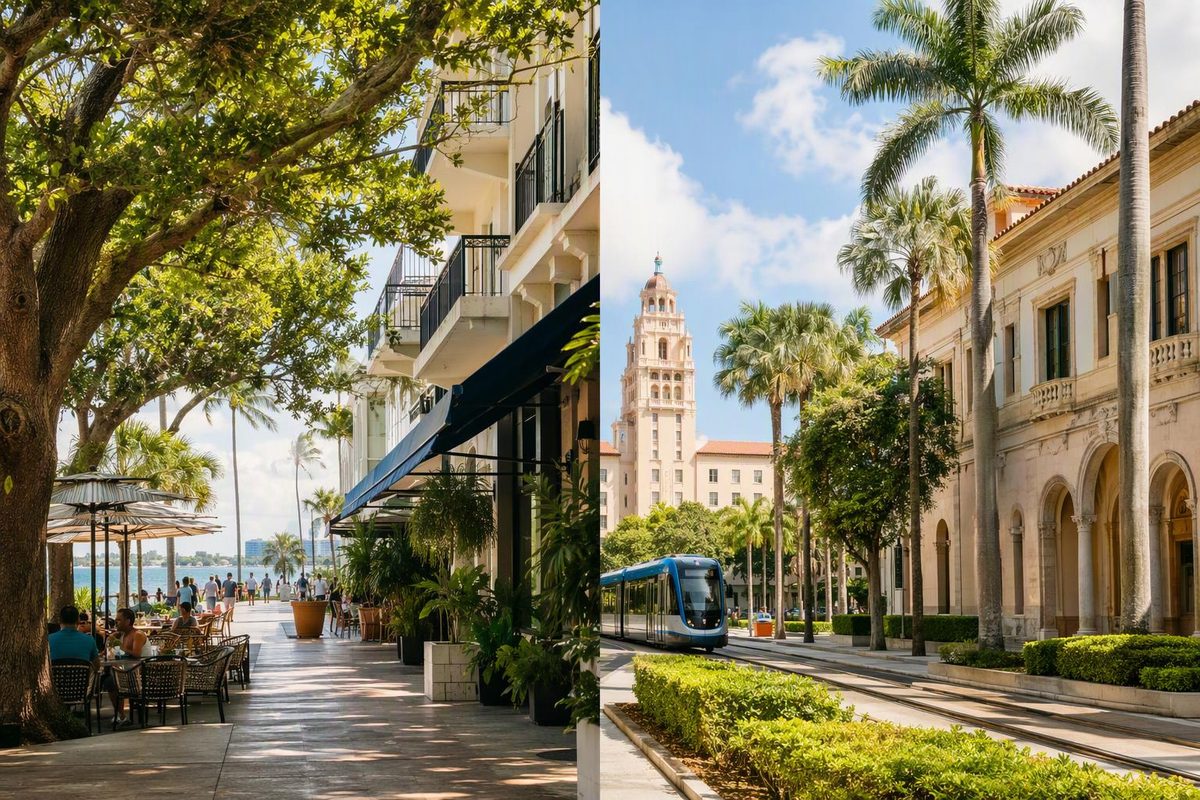
Compare Coconut Grove and Coral Gables for a car-light Miami stay, including hotel location, rail connections, walkable outings and rain backups.
Choose central Coconut Grove for bayfront parks and a trip built around walking to meals. Choose downtown Coral Gables for shopping, architecture and an indoor cultural stop close to dinner. Both can work without a rental car, but neither area name guarantees a convenient hotel location.
Coconut Grove is a neighborhood within Miami; Coral Gables is a separate city in Greater Miami. The Grove’s visitor core clusters around CocoWalk, Grand Avenue and Main Highway, while downtown Coral Gables centers on Miracle Mile and nearby Giralda Plaza. Those are the areas to examine first—not the entire territory shown under either name on a booking site. The destination bureau’s guides describe the Grove’s shops and waterfront parks and Coral Gables’ downtown attractions.
Which fits your trip?
| Your priority | Better starting point | Booking trade-off |
|---|---|---|
| Cafés, bay views and park walks | Central Coconut Grove | The restaurant core is not beside the namesake rail station |
| Shops, architecture and a museum afternoon | Downtown Coral Gables | Rail access usually needs a connecting ride |
| Spending most days within your base | Either central district | Check the actual walk from the hotel to meals and activities |
| Frequent trips to Brickell or Downtown Miami | Compare each hotel’s station connection | Include walking and trolley waits, not just train time |
| Daily ocean-beach visits | Look beyond these two bases | Bayfront scenery is not the same as an ocean-beach stay |
If beach access is the deciding factor, start with the broader Miami areas comparison before narrowing your hotel search.
Coconut Grove: prioritize the village core
For a stay built around strolling, look near CocoWalk and the Main Highway–Grand Avenue area. You can organize an outing around lunch, The Barnacle and a waterfront park without trying to cover every attraction marketed as “Coconut Grove.” Peacock Park and Regatta Park are useful outdoor anchors; the latter sits beside Dinner Key Marina on Biscayne Bay. The official neighborhood directory lists both parks and the area’s other attractions.
The crucial transit detail: Coconut Grove Metrorail station is about one mile from the heart of the neighborhood, according to the destination bureau’s transport guide. A hotel near the station and a hotel near the restaurants solve different problems. Don’t treat that mile as a trivial luggage walk; decide whether you want to walk it, connect by trolley or take a car ride.
As of October 24, 2026, the City of Miami lists the Coconut Grove trolley as operating Monday–Saturday, 6:30 a.m.–11 p.m., with connections to Coconut Grove and Douglas Road Metrorail stations. Consult the city’s route map for your hotel’s nearest stop. For Sunday travel, plan a bus, walk or rideshare connection rather than assuming the same trolley schedule.
A manageable half-day: visit The Barnacle, have lunch in the village core, then choose Peacock Park or Regatta Park. The Barnacle is at 3485 Main Highway; as of October 24, its grounds open Thursday–Monday, 9 a.m.–5 p.m., and the historic house requires a guided tour. It is closed Tuesdays, Wednesdays, Christmas Day and New Year’s Day. Check the park’s own visitor information before building your morning around it.
Coral Gables: prioritize downtown, not the city label
For a car-light visit, start your search around Miracle Mile, Giralda Plaza and the downtown stretch of Ponce de Leon Boulevard. Giralda Plaza is pedestrian-only, and the nearby Coral Gables Museum provides a cultural stop to pair with shops and restaurants. The Biltmore, Venetian Pool and Fairchild Tropical Botanic Garden are separate outings—not reasons to assume every Coral Gables hotel puts the downtown district at your door. See the destination bureau’s area guide.
The key rail connection is Douglas Road Metrorail station. From there, the free Ponce de Leon trolley runs north along Ponce de Leon Boulevard. As of October 24, 2026, Coral Gables lists service Monday–Saturday, 6:30 a.m.–10 p.m., with no service on Sundays, July Fourth, Thanksgiving or Christmas. Use the city’s trolley page and tracker to check the connection rather than assuming the train delivers you directly to Miracle Mile.
A manageable half-day: explore Miracle Mile, visit Coral Gables Museum, then eat around Giralda Plaza. The museum is at 285 Aragon Avenue and is closed Mondays. As of October 24, its hours are 11 a.m.–5 p.m. Tuesday–Friday and Sunday, and 10 a.m.–6 p.m. Saturday. That makes it a practical rain backup on an open day, but not on Monday. Confirm through the museum’s visitor page.
Before booking, test three journeys
- Arrival: check the route from Miami International Airport to the hotel door, including transfers and luggage. Take the MIA Mover to the airport’s Metrorail station; the destination bureau’s transport guide explains the Douglas Road connection. Weekend arrivals need an extra rail transfer: as of October 24, Miami-Dade says the Orange Line operates only between the airport and Earlington Heights on weekends, so change there to a southbound Green Line train for either area. Check current Metrorail service before departure, then plan the final neighborhood leg.
- An ordinary evening: locate somewhere you would actually eat within a walk you are comfortable making. Test the return after trolley operating hours, too.
- A wet or very hot afternoon: identify an indoor stop or allow time at the hotel. Don’t make a long park walk your only plan.
For the rest of your itinerary, use the car-free Miami planning guide. Pick the hotel whose everyday journeys work—not simply the neighborhood whose description sounds best.