
Find the Florida Beach That Fits Your Vacation
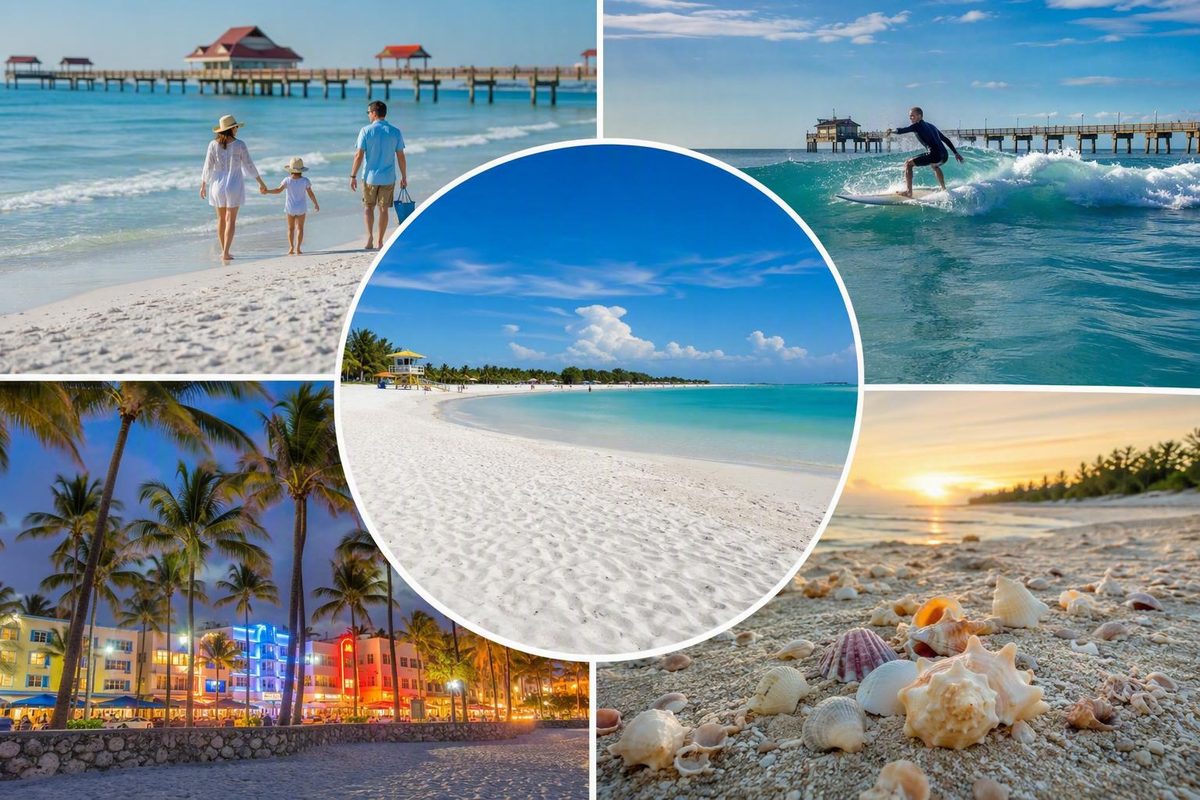
Siesta Beach leads overall; compare Clearwater for families, Cocoa Beach for surfing, South Beach for nightlife, and Sanibel or Captiva for shelling.
Florida has no universally best beach. The right choice depends on whether you want calm-water swimming, surf, nightlife, shelling, undeveloped scenery, easy food access, or a workable route across the sand.
Siesta Beach is this guide’s best-supported all-around recommendation, not an objective statewide winner. Its distinctive sand, Gulf setting, facilities, parking, lifeguards, and documented accessibility features make it suitable for a wide range of visitors. Other beaches are better for particular trips.
Florida’s top beaches at a glance
| Beach | Region/coast | Best for | Typical water character | Key facilities or access features | Primary tradeoff |
|---|---|---|---|---|---|
| Siesta Beach | Sarasota, central Gulf | Best all-around mix | Often gentler Gulf conditions | 950 free parking spaces, restrooms, concessions, playground, lifeguards, access mat, beach-wheelchair program | Crowds and parking pressure |
| Clearwater Beach | Tampa Bay, central Gulf | Developed family vacation | Generally shallow, calmer Gulf character | Pier 60 area, restaurants, shops, watersports, reported mats and wheelchair loans | Busy commercial atmosphere |
| Cocoa Beach | Space Coast, Atlantic | Surfing and an Orlando-adjacent beach day | More open-ocean wave activity | Lessons, rentals, pier-area food, entertainment, showers and lifeguards | Surf can challenge inexperienced swimmers |
| South Beach | Miami Beach, Atlantic | Nightlife, dining and culture | Open Atlantic conditions | Ocean Drive, Art Deco district, hotels, restaurants, clubs and volleyball | Noise, traffic and crowds |
| Sanibel and Captiva | Southwest Gulf | Shelling and a slower coastal trip | Typically gentler Gulf setting | Access varies; island lodging and nature experiences nearby | Shells are not guaranteed; recovery and access can change |
| St. Lucie Inlet Preserve | Treasure Coast, Atlantic | Boat-or-kayak-access nature | Exposed Atlantic shoreline after an Intracoastal crossing | Boardwalk, park beach and basic facilities | Requires water access and more planning |
| Hobe Sound National Wildlife Refuge | Southeast Atlantic | Undeveloped drive-up shoreline | Variable Atlantic surf | Long natural shoreline with minimal facilities | Few conveniences and no guarantee of solitude |
| Hollywood Beach | Broward County, Atlantic | Paved waterfront with reported accessibility infrastructure | Urban Atlantic beachfront | Approximately 2.5-mile paved Broadwalk; reported mats and reservable wheelchairs | Crowds and equipment availability |
| Panama City Beach | Panhandle Gulf | Family entertainment | Often gentler than the open Atlantic | Long developed beachfront and nearby Pier Park | Busy resort character in peak periods |
| Fort Walton Beach | Emerald Coast, Gulf | Families wanting pier-area activities | Gulf-oriented swimming conditions | Boardwalk, restaurants, concessions, volleyball and nearby attractions | More commercial than a nature beach |
| Anna Maria Island | Central Gulf | Lower-key family atmosphere | Generally calm Gulf character | Barrier-island beaches with town amenities nearby | Facilities differ significantly by access point |
| Daytona Beach | Northeast-central Atlantic | Active recreation and beach-town attractions | More consistent Atlantic surf | Boardwalk attractions, rentals, surfing and driving on designated sections | Vehicles and activity may not suit a quiet trip |
This is a traveler-fit shortlist, not a scientific ranking. Tourism guides, review platforms and personal recommendations do not assess every Florida beach under one consistent method. Tripadvisor, for example, says its ordering uses reviews, ratings, page views and user location; its visible Florida listings prominently include Clearwater, Siesta and Hollywood. That prominence reflects a platform-specific ranking method, not universal superiority.
Use the table as a first filter:
- Strongest all-around mix: Siesta Beach
- Developed family trip: Clearwater Beach
- Surf or an Orlando-area coastal day: Cocoa Beach
- Nightlife and urban culture: South Beach
- Shelling: Sanibel or Captiva
- Drive-up nature: Hobe Sound
- Boat-or-kayak-access nature: St. Lucie Inlet Preserve
- Paved waterfront with reported mobility infrastructure: Hollywood Beach
Every choice has a cost. Developed beaches exchange solitude for food, parking, lifeguards and entertainment. Natural beaches may provide more visual quiet but fewer restrooms, less shade, harder access and fewer ways to leave quickly when weather changes.
Why Siesta Beach is the strongest all-around choice
Siesta Beach works for the broadest range of visitors because it combines a memorable natural feature with practical infrastructure. Sarasota County describes the sand as nearly pure quartz crystal. Its Gulf setting is generally associated with gentler water than Florida’s open Atlantic shore, although wind, storms and tides can produce rough conditions on any coast.
The practical features are unusually extensive. Sarasota County lists 950 free parking spaces, restrooms, two concession stands, a playground, a half-mile esplanade, shelters and pavilions. It also reports daily lifeguard coverage from 10 a.m. to 5 p.m., although schedules can change and should be confirmed before travel. The same official page documents a 454-foot access mat and free beach wheelchairs available through the main pavilion concession stand, subject to availability on Sarasota County’s Siesta Beach page.
That combination serves several travel styles. Families have food, toilets, shelters and a playground. Couples can combine beach time with Siesta Village. Groups have gathering areas, while visitors who mainly want sand and water still get a broad Gulf beach.
The access mat and wheelchair program make Siesta a useful starting point for travelers with mobility requirements, but neither feature guarantees independent access to the water. The mat may not reach the day’s waterline, and a beach wheelchair may require sign-out, transfer help or a companion to push it.
The free Siesta Key Breeze trolley operates between Siesta Village and the southern end of the island. Sarasota County reports daily service, generally from 8 a.m. to 10 p.m.; confirm the current schedule, stops and accessibility arrangements before depending on it for the return trip.
Siesta’s awards offer evidence of broad appeal, but they remain third-party judgments. Sarasota County reports that U.S. News ranked Siesta Beach No. 1 among U.S. beaches and Florida beaches in 2026, and that Tripadvisor ranked it No. 1 in the United States in 2025. Those accolades reflect each publication’s method and date rather than proving Siesta is best for every visitor.
Its principal weakness follows directly from its strengths: fame and extensive development can mean crowded sand, traffic and parking pressure. Arriving early may help, but it does not guarantee a space. Check weather, water quality, red-tide information, lifeguard coverage, trolley operation and wheelchair availability before leaving.
If you like the Sarasota area but want a different atmosphere, consider:
- Lido Key, close to Sarasota and St. Armands Circle, for a beach-and-dining day.
- Manasota Key, a quieter Gulf alternative for travelers who place less value on Siesta’s full cluster of amenities.
These are alternatives, not identical substitutes. Confirm parking, restrooms, lifeguards and accessibility at the specific access point you plan to use.
Gulf Coast or Atlantic Coast: choose the water and atmosphere you want
The Gulf-versus-Atlantic distinction is useful as a planning tendency, not a promise.
Florida’s Gulf Coast is generally associated with:
- Calmer or shorter-period wave action
- Shallower nearshore areas in many locations
- White or pale sand
- Shelling
- West-facing sunsets
- Family-oriented swimming destinations
Florida’s Atlantic Coast is generally associated with:
- Larger or steadier open-ocean surf
- Faster drop-offs in some locations
- Surfing and active recreation
- Reef access in parts of Southeast Florida
- East-facing sunrises
- Urban beach experiences around Miami, Fort Lauderdale and other cities
Local geography matters. A Gulf beach can be choppy, while an Atlantic beach can have a relatively quiet morning. A Gulf Coast tour operator also cautions that daily wind, waves, tides and storms can override these broad coastal tendencies.
How the Gulf regions differ
The Gulf is not one uniform destination.
The Panhandle is known for broad shores, dunes and emerald-water scenery. Panama City Beach suits families seeking a developed resort area, while St. George Island offers a more relaxed setting. Fort Walton Beach combines sand with a pier-area boardwalk and nearby attractions.
The central Gulf contains many of Florida’s best-known family destinations. Clearwater provides a highly developed experience with restaurants and Pier 60 activity. Siesta combines soft quartz sand with substantial public facilities. Anna Maria Island offers a lower-key barrier-island atmosphere, although services vary by access point.
The southern Gulf is especially appealing for shelling, wildlife and subtropical landscapes. Sanibel, Captiva, Cayo Costa, Naples and Marco Island recur in nature-oriented recommendations. Access and recovery conditions can change after storms, particularly on less-developed islands.
Florida’s official tourism guide characterizes the Panhandle, central Gulf and southern Gulf in similar experience-based terms. It also describes summers as hot, humid and prone to afternoon thunderstorms and identifies hurricane season as June through November in its Gulf Coast overview. The calendar alone does not predict conditions for an individual trip, so use the actual forecast.
Concrete coast-by-coast choices
Choose Clearwater or Siesta for a developed Gulf trip with food, restrooms and activities nearby.
Choose Sanibel or Captiva when shelling and a slower island atmosphere matter more than a dense entertainment district.
Choose Cocoa Beach or Daytona Beach for Atlantic surf, lessons, rentals or an activity-centered day.
Choose Miami Beach when the beach is one part of an urban trip involving architecture, dining, nightlife and cultural attractions.
Choose Amelia Island for Atlantic beaches combined with history and nature. Fort Clinch and North Beach Park lean quieter, while Main Beach is more amenity-oriented.
Best Florida beaches for families
A family-friendly label should describe logistics, not guarantee safe water. Useful criteria include:
- A gradual or shallow swimming area when conditions allow
- Restrooms and rinse stations
- Lifeguards where available
- Food within easy reach
- Manageable parking or transportation
- Shade or shelters
- Activities beyond swimming
- A realistic route for strollers and mobility devices
Siesta Beach
Siesta is the strongest all-around family choice in this guide. It has a playground, concessions, restrooms, shelters, free parking and reported daily lifeguard coverage. Its 454-foot access mat and free beach-wheelchair program add practical options for some families, although equipment remains subject to availability.
Its tradeoff is popularity. Have a backup parking plan and do not assume every service will be operating simply because it appears in a general destination description.
Clearwater Beach
Clearwater works well for families who want beach time, restaurants and entertainment concentrated in one developed destination. Its shallow-water appeal, Pier 60 activity, watersports, nearby shops and family-oriented resorts make it possible to build a full day without relying solely on swimming.
The downside is intensity. Traffic, crowds and parking pressure can turn convenience into friction during popular periods. Clearwater is better for families who value options than for those seeking a quiet natural shoreline.
Panama City Beach
Panama City Beach suits families wanting a long developed beachfront backed by entertainment. Visit Florida describes the destination as having 27 miles of beach and highlights Pier Park as a nearby shopping and entertainment complex. Its family guide also identifies gradual slopes, shallow water, restrooms, showers and varied activities as useful family-beach criteria, while noting that amenities differ by location in its Florida family-beach guide.
Because Panama City Beach covers a substantial area, choose the exact access point or lodging zone carefully. A beachfront condo, public park and entertainment district can create very different experiences within the same destination.
Fort Walton Beach
Fort Walton Beach is useful when children need alternatives to hours on the sand. The pier-area boardwalk has restaurants, concessions and volleyball, while the nearby Gulfarium adds another family activity.
This is a convenient rather than secluded choice. If quiet dunes and minimal development matter more, compare it with less-commercial Panhandle beaches.
Cocoa Beach
Cocoa Beach is the practical Atlantic option for families combining the coast with an Orlando-area trip. Visit Florida places it about an hour east of Orlando and reports that the pier area has restaurants, shops, entertainment, rentals, showers, volleyball and lifeguards. Surfing lessons provide older children and adults with a structured activity beyond swimming.
The Atlantic setting is the main tradeoff. Choose a guarded area when possible and assess conditions when you arrive.
Anna Maria Island
Anna Maria Island suits families who want a lower-key barrier-island atmosphere and a generally calmer Gulf setting. It is less defined by a single entertainment complex than Clearwater or Panama City Beach.
That does not mean every access point has convenient parking, food or restrooms. Select a particular beach and neighborhood according to the facilities your family needs rather than booking solely on the island’s relaxed reputation.
No beach is automatically safe because a tourism guide calls it family-friendly. Before children enter the water, check weather, thunderstorm risk, surf conditions, beach flags, rip-current statements, lifeguard coverage and water-quality advisories. Reassess after weather changes.
Best beaches for surfing, nightlife, dining, and culture
Some travelers want a beach that becomes more interesting after the towel is packed away. For surfing, restaurants, architecture, concerts and nightlife, developed Atlantic destinations often offer the strongest mix.
Cocoa Beach for surfing and an Orlando-area side trip
Cocoa Beach is the most versatile surfing recommendation for visitors who are not planning a dedicated surf vacation. Beginners can look for lessons and rentals, while companions who do not surf can use pier-area restaurants, shops and entertainment.
Its proximity to Orlando makes it easier to fit into a theme-park or Central Florida itinerary than South Florida surf destinations. The tradeoff is that a surf-oriented beach is not necessarily the easiest swimming beach for young children or hesitant swimmers.
Daytona Beach for active recreation
Daytona Beach combines Atlantic surf with boardwalk attractions, games, concerts, rentals and motorsports context. Visit Florida reports that driving is permitted on portions of its hard-packed shore in its Atlantic Coast guide. Confirm current vehicle zones, entry rules, tides and temporary restrictions with the responsible local authority before planning around beach driving.
Daytona suits travelers who enjoy activity around them. Visitors seeking silence, vehicle-free scenery or a minimally developed shore should look elsewhere.
South Beach and greater Miami Beach for nightlife and culture
South Beach is the leading choice when beach time is part of a broader urban experience. Ocean Drive, historic Art Deco architecture, restaurants, hotels, nightclubs, cultural landmarks and volleyball create a setting where the surrounding neighborhood matters as much as the sand.
It is not the place to choose if your ideal evening is silent or your top priority is effortless parking. South Beach rewards visitors seeking energy, people-watching and options after sunset.
Fort Lauderdale Beach for a developed waterfront
Fort Lauderdale Beach offers an urban beachfront backed by shops, cafes, nightlife and accommodations, with watersports and snorkeling opportunities in the wider area. It can feel more linear and resort-oriented than South Beach while still providing plenty to do away from the water.
Do not build a plan around old rental, parking or operating details. Choose the section that best matches your hotel, dining and transportation needs, then verify current services.
Siesta Key for a Gulf alternative
Travelers who want Gulf sand without giving up evening options can pair Siesta Beach with dining and nightlife in Siesta Village. The trolley may help connect parts of the island, but its current schedule should be confirmed.
This is a more beach-town-oriented evening than Miami’s major nightlife districts—an advantage for couples or groups who want restaurants and drinks without a full-scale urban club scene.
Delray Beach for couples
Delray Beach is an Atlantic option for couples interested in resorts, restaurants, galleries and festivals. It places the beach near a broader social and cultural district rather than isolating visitors in a nature preserve.
The overall tradeoff is simple: more services and evening options usually bring more traffic, commercial activity, noise and crowds. A developed destination can rescue a rainy afternoon or satisfy travelers with different interests, but it rarely provides the deepest sense of coastal isolation.
Best beaches for shelling, wildlife, and undeveloped scenery
Shelling and wildlife trips require flexibility.
Sanibel and Captiva
Sanibel and Captiva are recurring Southwest Florida recommendations for shelling and a quieter Gulf experience. That reputation does not mean every tide will produce abundant finds.
Confirm beach access, parking, facilities and storm-recovery conditions before committing to a particular access point. Check current collection rules and take only what is legally permitted. Never assume a living shell, sand dollar or other specimen may be removed.
Cayo Costa
Cayo Costa is a largely undeveloped barrier island with nine miles of beach. Hurricane Ian damaged its docks, campground and other infrastructure in September 2022, and reported access arrangements have changed during recovery according to Florida Rambler’s access overview.
Check the park’s current operating status, transportation options, landing procedure, open facilities, camping availability and drinking-water situation. Do not rely on an old ferry schedule or assume a former dock is usable.
Tigertail Beach
Tigertail Beach on Marco Island combines a developed park side with a wilder sandspit. Visitors may reach the outer beach by crossing a tidal lagoon or walking around it.
The lagoon is not a universally easy shortcut. Depth, mud, current and footing vary with tide and weather. The longer route may suit some visitors better, but heat, distance and carried gear become factors. Ask locally about current conditions before choosing either route.
Shell Key Preserve
Shell Key Preserve offers wildlife, shelling and primitive camping near Tampa Bay. Florida Rambler reports that it is reached by boat or kayak, that visitors are limited to a designated public-use area, that overnight camping requires a county permit, and that the preserve has no restrooms.
Those restrictions define the trip. Bring enough water, understand the landing and return plan, and know how weather could affect the crossing. Confirm current rules and permit requirements with the county before departure.
Lovers Key State Park
Lovers Key State Park is a more structured nature-oriented Gulf option. It combines barrier islands, trails, wildlife habitat, rentals, picnicking, swimming and fishing. That variety suits groups in which some people want a beach while others prefer walking or paddling.
Verify which trails, rentals, access points and facilities are open. Nature-oriented does not necessarily mean empty, and a state park can become busy in favorable weather.
Across these destinations, keep expectations flexible. A shelling beach can have a sparse day. Wildlife may remain out of sight. Rain can reduce clarity, while wind can make paddling or snorkeling unsuitable. Treat discoveries as possibilities rather than promised features.
Best quiet beaches—and what seclusion costs
“Quiet” can mean a relaxed beach town, an undeveloped shoreline reached from a parking lot, or an island requiring a kayak. Those are fundamentally different trips, so access difficulty is more useful than a single seclusion ranking.
Easier drive-up options
Hobe Sound National Wildlife Refuge provides access to more than five miles of undeveloped shoreline, according to Florida Rambler. Facilities are minimal, making it a better fit for visitors prepared to bring food, water, shade and beach gear than for those seeking resort convenience.
Manasota Key offers a quieter Gulf experience than Florida’s most famous resort beaches. Individual access points differ, so confirm parking, restrooms and lifeguard arrangements.
Pass-a-Grille combines a relaxed Gulf setting with a small coastal community. It is more convenient than a boat-only preserve but remains developed and can attract visitors during favorable weather.
St. George Island offers a more relaxed Panhandle alternative to larger resort centers. Decide whether you want town access or a more nature-oriented section before choosing accommodations.
Ormond Beach provides a quieter Atlantic beach-town atmosphere while remaining near Daytona’s larger concentration of attractions.
North Beach Park and Fort Clinch on Amelia Island suit visitors interested in nature and lower-key surroundings. North Beach has limited amenities, while Fort Clinch combines beaches with a historic fort, trails and park facilities. A local Amelia Island guide reports more than 13 miles of beaches and distinguishes quieter Fort Clinch and North Beach from more amenity-heavy access points in its Amelia Island overview.
None of these places can promise solitude. Season, day, weather, holidays and local events can change crowd levels quickly.
Boat-or-kayak access
St. Lucie Inlet Preserve State Park is the strongest choice when reaching the beach is part of the adventure. Visitors cross roughly one-third of a mile of the Intracoastal by boat or kayak, then use a boardwalk to reach a 2.7-mile park beach adjoining Hobe Sound shoreline, according to Florida Rambler.
Short mileage does not guarantee an easy crossing. Wind, boat traffic, currents, launch logistics and paddler experience matter. Verify launch conditions, park facilities and whether the return remains practical if afternoon weather develops.
Shell Key Preserve also requires boat or kayak access. Its lack of restrooms and wildlife-protection restrictions make it better for prepared visitors than spontaneous beachgoers.
Highest-verification option
Cayo Costa demands the most current research. Storm recovery has affected docks, camping, park access and commercial transportation. Even returning visitors should treat previous arrangements as outdated until confirmed.
The seclusion tradeoff is direct: difficult access may reduce casual crowds, but it also means fewer restrooms, concessions, lifeguards, shaded areas and easy exit options. On an island or after a paddle, a storm can disrupt the route home.
For any quiet beach, ask four questions:
- How do I reach the actual sand?
- Which facilities are open?
- What is my weather-triggered exit plan?
- What happens if the parking lot, ferry, launch or preferred route is unavailable?
Accessible beach planning: verify the whole route
An accessible parking space does not necessarily create an accessible beach day. A paved path may end at loose sand. A boardwalk may reach an overlook but not the shoreline. A beach wheelchair may require a reservation, transfer assistance or a companion to push it.
Plan the complete journey:
Vehicle or transit stop → parking → restroom → boardwalk or mat → firm sand → waterline → return route
Siesta Beach
Siesta is the best-documented accessibility choice in this guide. Sarasota County reports a 454-foot access mat and free beach wheelchairs through the main pavilion concession stand, subject to availability.
Ask where the mat ends relative to the usable beach and current waterline. Confirm wheelchair pickup, sign-out requirements, staffed hours and whether someone must push the chair.
Hollywood Beach
The commercial accessibility guide xROVER USA reports an approximately 2.5-mile paved Broadwalk, eight Mobi-Mat locations and reservable free beach wheelchairs at Hollywood Beach in its Florida accessibility overview. These details are not official confirmation: check them directly with the responsible city office before travel.
The paved waterfront can still provide ocean views without requiring every visitor to cross sand. Construction, erosion, storms and maintenance may nevertheless affect mats or equipment programs.
Miami Beach
xROVER USA also reports that the Miami Beachwalk connects with more than 20 beach-access points described as having nearby disability parking and boardwalk or mat connections. Because this is secondary reporting, choose a specific access point and confirm the details with Miami Beach before leaving.
Ask about parking distance, curb cuts, mat length, restroom access and the nearest available adaptive equipment. Do not assume every access point provides an equivalent route or reaches the waterline.
Clearwater Beach
The same commercial guide reports access mats and free beach-wheelchair loans around selected Clearwater Beach access areas. Availability, pickup procedures and exact mat placement require direct confirmation with the city or responsible beach office.
State-park options
xROVER USA reports adaptive infrastructure at:
- Bill Baggs Cape Florida
- Grayton Beach
- John D. MacArthur Beach
- Delnor-Wiggins Pass
- Lovers Key
- Henderson Beach
Disability Rights Florida separately reports elevated beach boardwalks and free beach wheelchairs at Honeymoon Island. Equipment may include manual beach chairs, swimming chairs, all-terrain chairs, mats or elevated boardwalks, depending on the park. Because reservations, staffing, weather and maintenance can affect availability, confirm every feature with the relevant ranger station.
Accessibility call-ahead checklist
Ask the government beach office, park ranger station or equipment provider:
- Where is the nearest suitable parking space?
- Is there a continuous step-free route from parking to the mat or boardwalk?
- Where does the mat end?
- Does it reach firm sand, the typical high-tide area or the waterline?
- What type of beach wheelchair is available?
- Is it designed for dry sand, wet sand or water entry?
- Is advance reservation required, or is it first come, first served?
- Where and when is the chair collected and returned?
- Are there transfer, weight or weather requirements?
- Must a companion push the chair?
- Are accessible restrooms and rinse stations on the same route?
- What is the same-day contact number?
- What alternative is available if the mat or chair is out of service?
Get answers in writing where possible, or save dated screenshots. Disability Rights Florida recommends checking the entire route, equipment policy, restrooms, rinse stations and a day-of contact rather than relying on a broad “accessible” label in its pre-visit guidance.
Before you choose: current conditions and practical checks
This guide cannot provide live beach conditions. Words such as calm, clear, quiet and accessible describe broad tendencies or reported infrastructure; they may not match the day you arrive.
Use the responsible city, county, state-park, refuge or beach office for operational information. An older travel article can help you choose an atmosphere, but it should not be the final authority for closures, fees, transportation, rules or safety conditions.
Check weather and water
Before departure, verify:
- Hourly weather and thunderstorm timing
- Wind direction and speed
- Surf and wave forecast
- Rip-current statements
- Tides
- Beach warning flags
- Water-quality advisories
- Red-tide information
- Recent heavy rainfall
- Erosion or storm-recovery conditions
- Temporary closures
Check again shortly before leaving, especially in summer. If conditions deteriorate after arrival, reassess rather than assuming the morning forecast still applies.
Check access and operations
Confirm:
- Parking location, rules and payment method
- Admission requirements
- Ferry, shuttle or trolley operation
- Park and gate hours
- Lifeguard locations and seasonal schedules
- Restroom and shower availability
- Concession and rental operation
- Beach-wheelchair availability
- Access-mat condition
- Construction or event-related restrictions
For developed beaches, also verify beach-driving zones, alcohol and glass rules, dog policies, and events that may alter parking or pedestrian access. Local rules differ and can change.
For secluded beaches
Verify:
- Launch conditions
- Paddling distance and difficulty
- Boat traffic and expected wind
- Ferry or shuttle operation
- Permits
- Tidal crossings
- Landing requirements
- Restrooms
- Drinking water
- Cell coverage
- Latest safe return time
Do not treat a short paddle as an easy paddle without considering current, wind and experience. Do not attempt a tidal crossing solely because another traveler described it as shallow.
Build a weather-adaptive backup
Avoid making the entire day depend on uninterrupted sunshine. Pair the beach with one compact nearby alternative:
- A long lunch or café stop
- A museum or gallery
- A historic site
- A shopping district
- An aquarium or indoor attraction
- A hotel break near the beach
In Miami, for example, a flexible day can use indoor anchors and short outdoor windows rather than forcing a continuous beach schedule when storms move through, an approach described in Miami Finder’s rainy-day planning guide.
Frequently asked questions
What is the best beach in Florida overall?
Siesta Beach is the strongest all-around recommendation for most travelers because it combines distinctive quartz sand, a generally gentler Gulf setting, extensive facilities, free parking, lifeguards and documented accessibility features.
It remains an editorial choice, not an objective winner. Choose Clearwater for a more intensively developed family trip, Cocoa Beach for surfing, South Beach for nightlife, Sanibel or Captiva for shelling, and Hobe Sound or St. Lucie Inlet Preserve for nature.
Which side of Florida has calmer water, the Gulf or Atlantic?
The Gulf generally tends to have calmer, shallower nearshore water, while the Atlantic more often has larger or steadier surf. That makes the Gulf a common starting point for family swimming and shelling, and the Atlantic a stronger starting point for surfing.
These are tendencies, not guarantees. Wind, tides, storms and local geography can make a Gulf beach rough or an Atlantic beach comparatively calm on a particular day.
What are the best Florida beaches for families?
Start with Siesta Beach for the broadest mix of facilities, Clearwater Beach for Pier 60 and nearby dining, Panama City Beach for beachfront development and Pier Park, Fort Walton Beach for boardwalk activities, Cocoa Beach for an Orlando-adjacent trip with surfing options, or Anna Maria Island for a lower-key Gulf atmosphere.
The best choice depends on the exact access point and your children’s needs. Confirm restrooms, food, parking, lifeguards and current water conditions rather than relying only on a family-friendly label.
Which Florida beaches are best for shelling and quiet nature?
Cayo Costa adds a largely undeveloped island setting but requires careful verification of access and storm recovery. Tigertail Beach combines a developed park with a wilder sandspit, while Shell Key and St. Lucie Inlet Preserve suit visitors prepared for boat or kayak access.
For easier drive-up nature, consider Hobe Sound National Wildlife Refuge. Shell abundance, wildlife and solitude are never guaranteed, and collection rules should be checked before taking anything.
Which Florida beaches have access mats or beach wheelchairs?
Siesta Beach has the clearest official documentation in this guide, with a 454-foot access mat and free beach wheelchairs subject to availability. Commercial accessibility reporting also identifies combinations of paved routes, mats or wheelchair programs at Hollywood Beach, Miami Beach, Clearwater Beach and several state parks, but those details need direct confirmation.
Verify the whole route, not merely the existence of one feature. Ask where the mat ends, what type of chair is available, whether reservations are required, whether a companion must push it, and what alternative exists if equipment is unavailable.
A simple way to choose
Start with the coast, then choose the experience and access level:
- Siesta Beach for the strongest all-around mix
- Clearwater or another developed Gulf destination for family convenience
- Cocoa Beach or Daytona Beach for Atlantic activity
- South Beach for nightlife and culture
- Sanibel or Captiva for shelling
- Hobe Sound or St. Lucie Inlet Preserve for nature and quiet
Every option involves tradeoffs. Before leaving, verify same-day weather and water conditions, closures, parking, lifeguards, local rules, transportation and accessibility equipment with the responsible authority.