
The Best Water Sports in Miami: What to Try, What It Costs, and How to Book
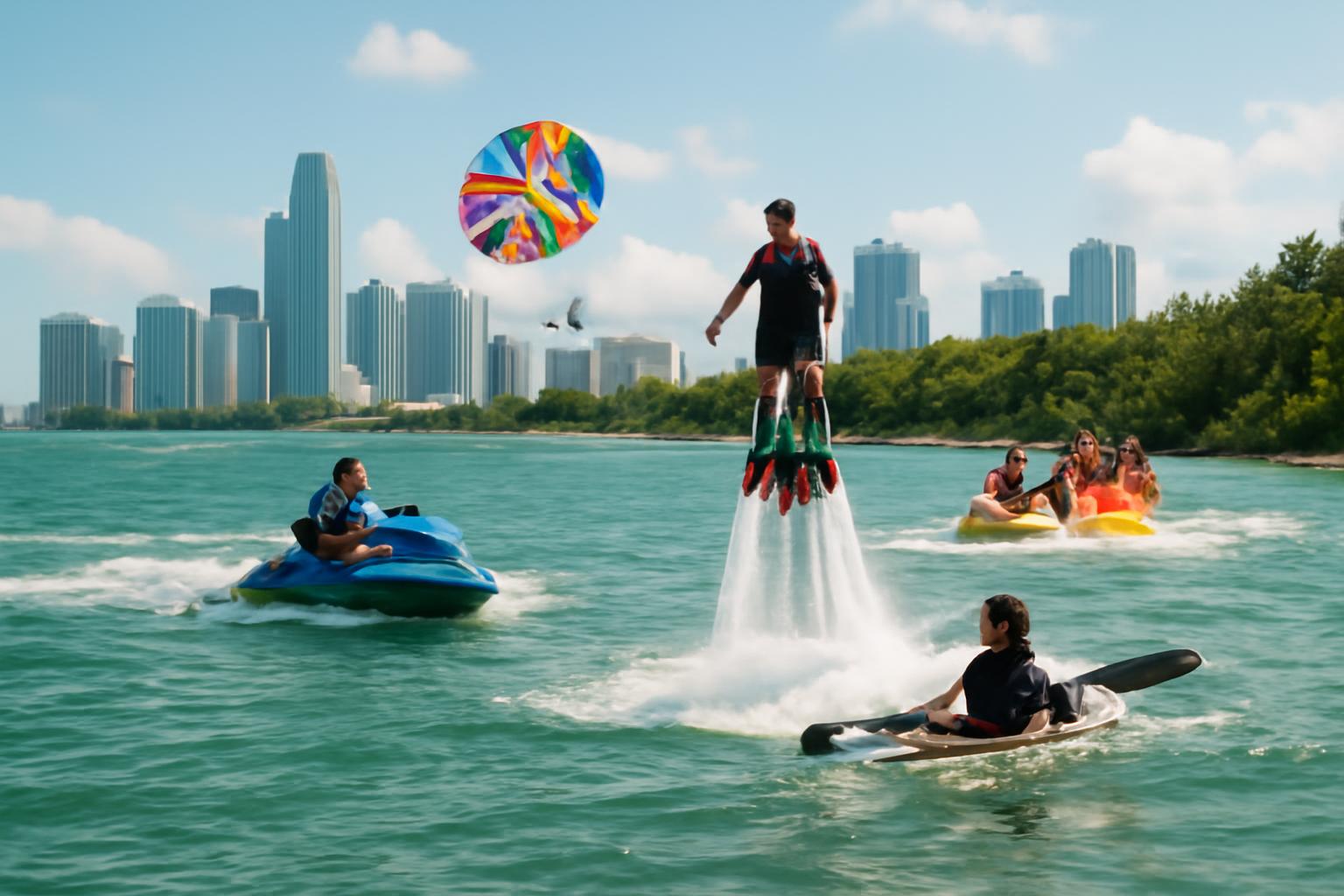
Options run from about $65 for a kayak tour to $295 an hour for wake sports. Checks include age minimums, Florida's boater-safety rule and what the price includes.
Overview
The best water sports in Miami are jet skiing and parasailing on Biscayne Bay, flyboarding, banana boat rides, speedboat tours, clear-kayaking the Oleta River mangroves, snorkeling off Key Biscayne, paddleboarding, and coached wake sports. Expect roughly $65 for a kayak tour up to $295 an hour for wake sports, and check three things before you pay: age minimums, Florida’s boater-safety rule, and what the price actually includes.
One thing worth knowing up front: nearly every “best water sports” ranking you’ll find online is an operator landing page or a booking platform selling what it ranks. This guide compares the activities themselves, so you can pick what fits your group first and choose an operator second.
The Top Water Sports in Miami
Miami’s water sports fall into three natural groups: motorized thrills, calm nature-focused paddling and snorkeling, and coached wake sports behind a boat. The roster is remarkably consistent across every operator and booking platform: parasailing, jet skiing, flyboarding, banana boat and tube rides, speedboat tours, kayaking, snorkeling, paddleboarding, wakeboarding, and boat tours appear on nearly every list, from operator sites like Miami Watersports to the official Greater Miami tourism bureau. The differences that matter to you are pace, price, and who in your group can participate, so here is each group in plain terms.
Motorized Thrills: Jet Ski, Parasailing, Flyboard, Banana Boat, and Speedboat
Jet skiing is the signature ride. The classic format, per the miamitourism.org visitor guide, is a one-hour guided tour of Biscayne Bay looping past Star Island, the downtown skyline, and the Venetian Islands, and Miami Watersports runs one-hour group rides with drivers 16 and up (confirm the departure marina when booking).
Parasailing is the easiest big-feeling activity. Miami Watersports advertises flights from $115 per person, ages 5 and up, flying solo, in a pair, or as a trio. Set expectations on time, though: the advertised “10 min flight” matches the miamitourism.org guide’s note that 8 to 12 minutes aloft is standard, and that flight sits inside a longer boat outing, listed at about 90 minutes on Cool Everglades. You are on the water for a while; you are in the air for roughly ten minutes.
Flyboarding straps your feet to a water-jet board that lifts you above the surface. Miami Watersports includes instruction and sets the minimum at age 16. Banana boat and tube rides are short towed group rides, and Cool Everglades lists Miami’s only offshore speedboat tour, a 45-minute ride across Miami waters, as a sit-down alternative for people who want speed without steering.
Calm-Water Options: Kayaking, Snorkeling, and Paddleboarding
If your group wants nature over horsepower, Miami has a full calm-water menu. The standout is the clear kayak tour on the Oleta River: Miami On The Water describes paddling through mangroves in a transparent kayak “offering a glimpse into the underwater world below,” with tours from $65, which makes it one of the cheapest guided options in the city.
Snorkeling is better than first-timers expect. The Greater Miami tourism bureau points snorkelers toward the waters from Key Biscayne out to Emerald Reef, calling Miami’s underwater world “closer than you think.” The same bureau page confirms paddleboarding, windsurfing, and even surfing are all doable here, so if someone in your group would rather move under their own power, they have real choices, not consolation prizes.
These options also suit travelers without a car. Kayak and paddleboard launches sit at fixed waterfront points, so you can build a morning around one location rather than driving between marinas.
Wake Sports: Wakeboarding, Wakesurfing, and Wakefoiling
Yes, you can learn wake sports in Miami with proper coaching, and this is the niche most tourist lists skip. Watersports Paradise offers tubing, wakeboarding, waterskiing, wakesurfing, and wakefoiling with Level 1 USA Waterski and Wakeboard certified coaches, catering to everyone from beginners to seasoned pros, with sessions from $295.
Wakefoiling is the newest of the group: a hydrofoil under the board lifts you above the wake once you have speed. Miami On The Water lists wakefoiling at ages 14 and up and describes its lessons as suitable for all levels, beginner to advanced. At $295 per hour this is the priciest activity per person-hour in this guide, but it is also the only one where you leave with a genuinely new skill and certified instruction rather than a ride. If your group includes a teen or adult who already snowboards or surfs, this is the upgrade pick.
Which Water Sport Should You Pick?
Match the activity to your group’s nerves, ages, and interests rather than to whatever an operator’s homepage features first. Broadly, the fit works like this:
- Thrill-seekers: jet ski (the Biscayne Bay one-hour tour), flyboard, or the 45-minute offshore speedboat tour for speed without driving.
- Families and mixed groups: parasailing (ages 5+), banana boat rides, tubing, and boat tours, which let everyone participate together.
- Nature lovers: the clear kayak tour through the Oleta River mangroves or snorkeling toward Key Biscayne and Emerald Reef.
- Skill-builders: coached wakeboarding, wakesurfing, or wakefoiling with certified instructors.
If someone in your group is nervous, the first-person reviews on Miami Watersports are genuinely reassuring. One flyboard customer wrote, “I can’t swim and was nervous about flyboarding,” and credited a patient instructor named Pierre; another wrote, “I’m afraid of high places but the parasail was nice and relaxing. Recommend to any family.” Instruction is included for flyboarding per the same operator page, and the miamitourism.org guide notes parasailing lifts and lowers you smoothly enough that “even nervous first-timers handle it well.” Non-swimmers wear vests on towed activities, but if swimming ability is a concern for your group, confirm the operator’s policy for that specific activity before you book.
What Miami Water Sports Really Cost
Plan on roughly $65 to $295 per person depending on the activity, and treat every advertised “from” price as a starting point, not an all-in total. The table below reconciles the figures published across operator pages and the miamitourism.org visitor guide, with notes on what each price does and does not cover.
| Activity | Typical advertised price | What the price covers | Source |
|---|---|---|---|
| Kayak tour (clear kayak, Oleta River) | From $65 | Guided tour, kayak included | Miami On The Water |
| Parasailing | $115–$140 per person (tandem $80–110/person per the tourism guide) | ~90-minute boat outing, 8–12 minutes aloft | Miami Watersports; miamitourism.org; Cool Everglades |
| Jet ski (1 hour) | From $120 advertised; $135–$195 realistic for a single rider on a one-hour tour | Varies widely; see below | Cool Everglades; Miami On The Water; miamitourism.org |
| Banana boat / tubing | From $120 (tubing listed from $295 as a private boat session) | Towed group ride | Miami On The Water |
| Speedboat tour | Priced per seat; 45-minute offshore ride | Ride only | Cool Everglades |
| Wake sports (wakeboard, wakesurf, wakefoil) | From $295 per hour | Boat, gear, certified coach | Watersports Paradise |
For whole-day budgeting, the miamitourism.org guide offers two useful benchmarks: about $300 to $400 for two people covers a one-hour jet ski combo with a parasail flight plus lunch and tips, while a more relaxed half-day of kayaking or snorkeling runs closer to $150 to $200 for two. Those two numbers are a better planning anchor than any single “from” price.
Why Jet Ski Prices Range from $79 to $179
The same one-hour jet ski product shows up at wildly different advertised prices, from the $120 advertised on Miami On The Water to the higher realistic rates the miamitourism.org guide benchmarks. The miamitourism.org guide’s neutral benchmark is $135 to $195 for a single rider on a one-hour tour, or $165 to $225 for two people sharing a ski.
The spread comes down to three things. First, rider count: single-rider and two-rider prices differ, and the cheapest headline usually assumes conditions most groups will not match. Second, what’s bundled: guided-tour packaging costs more than a bare rental slot. Third, fees: teaser rates often exclude fuel, tax, and marina fees that get added later. The cheapest genuine option in the city, per miamitourism.org, is a mid-day weekday rental from Haulover Marina or Pelican Harbor, often starting around $90 for 30 minutes, before adding fuel (about $25) and tax, booked directly from the marina rather than through a reseller. When comparing quotes, ask for the all-in price for your exact rider count and duration.
Taxes, Fuel, and Add-On Fees to Expect
On top of the advertised price, expect some combination of tax, fuel, and marina fees, because the booking pages in this market openly contradict each other. Advertised prices in this market often exclude add-ons: budget jet ski rentals add fuel (about $25) and tax, per miamitourism.org, so the headline price and the all-in total can differ. No wonder travelers show up unsure what they’ll pay.
The documented add-ons to ask about: fuel (about $25 on budget jet ski rentals, per miamitourism.org), sales tax, marina or dock fees collected on arrival, and optional upgrades like the “high-flyer” parasail run on a 1,200-foot line, which miamitourism.org prices at about $30 more. One Tripadvisor reviewer noted, “The price we paid online was exact, and no extra fees were needed when we arrived, unlike other comments I was reading,” which tells you both outcomes happen in this market. Get the all-in number in writing before you pay a deposit.
Budget and Low-Cost Options
You can get on the water in Miami for well under $100 a person. The cheapest guided options in the evidence here are the clear kayak tour from $65 (Miami On The Water) and the roughly $90 mid-day weekday 30-minute jet ski slots from Haulover Marina or Pelican Harbor cited by miamitourism.org, though remember fuel and tax on top. The miamitourism.org half-day benchmark of $150 to $200 for two covers a relaxed kayaking or snorkeling outing.
Cheaper still: swimming and shore-based time in the water cost nothing beyond getting to the beach, and the tourism bureau’s coverage of paddleboarding and shore-accessible snorkeling grounds means you can rent gear by the hour rather than booking a full tour. Exact rental rates for DIY paddleboards vary by beach and vendor, so confirm on the spot.
Age Minimums and the Best Picks for Families
Most Miami water sports welcome kids, and the age floors are specific: parasailing and banana boat rides start at age 5, tubing and waterskiing at 8, wakefoiling at 14, and flyboarding and jet ski driving at 16. These come straight from operator pages, and they are go/no-go numbers, so check them against your youngest traveler before you build the day.
| Activity | Minimum age | Source |
|---|---|---|
| Parasailing | 5+ | Miami Watersports |
| Banana boat ride | 5+ | Miami Watersports |
| Tubing / waterskiing | 8+ | Miami On The Water |
| Wakefoiling | 14+ | Miami On The Water |
| Flyboarding | 16+ | Miami Watersports |
| Jet ski (as driver) | 16+ at Miami Watersports; the miamitourism.org guide says some operators require drivers to be 18 with ID | Miami Watersports; miamitourism.org |
Note the jet ski line: passengers as young as 5 can ride along in a vest per miamitourism.org, but the driver minimum varies by operator between 16 and 18, so confirm before promising a teen the handlebars. Cool Everglades maintains a kid-friendly ranking drawn from its verified reviews, and parasailing, banana boats, and boat tours consistently lead that category.
Large mixed groups work well here too. One Miami Watersports review describes a 14-member group with 8 adults and 6 kids doing a combined outing, which is a realistic model for a multigenerational trip: book activities with age-5 floors so everyone participates, and let the 16-plus crowd add a jet ski or flyboard session at the same marina.
Where to Go: Marinas, Bays, and the Best Waters for Each Sport
Pick your marina first and your day gets simpler, especially if you’re traveling without a car, since each launch point is a single destination you can reach by rideshare or transit rather than a driving circuit. The main bases, per the operator pages and the miamitourism.org guide:
- Miami Watersports (confirm the departure marina when booking): the operator offers parasailing, jet skiing, flyboarding, and banana boat rides, which can make it a convenient one-stop base for combining activities.
- Miami Beach Marina (South Beach, near 5th Street): Cool Everglades notes its parasail boats depart from here as Miami Beach’s only parasail operator, and miamitourism.org lists it as a main parasail launch alongside Haulover Marina and Bayside.
- Haulover Marina and Pelican Harbor: the budget jet ski spots, with mid-day weekday 30-minute rentals from about $90 per miamitourism.org.
- Oleta River (North Miami): the clear kayak mangrove tours from Miami On The Water.
As for the water itself: jet ski tours run Biscayne Bay past Star Island and the downtown skyline (miamitourism.org), the tourism bureau highlights jet skiing around Biscayne Bay and South Beach, and the best snorkeling stretches from Key Biscayne out to Emerald Reef per the same bureau. If your hotel is in South Beach, Miami Beach Marina is walkable or a short ride; if you’re staying in Coconut Grove or downtown, Dinner Key is the closer call.
Do You Need a License? Florida’s Jet Ski and Boating Rules
You do not need a boating license to jet ski in Miami, but if you were born on or after January 1, 1988, Florida law requires boater-safety education before you drive any vessel with a motor of 10 horsepower or more, which includes jet skis. Per the Florida Department of Highway Safety and Motor Vehicles, you must have completed a NASBLA-approved boating education course (or passed an equivalent or temporary certificate exam) and carry both a boating education ID card and photo identification on the water.
Visitors have two practical paths. If you already hold a boater-safety card from another state that meets or exceeds Florida’s requirements, FLHSMV says you do not need a separate Florida card. If you don’t, you can obtain a temporary certificate from approved vendors around the state; the miamitourism.org guide notes the free course takes about 30 minutes online and can even be done at the dock before you launch. One caution on conflicting information: an operator blog (Miami Connect Bookings) claims the temporary certificate lasts one year, but the state’s own FLHSMV page says the temporary certificate is valid for 90 days, and the state source is the one to trust. For a 90-day validity window, any normal vacation is covered either way.
Two more rules worth knowing before you throttle up: miamitourism.org notes Coast Guard rules cap speeds at 15 mph inside marina zones, with full throttle only in the open bay, and passengers of any age ride in vests. The FLHSMV rule applies to whoever drives, so if a companion born before 1988 takes the handlebars, the education requirement doesn’t apply to them.
The Best Time of Year for Miami Water Sports
Winter and early spring give you the driest water-sports weather, but you’ll share it with the biggest crowds. Tripadvisor’s month data for Miami water sports shows March as the busiest month, at 72°F with only 6 days of rain, while August is the wettest at 83°F with 19 rain days, and June is the least busy at 82°F with 17 rain days.
That’s the tradeoff in one line: December through March buys reliable weather at peak demand, and summer buys empty boats at the cost of near-daily rain risk. The practical sweet spot is the shoulder between those extremes, when rain days are falling and the winter crowds haven’t fully arrived, though the sourced month data covers March, June, and August specifically, so treat the shoulder framing as reasoning rather than a published statistic.
Booking lead time follows the same curve. Exact how-many-days-ahead numbers aren’t published anywhere in this market beyond generic “likely to sell out” badges, so the honest guidance is directional: in the documented busy winter and spring window, reserve as early as your dates firm up, especially for weekend slots and large groups. In the June-to-August low season you’ll have far more same-week flexibility, but build a weather backup into the plan, such as shifting a rained-out morning jet ski to an afternoon slot or swapping to the next day, and confirm the operator allows that (more on cancellation terms below).
How to Book Without Surprise Fees
Booking works the same across this market: you reserve online, most listings on platforms like Klook advertise free cancellation and instant confirmation, and operators like Cool Everglades badge free cancellation on individual outings such as the 90-minute parasail trip. The badges are real features, but they’re displayed without explained terms, and commonly excluded add-ons like fuel (about $25 on budget jet ski rentals, per miamitourism.org) and tax mean the advertised price and the price you pay can differ.
Before you pay, get answers to these questions in writing or on the booking page:
- Is sales tax included in the quoted price? Listings in this market state it both ways.
- Is fuel included? Budget jet ski rentals add roughly $25 in fuel per miamitourism.org.
- Are marina or dock fees collected at check-in? Some listings collect tax and a marina fee on arrival.
- What are the weight limits? Per miamitourism.org, solo parasail flyers usually need to be at least 130 pounds and tandems typically run 220 to 375 pounds combined.
- What is the exact cancellation deadline, and is the refund full? “Free cancellation” badges rarely state the cutoff.
- Does my quoted price match my rider count and duration? Teaser rates often assume a single rider or a shorter slot.
One Tripadvisor reviewer’s experience is the standard to aim for: “The price we paid online was exact, and no extra fees were needed when we arrived.” If an operator can’t confirm the all-in number before you book, that’s your answer about booking elsewhere.
How to Vet an Operator
The honest truth is that the public signals for vetting Miami water sports operators are thin. What exists: Tripadvisor’s named ranking (its 2026 list leads with Mark the Shark, Mr. Sea Boat Rentals, Miami Parasail, Happy Cruises Miami, and South Beach Party Boats) and operators’ self-reported review volume, such as Miami Watersports citing 2,500+ five-star reviews across Google, TripAdvisor, and Viator.
Use those signals for what they are: evidence that an operator has served many customers without a pattern of complaints. Read recent reviews for the specific activity you’re booking rather than the overall score, and look for mentions of surprise fees or cancellation disputes, since Cool Everglades and Tripadvisor reviews surface both. What no source in this market publishes: independent safety records, insurance verification, or licensing comparisons. Those aren’t available publicly, so ask the operator directly about Coast Guard licensing and insurance before booking, and treat a clear answer as a good sign in itself.
Weather Cancellations and Refunds
If weather cancels your trip, what happens to your money depends entirely on the operator’s policy, and no operator in this evidence publishes its weather terms in full. What is documented: many listings advertise free cancellation (Klook badges it alongside instant confirmation, and Cool Everglades badges it on its parasail outing), and Tripadvisor’s month data shows summer brings 17 to 19 rain days per month, so a weather disruption is a realistic scenario for a June-to-September trip, not an edge case.
Confirm three things before booking, especially in summer: who makes the weather call (you or the operator), whether the default outcome is a refund or a reschedule credit, and the deadline for canceling on your own terms if the forecast looks bad. Named-operator policies vary and aren’t verified here, so treat this as a required question, not an assumption. A simple backup plan helps too: book morning slots early in your trip so a rainout can slide to a later day.
Combo Packages: When Stacking Activities Pays Off
Combo packages, such as a parasail flight plus a jet ski hour at the same marina, are usually the best value for groups doing more than one activity. Miami Watersports offers parasailing, jet skiing, flyboarding, and banana boat rides through one operator — confirm the departure marina when booking — which is what makes stacking practical: one trip to the marina, one parking or rideshare cost, one check-in and waiver cycle, and back-to-back time slots instead of a second outing on another day.
The miamitourism.org benchmark gives you the budgeting anchor: roughly $300 to $400 for two people covers a one-hour jet ski combo with a parasail flight, plus lunch and tips. Exact combo discounts vary by operator and aren’t published consistently, so compare the combo quote against the two activities priced separately, and confirm the all-in figure covers both activities’ taxes and fees, using the same checklist above. If the combo saves money or even just consolidates your day into one marina visit, it’s worth taking.