
A Clear Guide to Miami Mint’s Cool, Sweet and Citrusy Flavor
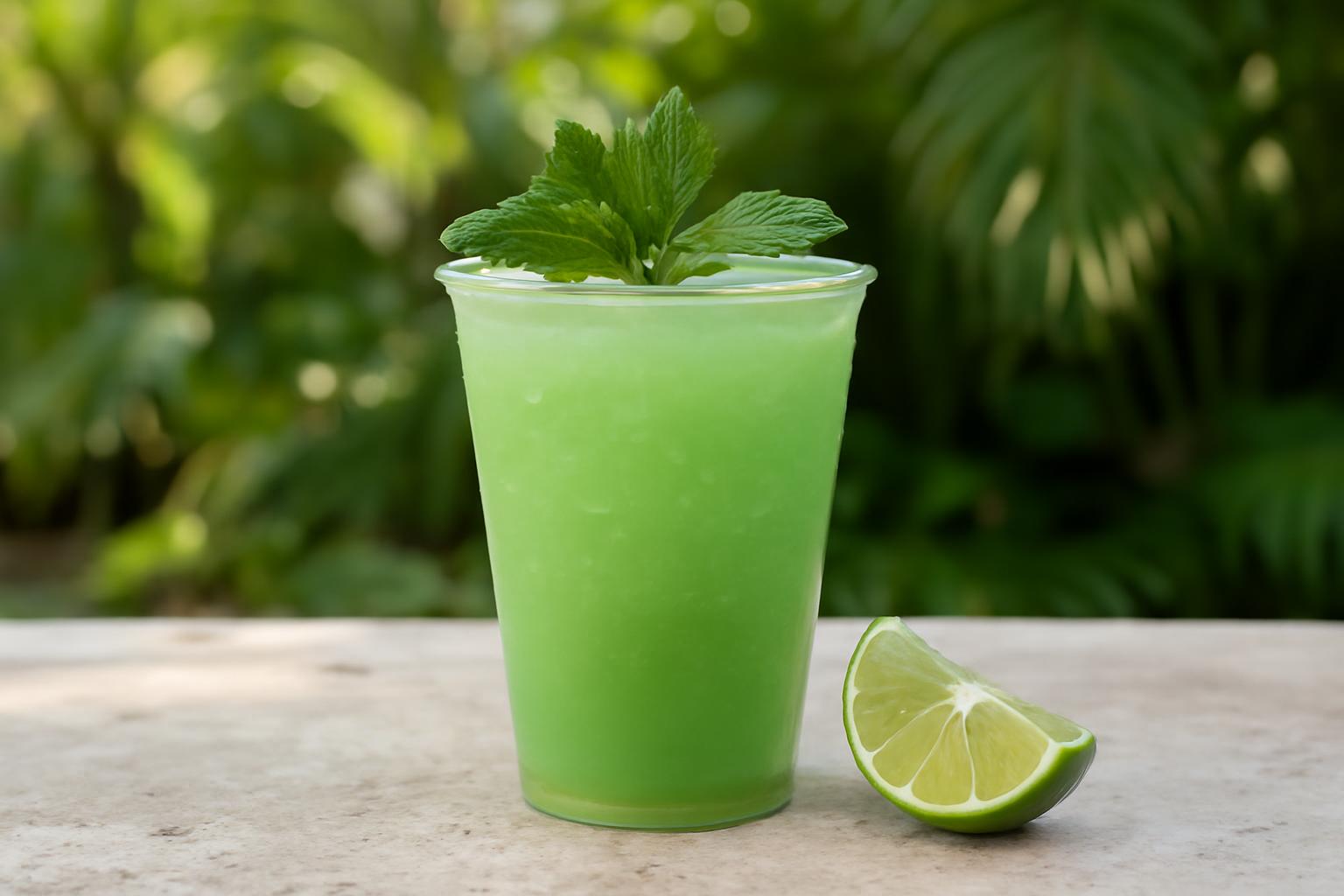
Commercial reviewers commonly report mild sweetness and a lingering chill. Lime, tropical warmth, mint type and ice level depend on the particular version.
The short answer: what Miami Mint usually tastes like
Miami Mint is generally described as a mint-forward vape flavor with mild sweetness and a cooling finish. Some versions add lime, mixed citrus, tartness or loosely defined tropical notes, but mint usually remains the central flavor. A multi-brand retailer overview summarizes the category as a slightly sweet mint profile with citrus undertones, while noting that many brands sell their own versions (VapeJuice.com’s Miami Mint overview).
The broad sensory pattern is:
- Fresh mint at the beginning
- Restrained sweetness or a bright accent in the middle
- Cooling that becomes especially noticeable on the exhale
- A lingering herbal, minty or lightly citrus finish
Depending on the product and reviewer, the mint may evoke spearmint gum, peppermint, wintergreen or a generic fresh-mint flavor. Citrus-accented versions are sometimes compared with a mint-and-lime mojito. Those comparisons are subjective shorthand, not recipes: they do not establish particular ingredients, and “mojito-like” does not imply alcohol.
It is equally inaccurate to say that every Miami Mint tastes like toothpaste or plain menthol. Some reviewers describe particular products as leafy, gum-like, candy-leaning or cocktail-like. Others may perceive medicinal or toothpaste-like qualities, especially in versions they interpret as wintergreen- or peppermint-leaning. An affiliate-supported roundup illustrates this range by describing different products as spearmint-like, wintergreen-like, citrus-tart or strongly cooling (Vapegrl’s Miami Mint roundup).
The least predictable part of the name is the cooling intensity. Reports range from moderate and breezy to strongly icy. Mint flavor and physical coldness are related but distinct sensory dimensions, so a version can taste like relatively soft herbal mint while still producing a forceful cooling sensation.
Miami Mint is therefore best treated as a shared commercial flavor label, not a demonstrated standardized formula. The name alone cannot establish the precise mint style, sweetness, citrus intensity or ice level.
Evidence note: This article is a desk synthesis of commercial tasting descriptions, not a report of firsthand testing. The supplied evidence comes predominantly from vape retailers, distributors, storefronts and affiliate-supported reviewers. It does not include independent laboratory analysis, verified formulation disclosures, representative consumer surveys or a methodologically transparent independent sensory comparison. The descriptions can set broad expectations, but they cannot guarantee how an unspecified product will taste.
Breaking down the flavor: mint, sweetness, citrus and cooling
The clearest way to understand Miami Mint is to separate it into four principal dimensions: mint character, sweetness, bright accents and physical cooling. This also helps explain why two accounts can sound different without necessarily contradicting each other.
| Sensory dimension | Commonly reported range | Practical interpretation |
|---|---|---|
| Mint | Dominant | Usually the central flavor; various products are perceived as spearmint, peppermint, wintergreen or generic mint |
| Sweetness | Low to moderate | Typically supports the mint, although some versions seem more like candy or gum |
| Citrus or tropical accent | Optional and usually secondary | May resemble lime, lemon zest, mixed citrus, tartness or nonspecific tropical freshness |
| Cooling | Moderate to strong, with product-specific exceptions | May feel breezy, crisp or intensely icy independently of the aromatic mint strength |
| Aftertaste | Herbal, cool, lightly sweet, citrus-tinged or lingering | Depends on the product, device and individual palate |
Mint character: Spearmint-leaning descriptions tend to suggest a softer, greener or more herbal flavor. Words such as leafy, garden mint and fresh gum generally point in that direction. These are reported perceptions, not evidence that the corresponding plants or compounds appear in a product.
Sweetness: Commercial accounts generally place sweetness below mint in the flavor hierarchy. It may round off a brisk mint note, create a gum-like impression or soften a citrus edge. “Slightly sweet” is a reasonable category-level expectation, but it is not a fixed rating.
Citrus and tropical accents: Lime is a frequently named supporting note, with other accounts mentioning lemon zest, mixed citrus or mild tartness. In these descriptions, the bright note lifts the mint rather than turning the profile into lemonade or a conventional fruit blend. One commercial flavor guide describes its benchmark as spearmint-forward with soft sweetness, lime and citrus, while acknowledging variation in citrus prominence and cooling among products (TopVapeFlavors’ Miami Mint guide).
“Tropical freshness” deserves more caution. Some sources use that expression without identifying a fruit. It should not be converted into a definite mango, pineapple, coconut or passion-fruit note unless the exact product description names one. In some reviews, “tropical” may simply denote an indistinct bright or warm background impression.
Cooling sensation: Coldness is not identical to mint aroma. A softly herbal profile can finish with substantial ice, while a sharper peppermint-like profile may feel only moderately cold. Asking whether a product is “minty” and asking whether it is “icy” are therefore two different questions.
The disagreement over cooling demonstrates the variation. Broad category descriptions often call the chill balanced, smooth or moderate. By contrast, an authorized JNR distributor’s proprietary assessment rates its specific formulation at 9.0 out of 10 for cooling, compared with 5.0 out of 10 for sweetness and 3.0 out of 10 for citrus zest (JNR distributor’s Miami Mint assessment). Those are subjective retailer ratings without a disclosed controlled protocol, not standardized measurements for the category.
When reading an exact product description, separate four questions:
- What kind of mint does the reviewer perceive?
- How prominent is sweetness relative to mint?
- Is citrus or fruit specifically identified?
- How strong is the reported physical chill?
That approach is more informative than treating “Miami Mint” as one indivisible flavor note.
How the taste can change from inhale to aftertaste
Commercial reviews often describe Miami Mint as developing over the course of a draw. The progression below is a synthesis of those accounts, not a sequence every product will reproduce.
Inhale: The opening is commonly described as crisp, leafy or brisk mint. A retailer’s review of a Lost Mary profile specifically reports peppermint at the beginning, followed by sweeter spearmint and comparatively light cooling. That description applies to the reviewed Lost Mary products rather than every device carrying the Miami Mint name (eJuiceDB’s Lost Mary Miami Mint review).
Middle: As the opening mint recedes, some accounts identify a softer herbal quality. This is also where mild sweetness, lime, citrus zest, tartness or indistinct tropical warmth may become easier to notice. In a strongly mint-led version, the supporting layer may register merely as brightness rather than as an identifiable fruit.
Exhale: Cooling is often reported as more apparent on the exhale. The aromatic mint may seem to fade while the cold sensation persists in the mouth or throat. In moderate versions, this is described as breezy or crisp; in high-ice products, it can become the dominant part of the profile.
Aftertaste: Reported finishes include cool mint, herbs, restrained sweetness and light citrus. A retailer tasting panel recorded a 10–15-second herbal-citrus aftertaste for the Miami Mint samples it assessed (TopVapeFlavors’ tasting-panel comparison). That is a panel-specific observation from a commercial source, not a standard duration or a result that can be generalized to every product.
The mojito comparison is most useful as a description of structure: mint forms the base, a little sweetness rounds it, lime-like brightness may appear underneath, and the finish remains cool and aromatic. It does not establish ingredients, alcohol content or a complete cocktail flavor. Some versions may have no clearly detectable lime.
Similarly, words such as “smooth” and “clean” should be interpreted as sensory judgments. They may describe how a reviewer perceived the taste, mouthfeel or throat sensation, but they do not demonstrate purity, manufacturing quality, safety or reduced health risk.
Negative descriptions must also remain product-specific. A reviewer may report that one version is not bitter, syrupy, harsh, medicinal or toothpaste-like, but another formulation—or another person’s palate—may produce a different impression. The same wintergreen-like quality might seem pleasantly gum-like to one reviewer and medicinal to another.
The timing can vary as well. Sweetness may be noticeable immediately rather than emerging in the middle. Strong cooling may begin with the inhale instead of arriving chiefly on the exhale. A product with a more prominent fruit base may open with sweetness or brightness even when mint remains dominant overall.
The progression is therefore best used as an expectation-setting map:
- Opening: crisp, brisk or leafy mint
- Development: softer mint, restrained sweetness or brightness
- Close: cooling or ice
- Finish: lingering mint, herbal character or citrus
Why Miami Mint tastes different across brands
Miami Mint functions as a shared market label, not a demonstrated industry formula. Brands can use different flavor balances, cooling levels and device designs while placing the same name on the package. Even within one brand, separate device lines may emphasize different notes.
The following comparison is organized by reported sensory emphasis, not quality or rank.
| Example | Reported mint style | Reported accent | Reported cooling | Scope and source |
|---|---|---|---|---|
| Lost Mary review | Crisp peppermint followed by sweeter spearmint | Subtle sweetness | Light to moderate | One retailer’s assessment of specific Lost Mary products; not a description of every Lost Mary device |
| Geek Bar reviews | Smooth or brisk mint, sometimes interpreted as spearmint or wintergreen | Slight sweetness, citrus tartness or vague tropical freshness | Balanced to substantial and potentially mode-dependent | A synthesis of commercially interested reviews rather than a manufacturer formulation disclosure |
| JNR distributor review | Sweet, herbaceous spearmint compared with white gum | Light citrus zest | Very strong in the distributor’s proprietary rating | Applies to the reviewed JNR formulation, not the entire category |
| Lost Mary MT15000 description | Mint-forward | Noticeable but reportedly restrained citrus | Not consistently quantified | Product-specific retailer description |
| Lost Mary MO20000 Pro description | Cool, crisp mint | Lime cutting through sweetness | Icy finish | Does not establish the profile of other Lost Mary models |
| Off Stamp description | Prominent mint | Broad tropical-fruit base | Product-dependent | “Tropical fruit” is less specific than a named fruit note |
One retailer guide provides the last three examples: it describes a Lost Mary MT15000 version as having a noticeable but restrained citrus kick, a Lost Mary MO20000 Pro version as lime-accented with an icy finish, and an Off Stamp version as mint over a tropical-fruit base (Vaping.com’s multi-product Miami Mint guide).
These accounts suggest several possible emphases:
- Mint-forward: Little fruit is apparent, and herbal or brisk mint carries the profile.
- Citrus-forward: Lime, zest or tartness is clearly noticeable behind the mint.
- Tropical: A broad fruit-like impression supports the mint without necessarily identifying one fruit.
- Candy-leaning: Sweetness and gum-like qualities become more prominent.
- High-ice: Physical coldness is the defining characteristic.
- Layered mint: Different reviewers perceive peppermint, spearmint or wintergreen at separate points.
Commercial sources disagree over whether citrus is obvious, subtle or absent. That disagreement may reflect genuine formulation differences, device conditions, individual perception or different language for the same ambiguous brightness. It is a reason to avoid declaring one definitive recipe.
The practical implication is simple: a reader looking for a mint-forward, citrus-forward, tropical, candy-like or high-ice profile needs the description of the exact brand and device model. The category name alone cannot reliably identify that emphasis.
Current price, availability, advertised capacity and nicotine concentration do not clarify flavor and may change over time. None should be inferred from a general Miami Mint taste description.
Miami Mint vs. Cool Mint and plain menthol
The table below summarizes tendencies in the supplied retailer comparisons. It is not a standardized market taxonomy, and products from different brands may reverse these patterns.
| Dimension | Miami Mint | Cool Mint | Plain menthol in the supplied comparisons |
|---|---|---|---|
| Flavor complexity | Usually portrayed as layered mint with possible sweetness and bright accents | Generally portrayed as direct and mint-focused | Presented chiefly as a simple reference for sharp coldness |
| Sweetness | Often low to moderate | Usually described as minimal | Not treated as a central feature |
| Citrus or fruit accents | Optional lime, citrus, tart or tropical notes | Usually absent from straightforward descriptions | Absent from the supplied comparisons |
| Cooling | Moderate to strong and highly variable | Often positioned as strongly cold and crisp | Commonly portrayed as cooling-led |
| Overall impression | Aromatic, rounded or nuanced | Cold, crisp and direct | Relatively singular and sharp |
In one Geek Bar Pulse comparison, a retailer describes Miami Mint as slightly sweeter, smoother and less aggressively icy than Cool Mint. Cool Mint is presented as more direct, with strong cooling and minimal sweetness (Pink Smoke Shop’s Geek Bar comparison).
That is a product-specific commercial comparison, not a universal rule. Other Miami Mint products receive very high cooling ratings, so a high-ice Miami Mint could feel colder than a restrained Cool Mint from another line.
Plain menthol is used more narrowly in the supplied commercial comparisons. Miami Mint is portrayed as more aromatic, somewhat sweeter or more likely to include citrus-like brightness, while menthol serves as a reference for a simpler, cooling-led profile. The evidence is too limited to turn that contrast into a definitive classification of every menthol or Miami Mint product.
For readers comparing descriptions rather than seeking a recommendation:
- Cool Mint tends to signal a direct mint profile with pronounced coldness.
- Miami Mint tends to signal mint with some combination of sweetness, citrus, herbs or loosely tropical nuance.
- Plain menthol, as used in the supplied comparisons, signals a more singular focus on sharp cooling.
A fruit-and-ice flavor offers another contrast. One commercial tasting panel judged its Miami Mint samples less sweet and less strongly chilled than its Watermelon Ice samples, with herbal spearmint replacing prominent fruit. That finding applies only to the products and scoring system used by that panel.
Taste and throat sensation are separate from safety. A flavor described as smoother or less aggressive is not thereby safer, healthier or less addictive.
How power, airflow and device design affect perceived flavor
The supplied reviews report differences associated with hardware, power mode, wattage, airflow and adjustable cooling features. These are subjective observations from commercial reviewers, not controlled experiments establishing universal cause and effect.
A retailer review of Geek Bar Miami Mint reports that Pulse Mode produces stronger flavor and a colder hit than Regular Mode (eJuiceDB’s Geek Bar Miami Mint discussion). In that reviewer’s experience, changing the mode altered both flavor intensity and cooling.
An authorized JNR distributor similarly reports that open airflow makes its Miami Mint seem breezier, while tighter airflow creates a denser mint impression (JNR distributor’s airflow observation). This is a product-specific assessment rather than proof that every device will behave in the same way.
It is important to distinguish reported flavor intensity from reported cooling intensity. A reviewer may experience both as stronger in a more intense operating mode, but a colder sensation does not demonstrate that the product contains more mint flavor. Likewise, a denser mint impression does not necessarily mean that the formulation has become colder.
Reviews may therefore conflict even when the flavor label is identical because reviewers could be using:
- Different brands or formulations
- Different device models or hardware generations
- Different operating modes
- Different airflow positions
- Different adjustable cooling settings
- Different personal standards for “sweet,” “minty” or “icy”
These variables do not explain every disagreement; the underlying formulations may also differ. They simply make category-level comparisons less precise.
No setting should be treated as the uniquely correct expression of Miami Mint based on this evidence. Device context is relevant because a report of a breezy, moderate mint and a report of a dense, icy mint may concern different formulations, different delivery conditions or both.
How confident can we be in these taste descriptions?
Confidence should be proportional to the evidence. The supplied taste material comes almost entirely from retailers, storefronts, distributors, brand-connected editorial teams and affiliate-supported reviewers. These publishers have commercial incentives, and the available pages generally do not provide controlled tasting protocols, independent laboratory analysis, verified ingredient lists or representative consumer surveys.
Recurring language can still reveal a broad family resemblance. Mint dominance, cooling and restrained sweetness appear repeatedly across separate commercial descriptions. However, repetition within a commercially interested source pool is not equivalent to independent scientific or consumer evidence.
Three boundaries are especially important:
- A perceived note is not a confirmed ingredient. A reviewer’s reference to spearmint, peppermint, wintergreen, lime, lemon zest, tropical fruit, sugar, menthol or ice does not prove that the named substance appears in the formulation.
- A tasting note is not universal. Another product or another person may produce a different impression.
- Pleasant flavor does not establish safety. Descriptions such as smooth, mild, clean or non-harsh do not demonstrate purity, reduced health risk or lower addiction potential.
Flavor perception also varies by person.
The most defensible confidence hierarchy is:
- High confidence: Commercial reviewers use Miami Mint to describe a cooling, mint-forward vape profile.
- Moderate confidence: Mild sweetness is commonly reported and usually secondary to mint.
- Lower confidence: An unspecified product will have a clearly perceptible lime, citrus, tropical, spearmint, peppermint or wintergreen quality.
- Low confidence: An unspecified product will produce a particular aftertaste duration, ice score or inhale-to-exhale sequence.
The broad family resemblance is clearer than any exact recipe.
This flavor name is associated in the supplied sources with vaping products. One cited retailer applies a 21-or-older purchase policy, but that store policy should not be treated as a universal statement of law (Vaping.com’s nicotine warning and age policy). Check the exact product label, manufacturer disclosure and applicable local rules rather than inferring nicotine content or legal eligibility from the flavor name.
Frequently asked questions
Is Miami Mint more minty or fruity?
Miami Mint is generally described as more minty than fruity. Mint is the dominant reported flavor, while lime, citrus, tartness or broad tropical notes usually act as supporting accents.
If an exact description leads with spearmint, peppermint or wintergreen and mentions citrus only briefly, the result is likely intended to be mint-forward. If it prominently emphasizes lime, tropical fruit or tartness, the bright layer may be easier to notice. The product-specific description is more informative than the category name.
Does Miami Mint taste like toothpaste, gum or a mojito?
It can remind reviewers of spearmint gum or a mint-lime mojito, depending on the formulation. Gum-like comparisons generally point to herbal mint and noticeable sweetness. Mojito-like comparisons suggest mint, mild sweetness and lime-like brightness.
Neither analogy applies to every version. A sharp peppermint- or wintergreen-like profile may seem medicinal or toothpaste-like to some people, even when another reviewer calls it fresh. The mojito comparison does not imply alcohol or a complete cocktail recipe.
Is Miami Mint sweeter or less icy than Cool Mint?
Some Geek Bar-specific retailer comparisons describe Miami Mint as slightly sweeter, more layered and less aggressively icy than Cool Mint. This is a tendency reported for those products, not a category-wide rule.
Other Miami Mint versions are described as intensely icy and could feel colder than another brand’s Cool Mint. When cooling intensity matters, check the exact model rather than relying on the shared flavor name.
Why does Miami Mint taste different from one brand or device to another?
The name does not represent one standardized formula. Brands can balance mint, sweetness, citrus, fruit and cooling differently. Device hardware, operating mode, airflow and adjustable cooling may also alter what a reviewer perceives as most prominent.
Personal reference points add another layer. One person may identify wintergreen where another detects generic mint; one may notice lime while another experiences only tart brightness. Reviews are most useful when they identify the exact brand, model and mode assessed.
Does Miami Mint contain nicotine?
The flavor name alone does not answer that question. Products sold under the Miami Mint name may contain nicotine, and retailer warnings state that nicotine is addictive, but the content must be verified on the exact package or through the manufacturer’s disclosure (Vapesourcing’s Miami Mint guide and nicotine warning).
Do not infer a nicotine concentration—or assume that a product is nicotine-free—from the flavor name.
Conclusion
Miami Mint is best understood as a family of cooling, mint-led vape profiles rather than one fixed recipe. Commercial reviewers commonly report mild sweetness and a lingering chill, while lime, citrus, tropical warmth, peppermint, spearmint, wintergreen and high-ice qualities depend on the particular version.
Use the exact brand and model description to identify the intended emphasis. Treat gum, mojito, citrus and mint-type comparisons as subjective tasting language—not as confirmed ingredients or a guaranteed experience.