
Make Refreshing Ceviche Mixto for Your Car-Free Miami Adventure
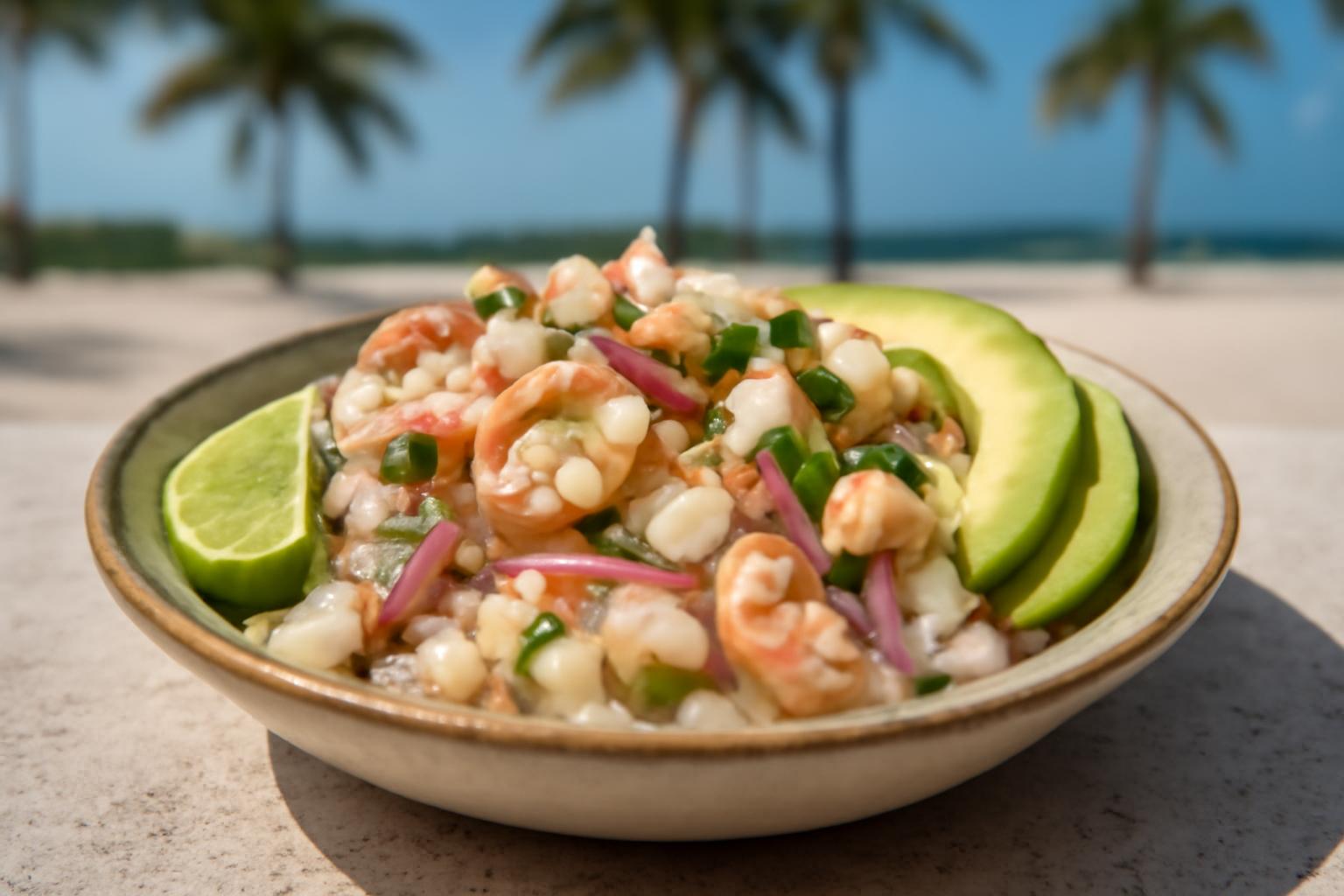
One cautious route blanches fish for about 2 minutes and also blanches shrimp, then chills the seafood for at least 15 minutes before marinating.
When Miami feels hot, bright, and too humid for another heavy lunch, ceviche mixto makes immediate sense. It is cold, sharp with lime, seafood-forward, and easy to portion after a beach morning, a paddle-board session, or a mid-afternoon reset back at your hotel suite or rental kitchen.
That said, most people searching ceviche mixto are really looking for two things at once: what the dish traditionally is, and how to make a realistic home version without turning a vacation grocery run into a culinary research project. This guide stays centered on that recipe-first need, while keeping the Miami context where it actually helps: small batches, limited kitchen gear, and food that works around beach time, rain, and neighborhood-based itineraries.
The other reason ceviche mixto deserves a little explanation is that it sits between tradition and flexibility. The Peruvian core is clear: fish plus other seafood, lime, onion, heat, and cold service. But once you start reading recipes, you quickly notice variation in seafood choices, marination times, garnish style, and how cautious home cooks want to be with raw or partly cooked seafood.
So the goal here is not to pretend there is one single universal bowl. It is to show you what defines ceviche mixto, what ingredients keep it recognizably Peruvian, where modern home versions branch off, and how to build a version that still tastes bright and right on a Miami trip.
What Is Ceviche Mixto?
Ceviche mixto is a Peruvian mixed-seafood ceviche: fish is the base, and it is joined by other seafood such as shrimp, squid, octopus, clams, or scallops. The seafood is typically marinated in lime juice with onion, garlic, celery, coriander or cilantro, hot chiles, and salt, then served cold as an appetizer (TasteAtlas).
The word mixto matters. In Peruvian ceviche language, the distinction is not subtle. Ceviche simple is the classic fish-only version, while ceviche mixto keeps the same basic idea and adds more seafood. New Peruvian’s overview of Peruvian ceviche types describes mixto as simple ceviche with additions such as shrimp, octopus, squid, clams, and scallops.
That difference shapes both taste and texture. Fish gives the dish its clean, delicate base. Shrimp adds sweetness and familiarity. Scallops contribute softness, squid brings more chew, and octopus adds a firmer bite when prepared well. Even when two bowls use the same lime and onion base, a fish-only ceviche and a mixed-seafood ceviche do not eat the same way.
For home cooks, that means ceviche mixto is less about obeying one rigid ingredient list and more about hitting the defining pattern: small seafood pieces, a bright acidic marinade, onion and chile for contrast, and cold service. If those pieces are in place, the bowl will read as ceviche mixto even if your exact seafood mix depends on what looked best that day.
It also explains why the dish translates well to travel cooking. A simple white fish and shrimp version still feels true to the category, while a bigger seafood mix can feel more restaurant-like if you have access to scallops, calamari, or cooked octopus.
Origins and Peruvian Tradition
Ceviche mixto is rooted in Peru and is widely presented as one of the country’s classic ceviche variations.
Within Peru, mixto is one branch of a broader ceviche family. Alongside it, you will commonly see ceviche simple for fish-only ceviche, ceviche de pulpo for octopus, and ceviche de conchas negras for black-shell versions. That family resemblance matters because ceviche mixto is not a separate culinary universe; it is a mixed-seafood variation built on the same Peruvian ceviche framework (New Peruvian).
Some more restaurant-style or chef-driven versions add leche de tigre, the intensely seasoned liquid built from ingredients such as fish, lime, celery, onion, garlic, and chile. In chef Ricardo Zarate’s published ceviche mixto recipe, the dish uses a blended Leche de Tigre Amarillo with lime, celery, red onion, garlic, ginger, sea bass, and blanched ají amarillo, and it can be served with glazed sweet potato and Peruvian choclo or standard corn (PBS SoCal).
That is a useful reality check for home cooks. Traditional does not have to mean simplistic, and authentic does not mean every bowl looks the same. Some versions are spare and direct. Others are more layered and sauce-driven. What keeps them connected is the Peruvian ceviche base, the mixed seafood, and the cold, citrus-led presentation.
For a Miami visitor, that distinction is helpful because it lets you choose your target. If you want a more classic Peruvian feel, keep the bowl restrained and serve it with sweet potato and corn. If you want a vacation-kitchen version that leans a little more modern, you can still stay within the spirit of ceviche mixto while being selective about ingredients and method.
Essential Ingredients for Ceviche Mixto
The easiest way to think about ingredients is in layers: core seafood, core cure, traditional savory accents, and optional modern add-ins.
1. The seafood base
Published recipes repeatedly return to mild or semi-firm white fish as the anchor. Common suggestions include sea bass, snapper, halibut, mahi-mahi, corvina, rockfish, cod, flounder, and similar ocean fish. Shrimp and scallops appear often as the second and third seafoods, while squid or octopus show up in more expansive versions (Feasting at Home).
If you are making ceviche mixto in a temporary kitchen, start smaller than restaurant menus do. Two seafoods are enough. If you want the bowl to feel more distinctly mixto, add scallops or a little calamari. If octopus sounds good but intimidating, buying it cooked is much easier than trying to nail both tenderness and marination on the same day.
A useful way to prioritize the seafood choices:
- Best beginner mix: white fish + shrimp
- Most classic-feeling upgrade: add scallops or squid
- Lowest-stress version: raw-cured or blanched fish + cooked shrimp or cooked octopus
- Budget-minded version: cod or another affordable mild white fish instead of premium sea bass
- Small-batch travel version: keep it to two seafoods unless you know you will finish it quickly
2. The acid and aromatics
Lime juice is the defining acid. After that, the most common flavor partners are red onion, cilantro, and fresh chile. Traditional descriptions of ceviche mixto also include garlic, celery, coriander or cilantro, and salt in the seasoning base, which gives the dish more savory depth than a plain lime-and-onion toss.
If you want the former, use onion, chile, salt, and at least a little garlic or celery. If you want something lighter and easier, onion, cilantro, chile, and lime will still get you very close.
3. The peppers
Heat varies widely across recipes, and the pepper choice changes the personality of the dish.
- Jalapeño keeps the bowl fresh and approachable.
- Serrano tastes greener and sharper.
- Habanero pushes more aromatic heat.
- Ají amarillo reads more recognizably Peruvian when you can find it.
In the Zarate recipe, ají amarillo is central to the leche de tigre, with yellow jalapeño suggested as a substitution if needed. In faster U.S. home versions, jalapeño is more common.
4. Traditional companions vs. modern add-ins
This is where many home recipes split.
Traditional Peruvian framing emphasizes the seafood, the lime, the onion, the chile, and the plate companions such as sweet potato and corn. Modern U.S. recipes often pull the side ingredients into the bowl itself with tomato, cucumber, mango, avocado, and olive oil. One Wall Street Journal recipe, for example, builds ceviche mixto with shrimp and white fish plus mango, tomato, cucumber, jalapeño, cilantro, onion, lime, and avocado (WSJ).
That does not make those bowls illegitimate.
A practical way to separate the two approaches:
More traditional core - white fish - shrimp and/or another seafood - lime juice - red onion - chile - cilantro - salt - optional garlic and celery - sweet potato and corn on the side
More modern home additions - tomato - cucumber - mango - avocado - olive oil
If you are cooking while traveling, restraint usually wins.
5. A realistic shopping list for visitors
For a small 2-to-4-serving batch, the simplest practical list is:
- 1/2 pound firm white fish
- 1/2 pound shrimp
- fresh limes
- 1 small red onion
- cilantro
- 1 or 2 fresh chiles
- salt
- optional garlic
- optional celery
- optional tomato or cucumber
- optional avocado
- optional sweet potato or corn for serving
That list gives you room to move in either direction: classic enough to feel grounded, flexible enough for a vacation kitchen, and small enough that leftovers do not become the whole plan.
Step-by-Step Ceviche Mixto Recipe
The method below is a practical home synthesis of the patterns that show up across published ceviche mixto recipes. It is designed for a small batch, modest kitchen setup, and a cautious mindset.
1. Choose and cut the seafood
A compact visitor-friendly batch starts well with about 1 pound total seafood, which matches the scale of one published 2-to-4-serving recipe built from 1/2 pound shrimp and 1/2 pound white fish (WSJ).
Cut the seafood into small, even, bite-size pieces. Published recipes range from roughly 1/4-inch cuts to 1/2-inch slices or cubes, depending on the seafood and the desired texture.
A good working pattern is:
- white fish in small cubes or slices
- shrimp peeled, deveined, and cut into bite-size pieces if large
- scallops thinly sliced if using
- calamari cut small
- cooked octopus chopped into bite-size pieces if using
If this is your first attempt, keep the mix simple. Fish and shrimp alone are enough to produce a satisfying ceviche mixto.
2. Decide whether to blanch
This is the biggest home-method choice.
One published ceviche mixto recipe takes a cautious route by blanching fish for about 2 minutes, blanching the shrimp as well, then chilling the seafood for at least 15 minutes before marinating. The same source explains that blanching is a safety-first adaptation for readers, while also noting that many traditional versions use raw seafood when the quality is trusted (The Sofrito Project).
In practice, that leaves you with three workable paths:
- Raw-cured route: closer to many traditional preparations, but only for seafood you trust completely
- Blanch-first route: more conservative for home cooks and travelers
- Mixed route: use raw-cured or blanched fish, plus cooked shrimp or cooked octopus
If you do blanch, cool the seafood fully before it goes into the lime.
3. Build the marinade
For a small batch, combine in a bowl:
- enough fresh lime juice to thoroughly coat the seafood
- finely sliced or diced red onion
- chopped cilantro
- minced chile
- salt
- optional grated garlic
- optional finely chopped celery
If you want a cleaner Peruvian line, stop there.
If you want a broader lunch bowl, hold back your tomato, cucumber, mango, or avocado until the end.
Some recipes add olive oil. Some do not. Some use a more complex leche de tigre rather than plain lime juice. For a travel kitchen, plain fresh lime with onion, chile, cilantro, and salt is usually the best starting point.
4. Marinate until the seafood turns opaque
There is no one universal ceviche mixto time because recipes vary by seafood type, cut size, and preferred firmness.
Mariano’s mixed-seafood version starts with 20 minutes in lime with habanero, then continues another 2 hours 40 minutes for a medium-to-medium-rare finish or 3 hours for a firmer, fully opaque texture (Mariano’s).
Much faster recipes exist. The Wall Street Journal version lets the seafood sit only until the fish turns opaque, about 5 to 10 minutes, while a general ceviche guide from Feasting at Home suggests about 30 minutes to 2 hours for 1/2- to 3/4-inch fish pieces. Those differences are not contradictions so much as proof that ceviche texture is partly a style choice.
A practical way to read those ranges:
- 5 to 10 minutes: very fresh, quick, lightly cured style
- 20 to 60 minutes: common home sweet spot for smaller pieces
- several hours: firmer, more aggressively cured texture
What you are watching for is not a magic safety moment. It is a texture change. The seafood loses its translucent look and becomes opaque and firmer. Stop when the texture suits the kind of bowl you want.
5. Add fresh finishers
Once the seafood is where you want it, fold in any ingredients you kept back for freshness:
- extra onion
- cilantro
- diced tomato
- cucumber
- mango
- avocado just before serving
Then taste again. Ceviche nearly always benefits from one last check for salt and lime.
This finishing stage is also where you decide what kind of ceviche mixto you have made. If the bowl is mostly seafood, lime, onion, and chile, it will read more classically. If it includes mango, cucumber, tomato, olive oil, and avocado, it will feel more modern and lunch-like.
6. Serve cold
Serve ceviche mixto as soon as it is ready, ideally chilled.
Published recipes suggest serving it with: - corn tostadas or tortilla chips - avocado - sweet potato - cooked corn - plantain or sweet potato chips in some modern variations
For a Miami trip, cold bowls plus chips or tostadas are the easiest setup. If you want a more complete plate, add sweet potato and corn for a more traditional balance.
Food Safety and Prep Variations
This is the section to read slowly.
Published ceviche guides are clear that lime changes seafood proteins through denaturation, which makes the seafood look opaque and feel firmer, but that is not the same thing as heat-cooking it on a stove (Cuisine With Me).
Feasting at Home makes the same point from a home-cook angle: ceviche can look “cooked” on the outside, but it is not fully cooked internally in the same way heated seafood is (Feasting at Home).
That is why published recipes diverge so much on method. They are solving for different comfort levels.
Raw-cured style
This is the version most people picture first. The seafood goes into lime raw and firms up in the acid. When it is done well, it tastes especially bright and delicate. But the same recipe sources that celebrate raw-cured ceviche also repeatedly tie that approach to very fresh seafood and a trusted source.
Blanch-first style
The Sofrito Project explicitly presents blanching as a more conservative home adaptation, using a brief blanch for fish and shrimp before the citrus marinade. This changes the texture less dramatically during marination and lowers the stress level for cooks who do not want to rely entirely on raw curing.
Mixed-prep style
Another common compromise is to combine different preparation states in the same bowl: raw-cured or blanched fish, cooked shrimp, cooked octopus, or both. Chef Rosie’s version, for example, uses fresh tuna with cooked shrimp and cooked octopus, then builds the rest of the dish around citrus, pickled onion, jicama, and corn. That kind of mix can be especially practical when you want the feel of ceviche mixto without handling every seafood in its raw state.
Fresh vs. frozen seafood
One mixed-seafood recipe notes that if you are not near the coast, frozen fish can be the author’s first choice for freshness, and it specifically cautions that lime does not kill all bacteria or parasites the way heat does. The same source recommends sushi-grade or properly frozen fish when you are making ceviche at home (Cuisine With Me).
For travelers, that usually leads to a sensible hierarchy:
- If you trust the seafood source and are comfortable with raw-cured ceviche, keep the cuts small and the method simple.
- If you do not trust the source fully, blanching fish and shrimp or using cooked shrimp/octopus is the more cautious move.
- If your kitchen situation is limited and you do not want uncertainty, make a partly cooked version rather than chasing the most “authentic” one.
How marination changes texture
Even apart from safety, marination is a texture control.
- Shorter marination keeps the seafood softer and less aggressively acidic.
- Longer marination makes it firmer, more lime-dominant, and sometimes chewier.
- Thin cuts cure faster than chunkier ones.
- Cooked seafood additions stay more stable and predictable than raw ones.
That matters because “best” ceviche mixto texture is not universal. Some people like the fish barely turned opaque. Others want everything distinctly firm. Neither preference is wrong, but the result is very different.
Customizations and Regional Twists
Once you know the core, ceviche mixto becomes highly adaptable.
For heat, the easiest control is simply how much chile you add and which one you choose. If you are cooking for a mixed group, start lower than you think and let extra chile happen at the table rather than in the whole batch.
The mango version is prominent in the Wall Street Journal recipe, while Chef Rosie’s tropical take leans on jicama for crispness and citrus fruit for sweetness.
That gives you a simple way to customize by mood:
- More Peruvian-leaning: keep the bowl seafood-forward; serve sweet potato and corn on the side
- More tropical: add mango
- More textural: add jicama or cucumber
- More filling: finish with avocado
- More weeknight-simple: use cooked shrimp or cooked octopus
You can also customize by budget and confidence.
Beginner-friendly substitutions
- Swap premium sea bass for cod or another mild white fish.
- Use only one shellfish instead of several.
- Use cooked shrimp if raw shrimp handling makes you uneasy.
- Buy cooked octopus rather than preparing it from raw.
- Keep the seafood list short and spend your attention on texture and seasoning.
Small batch vs. party platter
Published recipes range from quick 2-to-4-serving bowls to larger 6-to-8-serving platters. That flexibility is part of the appeal. A larger batch makes sense only if you know the group will eat it soon after it is mixed.
Nutrition, but only as recipe-specific examples
Nutrition in ceviche mixto is highly recipe-dependent because seafood mix, avocado, oil, and portion size change the numbers fast. So it is better to treat published nutrition panels as examples, not as universal norms.
One mixed-seafood recipe lists 180 calories, 25 grams of protein, and 420 milligrams of sodium per serving (Mariano’s).
Another mixed-seafood version lists 116 calories and 22 grams of protein per serving, while Feasting at Home’s general ceviche recipe lists 149 calories and 15.5 grams of protein per 3/4-cup serving. Those examples support the broad idea that ceviche can be relatively light while still protein-forward, but they should not be read as one standard nutritional profile.
Serving Ideas for Miami Trips
The Miami angle is not that ceviche mixto is somehow a “Miami dish.” It is that the dish fits the way many visitors already move through the city: beach in the morning, back to base in the heat, then out again for a second block of the day. If you are organizing the trip around neighborhood clusters instead of long cross-city drives, the Miami Finder guide on How to Explore Miami Without Renting a Car recommends focusing on one area at a time, with places like Little Havana and Wynwood treated as separate, walkable clusters rather than constant backtracking.
It is also well suited to weather shifts. Miami Finder’s A Flexible Miami Rainy-Day Discovery Plan favors indoor anchors, short outdoor windows, and compact transitions.
A few especially useful travel setups:
- Post-beach snack: small chilled bowls, extra lime, chips
- Rainy-day reset: ceviche first, then an indoor neighborhood plan
- Apartment dinner: bigger portions with sweet potato and corn
- Group share plate: one large cold bowl, avocado and chips on the side
If you want the cleanest texture, serve it the day you make it. That is true whether you are in a full kitchen or a compact vacation rental.
Nutrition and Storage Tips
Ceviche mixto often feels lighter than fried seafood, but the exact nutrition depends heavily on the recipe. As recipe-specific examples, published versions range from 116 calories and 22 grams of protein per serving to 180 calories and 25 grams of protein per serving, with sodium in one example listed at 420 milligrams (Cuisine With Me; Mariano’s).
Storage is where it helps to be conservative. Texture almost always peaks on day one. One mixed-seafood recipe says the dish stores for about 24 hours, noting that after that the seafood becomes too firm and the lime too dominant.
A shrimp-only ceviche recipe gives a looser outer edge of up to 48 hours in the refrigerator and specifically advises adding avocado last (Muy Delish).
The best way to reconcile those recipes is not to split the difference and call it a rule. It is to recognize that storage guidance varies by seafood type and recipe style. For mixed seafood, the safest practical quality advice is:
- best the same day
- still possible within about 24 hours in some mixed-seafood home recipes
- sometimes stretched to 48 hours in shrimp-focused recipes, but with noticeable quality decline
What changes first is usually texture. The seafood keeps firming in the acid. Onion softens. The lime starts to dominate the rest of the bowl. That means leftovers may still be usable within a short refrigerated window, but they are rarely the version you were aiming for when you first mixed it.
For travelers, the smartest move is simple: make less. A fresh small batch is much more rewarding than trying to stretch a large bowl through two days of beach plans and fridge openings.
FAQ
What’s the difference between ceviche mixto and simple ceviche?
Simple ceviche is the fish-only version. Ceviche mixto uses the same basic ceviche structure but adds other seafood such as shrimp, squid, octopus, clams, or scallops, which is the defining distinction rather than a completely different marinade.
How long to marinate ceviche mixto for safe eating?
There is no single marination time that guarantees safety. Published recipes range from a quick 5 to 10 minutes in one fast-serving version to 20 minutes plus additional curing time of 2 hours 40 minutes to 3 hours in a firmer mixed-seafood version, but those timings are really texture choices, not safety promises (WSJ; Mariano’s).
Can I make ceviche mixto without blanching the seafood?
Yes. Many versions are made without blanching, especially when the seafood is very fresh and trusted. But a published home adaptation also shows blanching fish for about 2 minutes, blanching shrimp, then chilling before marinating as a more conservative approach for readers (The Sofrito Project).
What are beginner-friendly seafood substitutions?
Start with white fish and shrimp. From there, scallops are an easy next step, while cooked shrimp or cooked octopus reduce the stress of handling everything raw.
Does ceviche mixto keep well for leftovers?
It keeps better than many people expect, but it is usually best the day it is made. One mixed-seafood recipe suggests about 24 hours of storage, while a shrimp-ceviche recipe allows up to 48 hours refrigerated, with the understanding that texture will keep firming and the lime flavor will intensify (Cuisine With Me; Muy Delish).