
What to Expect From Your First Bite of Shawarma
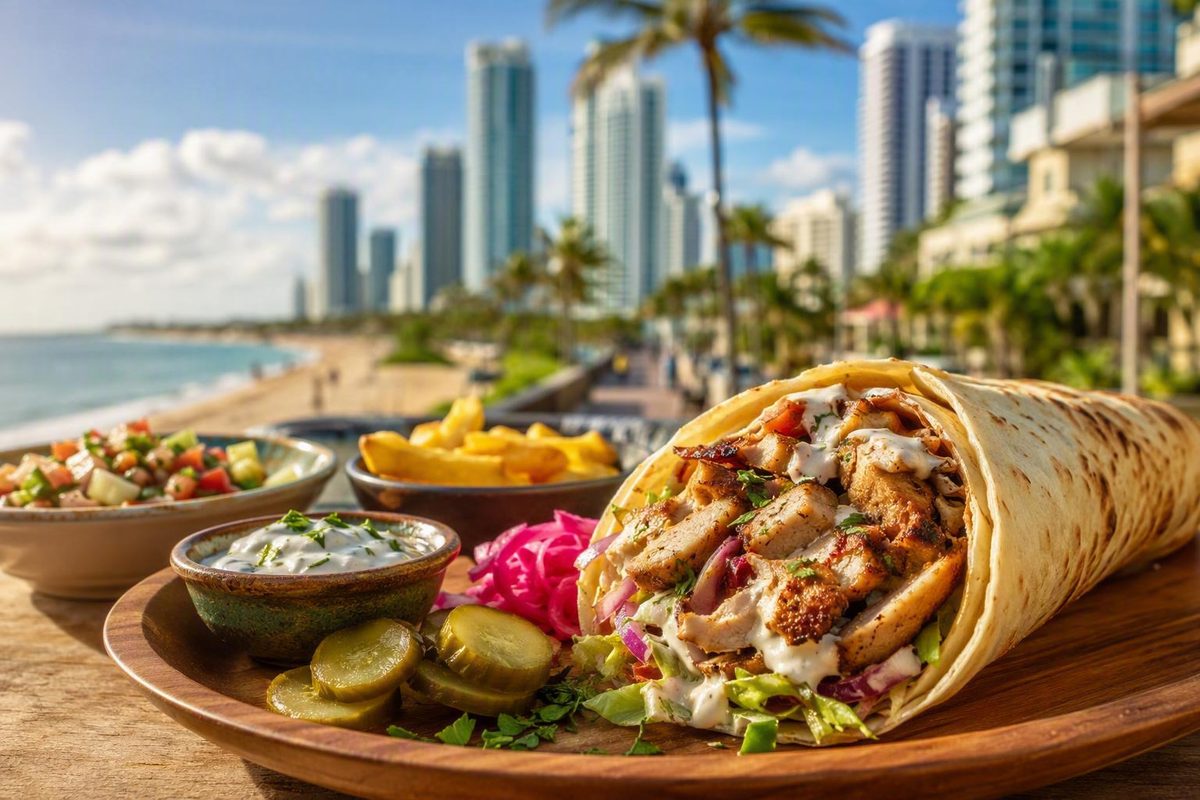
Cumin, coriander, cinnamon, cardamom, garlic and black pepper can make shawarma deeply aromatic and seasoned without making it especially hot.
The short answer: shawarma is savory, aromatic, and warmly spiced
Shawarma commonly tastes savory, garlicky, earthy, and warmly spiced. It often has tangy accents and browned, roasted, or lightly smoky notes, although the exact flavor varies by recipe.
In a representative bite, you may notice thin slices of roasted meat first, followed by cumin-like warmth, fragrant spices, and garlic. Then the accompaniments emerge: creamy sauce, acidic pickles, crisp vegetables, and soft bread. The complete bite can shift among rich, fresh, pungent, nutty, and tangy flavors.
Rich seasoning does not necessarily mean strong chile heat. “Spicy” can describe food seasoned with numerous aromatic spices, while “hot” refers more specifically to the burn of chiles. Many shawarma blends are highly aromatic but relatively gentle in heat. Cayenne, hot sauce, harissa, schug, chile flakes, or peppers can make an individual serving much hotter.
It also helps to distinguish the shawarma meat from the finished serving:
- The meat alone is usually savory, aromatic, garlicky, and roasted, sometimes with noticeable acidity from the marinade.
- A dressed wrap can taste creamier, tangier, fresher, or hotter because of its sauces, pickles, vegetables, and other condiments.
- A plate with condiments served separately lets you taste the components individually and control how much sauce or acidity enters each bite.
No single description applies to every shawarma. Chicken, beef, lamb, turkey, and mixed-meat versions can differ, as can marinades, spice blends, cooking equipment, sauces, breads, toppings, and restaurant or regional preferences. An overview of shawarma’s flavor likewise emphasizes that meat, seasoning, sauces, and accompaniments all shape the finished dish (Egea Food’s shawarma flavor guide).
For a first taste, expect seasoned roasted meat with warm aromatics, not necessarily a mouthful of chile heat. Whether your order leans garlicky, nutty, tangy, creamy, fresh, or hot will depend heavily on what accompanies the meat.
Why shawarma develops such a layered flavor
Shawarma is defined by a particular cooking method: marinated meat is arranged in a stack on a vertical rotisserie, slowly roasted as it turns, and shaved from the cooked exterior. The meat can then be served in bread or on a plate with sauces and other accompaniments. As the cooked surface is removed, the newly exposed layer continues roasting (Shawarma Press’s preparation overview).
The first layer of flavor comes from the marinade. Depending on the recipe, it may combine spices with garlic, lemon juice, yogurt, vinegar, oil, or some selection of those ingredients. Garlic adds pungency, while lemon, yogurt, or vinegar can introduce brightness and tang. The precise mixture varies, so none of these ingredients should be treated as universal.
The cooking method then changes the surface of the meat. The exterior of the rotating stack receives direct heat and browns before being cut away. Because shawarma is shaved in thin pieces, one serving may contain darker, lightly crisp-edged fragments alongside softer slices.
This repeated roasting and shaving distinguishes vertical-spit shawarma from a tray of meat cooked all at once. When one cooked layer is removed, the layer underneath becomes the new surface. Pieces carved at different moments can therefore show slightly different degrees of browning and tenderness.
The result comes from several elements working together:
- The marinade supplies spices, garlic, and possible acidity.
- The meat provides the central savory character.
- Browning adds roasted depth.
- Thin carving creates a mixture of tender slices and firmer edges.
- Sauces, pickles, and vegetables add contrasting flavors after cooking.
Smokiness requires qualification. Browned, roasted, or caramelized notes are reasonable expectations, but pronounced smoke is not guaranteed. The heat source, equipment, temperature, proximity to the heat, and degree of charring all affect the result. A heavily charred preparation may taste smokier than one browned without much smoke.
Oven-roasted adaptations may imitate some of shawarma’s seasoning and tenderness, but they should not be presented as identical to meat repeatedly shaved from a vertical spit. One oven-based chicken recipe uses garlic, lemon, cumin, coriander, turmeric, cinnamon, and cayenne while explicitly distinguishing its method from traditional spit cooking (Delish’s oven-roasted chicken shawarma recipe).
The spices behind shawarma’s warm, earthy aroma
Shawarma has no universal spice formula. Still, several seasonings recur often enough to explain the broad flavor family many diners associate with it.
Cumin commonly supplies earthy, savory warmth. It can deepen the roasted character of the meat without contributing much chile heat. Coriander seed can add another earthy layer with a lighter aromatic quality. Together, cumin and coriander often form part of the blend’s warm foundation.
Paprika may contribute warmth, color, and mild sweetness. Red-colored seasoning therefore does not automatically mean that a shawarma will be fiery.
Cinnamon and cardamom bring fragrant, subtly sweet warmth. In a savory marinade, they do not normally make the meat taste like dessert. Cinnamon can add a rounded aroma, while cardamom can give the blend a more floral or gently sweet quality.
Garlic contributes pungency and savory depth. Because it may appear in the marinade, sauce, or both, some orders are much more garlic-forward than others.
Other possible ingredients include allspice, cloves, nutmeg, ginger, and Aleppo chile. These are examples rather than requirements. One commercial blend combines coriander, cumin, cinnamon, cardamom, paprika, Aleppo chile, turmeric, nutmeg, garlic, and black pepper, but that formula represents a specific product rather than a definitive recipe for shawarma generally (Savory Spice’s shawarma seasoning explanation).
The key distinction is between aromatic complexity and chile heat. Cumin, coriander, cinnamon, cardamom, garlic, and black pepper can make a blend smell powerful and taste deeply seasoned without making it especially hot. Conversely, a simpler blend containing cayenne or another potent chile may produce more heat.
A posted ingredient list also does not tell the whole story. The amount of seasoning, meat, marinade, cooking, sauce, and acidic toppings all affect which flavors become most noticeable.
Is shawarma spicy, sweet, tangy, or smoky?
Shawarma can contain all four qualities, but their strength varies. The most dependable description is savory and aromatic, with roasted meat and warm spices at the center.
| Flavor note | What it contributes | Possible source |
|---|---|---|
| Savory | The central roasted-meat character | Meat, seasoning, and browning |
| Earthy | Warm depth | Cumin, coriander, or turmeric |
| Aromatic | Fragrant, layered warmth | Cardamom, cinnamon, allspice, cloves, or nutmeg |
| Garlicky | Pungency and depth | Marinade, toum, or another garlic sauce |
| Tangy | Bright or sour contrast | Lemon, yogurt, vinegar, sumac, pomegranate, pickles, or sauce |
| Creamy | A smooth mouthfeel | Toum, tahini, yogurt sauce, or hummus |
| Nutty | Earthy richness | Tahini |
| Subtly sweet | Aromatic roundness rather than sugariness | Cinnamon, cardamom, paprika, cloves, or allspice |
| Browned | Roasted or caramelized depth | The cooked surface of the meat |
| Hot | Chile burn | Cayenne, hot sauce, harissa, schug, chile flakes, or peppers |
Spicy: Shawarma is commonly spice-forward rather than automatically chile-hot. A marinade may contain cayenne or another hot pepper, but a restaurant may instead serve relatively mild meat and offer heat as a condiment. If you are sensitive to chiles, ask about both the marinade and the sauces.
Sweet: Any sweetness is usually subtle and aromatic rather than sugary. Cinnamon, cardamom, paprika, cloves, and allspice can create a sweet-smelling impression even when the dish remains predominantly savory.
Tangy: Acidity can enter at several stages. Lemon, yogurt, vinegar, sumac, or pomegranate may appear in the marinade or seasoning, while pickles and tangy sauces can add sourness after cooking. One Palestinian chicken shawarma recipe, for example, combines a yogurt-and-lemon marinade with tahini, pickled vegetables, and sumac-seasoned onions, illustrating how acidity can enter through several components (Palestine in a Dish’s chicken shawarma recipe).
The degree of tang varies substantially. One shawarma may have only a faint citrus note; another may combine a lemony marinade, sour pickles, and a tangy sauce. Noticeable sourness reflects that particular recipe and condiment balance, not an essential taste shared by every shawarma.
Smoky: Smoke is optional and preparation-dependent. Direct heat, fuel, equipment, and charring can all affect it. Browned and roasted flavors are more dependable expectations than overt smokiness.
The balance can also vary within a single wrap. A sauce-heavy bite may taste creamy and garlicky, while one with more pickles may seem sharper. A meat-heavy bite may emphasize warm spices and browning instead.
Chicken vs. beef vs. lamb shawarma
The choice of meat changes the starting point, but it does not determine the complete flavor. Marinade, cut, fat, cooking, and sauce can make two shawarmas using the same type of meat taste quite different.
These comparisons are broad tendencies, not fixed rules:
| Meat | Usual intensity | Typical character | Compatible sauce direction |
|---|---|---|---|
| Chicken | Generally lighter | Mild to moderately savory, tender, and receptive to garlic, lemon, yogurt, and warm spices | Toum for garlic intensity or yogurt sauce for cooling tang |
| Beef | Generally heartier | Robust, earthy, and deeply savory, sometimes with pronounced browning | Tahini for nutty richness or a tangy sauce for contrast |
| Lamb | Generally richer | Bold and rich, with flavor strongly affected by the cut, fat, marinade, and preparation | Tahini, yogurt sauce, or an acidic accompaniment |
| Turkey or mixed meat | Highly variable | Depends on the meat combination, seasoning, and cooking | Choose according to the restaurant’s preparation and available condiments |
Chicken shawarma often provides a comparatively light starting point. It readily takes on garlic, lemon, yogurt, and warm spices. It can pair with pungent toum, tangy yogurt sauce, fresh vegetables, and pickles. That does not mean every chicken shawarma is mild: a cook may use substantial chile, strong acidity, bold seasoning, or deeply browned meat.
Beef shawarma generally has a heartier savory base. Its flavor may remain prominent beneath cumin, coriander, garlic, and other aromatics, while browning can reinforce its roasted and earthy qualities. Tahini, onions, parsley, and pickles are possible accompaniments rather than requirements.
Lamb shawarma is often richer and bolder. Its exact flavor depends heavily on the cut, fat content, marinade, and preparation.
Turkey and mixed-meat shawarma are also possible. Their flavor depends on the particular combination and recipe, so assigning either one a universal profile would be misleading.
Choose by considering the entire order rather than the meat alone. Chicken with abundant toum may taste more pungent than beef with a restrained sauce. Lamb with yogurt sauce and vegetables may seem brighter than chicken served with numerous pickles and hot sauce. The meat sets the foundation, but the condiments determine much of the finished direction.
Sauces, pickles, vegetables, and bread reshape the bite
A fully dressed shawarma can taste substantially different from the carved meat alone. Sauce changes aroma and mouthfeel, pickles introduce acidity, vegetables add freshness and crunch, and bread holds the components together.
Toum, often called garlic sauce, is creamy and strongly garlic-forward. When used generously, it may become one of the most noticeable parts of the order. If you enjoy garlic but do not want it to dominate, request a moderate amount or ask for it on the side.
Depending on its preparation, it may also contain an acidic element, so its finished flavor can be both rich and tangy.
Its exact character depends on whether the recipe includes ingredients such as garlic, cucumber, lemon, or herbs.
Hot sauce changes the heat level rather than revealing an inherent quality shared by all shawarma. Harissa, schug, chile sauce, flakes, and peppers may produce different levels of chile heat. Ordering the condiment on the side allows you to add it gradually.
Pickles add acidity and crunch that contrast with rich meat and creamy sauce. Pickled cucumbers, turnips, and other vegetables can become prominent when used generously, so diners who dislike sour flavors may prefer a smaller amount.
Fresh vegetables offer additional contrast. Tomatoes can add juiciness, cucumbers and lettuce can contribute cool crispness, cabbage can provide a firmer crunch, and onions can add sharpness. The selection varies, and some shawarmas contain few vegetables so that the meat and sauce remain central.
Depending on the bread and preparation, it may be soft, pliable, chewy, or lightly toasted. A restaurant guide lists these breads alongside toum, tahini, yogurt sauce, hot sauce, vegetables, and pickles while noting that combinations vary according to preference (Shawarma Press’s guide to fillings).
Optional additions can shift the flavor further:
- Hummus can contribute creaminess.
- Amba can add tangy mango flavor.
- Schug can add chile heat.
- Rice can serve as an alternative base when shawarma is offered as a plate or bowl.
If you want to compare the meat with the condiments, ask for sauces on the side. If you want the full contrast of roasted meat, creamy sauce, acidic pickles, crisp vegetables, and soft bread, choose a dressed wrap.
What texture should good shawarma have?
Shawarma meat is commonly expected to be thin and tender, often with juicy pieces and browned or lightly crisp edges. Because the exterior is shaved in stages, one serving can contain crisp-edged fragments beside softer slices.
That variation is characteristic of the cooking method.
A complete wrap can combine several textures:
- Soft or chewy bread
- Tender sliced meat
- Browned or lightly crisp meat edges
- Creamy sauce
- Crisp fresh vegetables
- Firm, crunchy pickles
Not every serving will deliver all of these qualities. Holding time, cut, cooking method, serving temperature, and restaurant execution can alter the result.
Dryness, toughness, greasiness, or pronounced sourness may occur in an individual preparation, but none is a defining characteristic of shawarma. A food writer discussing particular Washington-area sandwiches encountered dry and notably sour examples while also questioning whether the experience reflected those restaurants or the writer’s expectations (Washington City Paper’s shawarma commentary).
Texture is therefore best treated as a common expectation rather than a guarantee. A freshly assembled serving may offer the strongest contrast among tender meat, browned edges, creamy sauce, crisp vegetables, pickles, and bread.
How to choose your first shawarma order
The best first order depends on the flavors you already enjoy. These are preference-based suggestions, not guarantees: every restaurant uses its own meat, marinade, sauce portions, bread, and toppings.
For a comparatively mild, garlic-forward introduction: Try chicken shawarma with toum, fresh vegetables, and a moderate amount of pickles. Chicken often offers a lighter base, while toum makes the garlic prominent. Ask whether the marinade contains chile if you need the whole order to remain mild.
For a cooling, tangier order: Choose chicken with yogurt sauce and vegetables. The sauce can add creamy acidity, while cucumbers, lettuce, tomatoes, or cabbage can contribute freshness and crunch.
For a richer, earthier profile: Consider beef or lamb with tahini, onions, parsley, and pickles where available. Beef generally provides robust savoriness, while lamb tends to be richer. Tahini adds an earthy, nutty direction, and pickles provide acidic contrast.
For more heat: Request hot sauce, harissa, schug, chile peppers, or another chile condiment. Do not assume the standard meat will be hot. Getting the condiment on the side lets you test the heat before adding more.
For less acidity: Ask for fewer pickles and check whether the sauce or marinade is especially lemony, vinegary, or yogurt-based. Individual recipes vary, so naming a sauce alone may not reveal how tangy it will be.
For more brightness: Request extra pickles, lemon, or another acidic accompaniment where offered. Add them gradually if the meat or sauce is already tangy.
To compare the components: Ask for sauce on the side. You can taste the meat first and then add toum, tahini, yogurt sauce, pickles, or hot sauce in separate amounts.
For more textural contrast: Choose a wrap with sauce, vegetables, and pickles and eat it soon after assembly. This combination can bring soft bread, creamy sauce, crisp vegetables, firm pickles, tender meat, and browned edges into the same serving.
Before ordering, check what the restaurant actually serves. Ask:
- Which meats are available?
- Is the meat carved from a vertical spit?
- Which sauce comes by default?
- What bread is used?
- Does the marinade contain chile?
- Are pickles and vegetables included?
Shawarma is a cooking method and a broad family of preparations, not one fixed sandwich formula.
A concise decision guide:
- Chicken for a generally lighter profile
- Beef for robust savoriness
- Lamb for a richer, bolder base
- Toum for strong garlic flavor
- Tahini for earthy nuttiness
- Yogurt sauce for cooling tang
- Pickles or lemon for brightness
- Chile sauce for heat
A typical shawarma bite is savory, aromatic, garlicky, and warmly spiced, with thin meat and browned edges balanced by sauce, pickles, vegetables, and bread. Aromatic seasoning is not the same as chile heat. For a generally lighter, garlic-forward introduction, consider chicken with toum; for a richer, earthier experience, try beef or lamb with tahini. In either case, the restaurant’s recipe can shift the result considerably.
Is shawarma hot and spicy?
Not necessarily. Shawarma is often seasoned with cumin, coriander, paprika, cinnamon, cardamom, garlic, and similar aromatics, but those ingredients do not automatically produce strong chile heat.
Heat may come from cayenne or another chile in the marinade, or from hot sauce, harissa, schug, flakes, or peppers added later. Ask about the meat and condiments separately, and order hot sauce on the side if you are unsure.
Does shawarma taste sweet because it contains cinnamon or cardamom?
Usually not in a sugary or dessert-like way. Cinnamon and cardamom generally add fragrant, subtly sweet warmth within an otherwise savory blend.
Paprika, allspice, and cloves may reinforce that aromatic impression. The strength varies, but meat, garlic, cumin, coriander, pepper, and salt usually keep the overall flavor savory.
Why does some shawarma taste tangy or sour?
Tang can come from the marinade, seasoning, sauce, or toppings. Lemon juice, vinegar, yogurt, sumac, or pomegranate may add acidity, while pickles and tangy sauces can create another sour layer.
A shawarma may taste particularly tart when it combines an acidic marinade with abundant pickles and a lemon-forward sauce. If you prefer less acidity, request fewer pickles and place the sauce on the side.
Does shawarma always have a smoky flavor?
No. Shawarma commonly has roasted and browned notes, but pronounced smokiness depends on the heat source, equipment, temperature, and degree of charring.
Vertical roasting can brown the exterior and create lightly crisp edges without producing a strong smoky aroma. If smoke is important to you, ask the restaurant how it cooks and finishes the meat.
Does shawarma taste like gyro?
Shawarma and gyro can seem similar because both may feature vertically roasted meat served with bread, sauce, vegetables, and onions. They are not interchangeable, however, and recipes for both dishes vary.
Shawarma commonly uses warm aromatic spices and may be served with garlic sauce, tahini, hummus, pickles, or fresh vegetables. Gyro is often associated with a different seasoning and condiment pattern, including tzatziki. A commercial comparison likewise distinguishes the dishes by their marinades, seasonings, sauces, and toppings while acknowledging their shared rotisserie format (shawarma and gyro comparison).
For a first-time diner, the safest expectation is structural familiarity rather than an exact flavor match: both can combine carved meat, bread, sauce, and vegetables, but the particular spice blend and condiments determine how similar they actually taste.