
When a Tan Actually Appears—and Why the Color Is Delayed
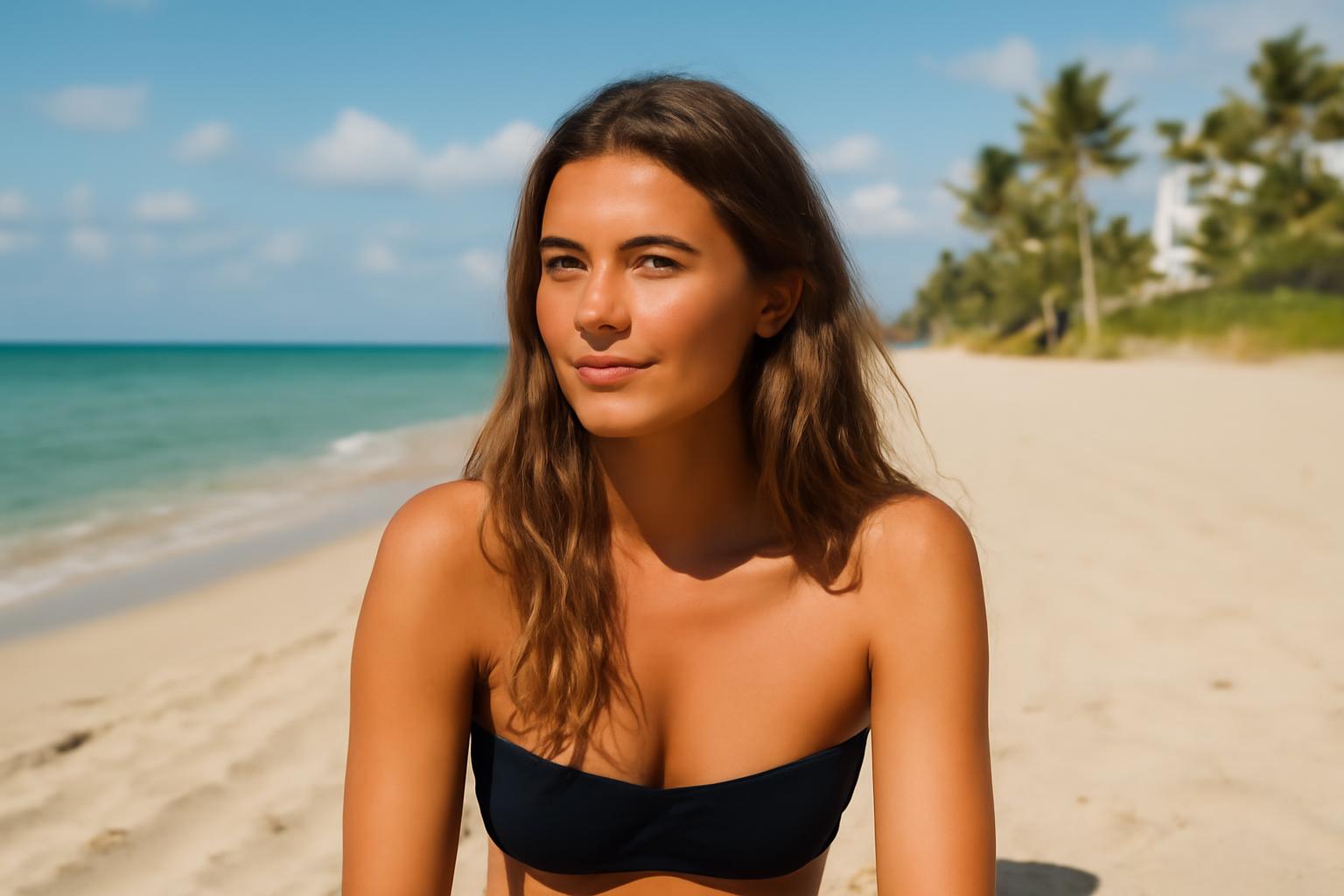
A tan can seem to appear overnight or deepen on the second day without more exposure. Skin type and UV conditions change when color becomes visible.
The short answer: visible color often takes 24–72 hours
A noticeable suntan commonly appears the next day or within roughly 24–72 hours after UV exposure. Some UV-triggered changes may begin during or soon after time in the sun, but enough pigmentation to be visible can take longer. Color may continue deepening for one to three days after the exposure ends, according to a Technology Networks science-news summary of delayed pigmentation research.
That range is a typical pattern, not a guarantee—and it is not a recommended amount of time to spend in the sun. Some people show color sooner, some later, and some burn while developing little or no tan.
The apparent conflict between “tanning begins quickly” and “a tan takes days to appear” makes more sense if you separate two clocks:
- The exposure clock: UV radiation can affect and injure skin during the exposure, before you see a change.
- The appearance clock: It can take hours or days for enough pigmentation to develop for you to notice it.
No immediate color does not mean nothing happened. UV can damage skin before pigmentation becomes obvious, and both a suntan and a sunburn reflect harmful exposure. The same UVA and UVB radiation that produces a tan can damage DNA and generate reactive oxygen species in skin cells, according to medically reviewed guidance from MD Anderson.
For that reason, the 24–72-hour range should never become a countdown to another exposure. If you see no color after leaving the beach, waiting gives the delayed result time to appear without adding another UV dose.
A single outing also may not produce a deep or even tan. The response depends on individual skin characteristics, UV intensity, location, weather and the amount of direct or reflected radiation. There is no universal number of outdoor minutes that guarantees visible color or makes intentional tanning safe.
A simple timeline from sun exposure to visible pigmentation
This is a development timeline, not a tanning schedule. It describes what may happen after exposure; it does not prescribe how long to remain outside.
During exposure and the first several hours
UV radiation can begin affecting skin even when the skin looks unchanged. A person may finish a walk, swim or beach visit without seeing either pigmentation or redness. That visual delay cannot establish that the exposure was harmless.
The lack of an immediate tan also does not show that more exposure is needed. The final pigment response may not yet be visible.
Around 6–24 hours
Pigment production may begin or become more active during this period, although timing varies considerably. Some people may detect a subtle change later that day, while others may look unchanged until the following morning.
Research summarized by Technology Networks proposed that skin cells initially prioritize responses to UV-related DNA injury before increasing pigment production more fully. That mechanism should be interpreted cautiously: the underlying research involved animal models and ex vivo human skin, not a clinical demonstration that every person follows an identical molecular timetable. The report places early melanin activity at roughly 6–24 hours.
At about 24 hours
Some people notice slight pigmentation the next morning. It may be easiest to recognize by comparing exposed skin with areas that were covered. Other people still will not see a meaningful difference.
The practical point is that appearance can lag well behind exposure. Inspecting the skin immediately after being outdoors cannot reliably establish whether the exposure had an effect or whether a later tan will appear.
Over one to three days
Visible pigmentation may become darker or more apparent over the following 24–72 hours. This is why a tan can seem to appear overnight or deepen on the second day even when there has been no additional exposure.
Repeating exposure during this delay can add further UV damage before the result of the first exposure is fully visible. Waiting for color to develop is therefore not the same as waiting to “try again.” The delay is part of the response, not evidence that the first exposure did nothing.
Why there is no universal tanning time
Skin type influences the response, but it is not a stopwatch. Two people in the same place for the same length of time can have very different outcomes.
Factors that may affect when tanning or burning begins include:
- baseline pigmentation and skin phototype;
- genetics and individual pigment response;
- UV intensity;
- the amount of direct sunlight reaching the skin;
- latitude and altitude;
- time of day and season;
- climate, cloud cover and other weather conditions; and
- reflected UV from water, snow or bright surfaces.
An expert-reviewed overview of tanning time identifies skin type, UV conditions, climate, latitude, altitude, weather and reflected radiation as relevant variables. Its broad onset estimates describe possible responses, however, not medically safe exposure limits.
Very fair skin may redden or burn rapidly and may develop little or no meaningful tan. Extending the exposure in an effort to overcome that tendency increases injury; it does not create a safe route to pigmentation.
A slower or less obvious visible response should not be interpreted as protection from cumulative UV injury.
UV intensity complicates the timeline further. Stronger conditions can deliver a larger dose more quickly, potentially accelerating both pigmentation and injury. Faster color is therefore not evidence that a method is safer, more controlled or more effective.
No article can calculate a medically safe tanning duration from skin tone alone. It also cannot reliably predict how long a particular traveler will take to tan at a specific Miami beach—or anywhere else—because both personal response and environmental conditions can change from one outing to the next.
Can you get a tan in 30 minutes, one day, or overnight?
Thirty minutes may be enough to initiate a pigment response in some people, but it may not produce visible color during those 30 minutes. The result depends on skin type, UV intensity, location and other conditions. Very fair skin may redden or burn during a short exposure rather than develop a meaningful tan.
Consumer timing estimates sometimes say tanning can begin within minutes or hours, while delayed-pigmentation research describes color becoming visible over the next one to three days. These statements are not necessarily contradictory. One concerns when the biological response starts; the other concerns when enough color becomes visible to be recognized as a tan.
Getting some color in one day is possible for some people. It is not predictable, and it does not establish that the exposure was safe. The expert-reviewed tanning guide notes that some people may begin showing a response within 30 minutes or during the same day, while emphasizing that skin type and UV conditions substantially affect the outcome.
A tan may appear to develop “overnight” because pigmentation continues after exposure has ended. For example:
- Someone spends part of the afternoon at the beach.
- They see no obvious color that evening.
- Slight pigmentation is visible the next morning.
- The color looks deeper over the following two days, despite no additional exposure.
That person did not need another outdoor session to make the first exposure “work.” The initial result simply had not finished developing.
A sunburn should not be described as the first stage of a tan. Tanning is a pigment response, whereas sunburn reflects skin damage and cell death. Some pigmentation may follow a burn, but a burn does not reliably “turn into” a tan; a severe burn may peel and remove pigmented surface skin, as the delayed-pigmentation research summary explains.
How UV conditions change exposure—and risk
The speed at which skin receives a UV dose changes with the environment. UV intensity, latitude, altitude, season, weather and the amount of direct sunlight all matter. Conditions may also vary substantially over the course of one day.
Stronger midday UV can make skin respond more quickly, but it simultaneously increases the potential for burning and cumulative damage. It should not be used as a shortcut to faster color. The same caution applies to high-altitude exposure and long periods in unobstructed sunlight.
Water and snow can reflect UV radiation, adding to exposure from the sky. Reflection is a reason to strengthen protection, not a technique for accelerating a tan.
Check current local UV conditions to guide protective decisions such as seeking shade, changing activity times, wearing protective clothing and using sunscreen. Do not convert the UV index into a personal tanning countdown.
This is especially relevant for travelers. A person’s response at home does not establish what will happen at a sunnier destination. Even in Miami, there is no dependable destination-specific formula in which a certain number of minutes produces a tan.
Anything that increases the UV dose reaching the skin can also increase injury.
A tan is not a sign of safe sun exposure
A tan without a burn is still not harmless. Skin-cancer guidance considers reddening or browning caused by UV exposure to be evidence of skin damage. Both UVA and UVB can contribute to pigmentation while also damaging DNA.
Tanning and sunburn are different visible responses:
- A tan is increased pigmentation following UV exposure.
- A sunburn is a more acute injury involving damaged skin cells.
Neither response marks healthy exposure. Avoiding a burn does not erase the damage associated with tanning, and the absence of visible color does not prove that the skin was unaffected.
UV damage also accumulates. Repeated exposure contributes to photoaging—including wrinkles, dark spots and uneven pigmentation—and increases skin-cancer risk. MD Anderson reports that about 70% of skin cancers are caused by repeated ultraviolet-light exposure, while emphasizing that both tans and burns harm the skin.
A “base tan” is inadequate preparation for a vacation. MD Anderson compares its limited protection with only about SPF 3 or 4, which is far below the recommended sunscreen baseline. Existing pigmentation does not replace shade, clothing or sunscreen.
Indoor tanning is not a controlled or safe alternative. Tanning beds deliver carcinogenic UV radiation, and occasional use still exposes the skin to radiation that damages DNA. Medically reviewed cancer-center guidance states that tanning beds are unsafe even for one-time use.
The Skin Cancer Foundation summarizes the central point directly: there is no safe UV tan, because UV-related browning or reddening is a sign of skin damage.
Timing information therefore answers only when color may become visible. It does not answer how long it is safe to remain in sunlight. There is no medically endorsed countdown for obtaining a UV tan.
What sunscreen changes—and what it does not
Sunscreen reduces the amount of UV radiation reaching the skin. It does not necessarily prevent all pigmentation, so it is possible to tan while wearing sunscreen.
That possibility does not make intentional tanning safe. A tan obtained while wearing sunscreen still means that enough UV reached the skin to stimulate a pigment response. Sunscreen should be used to reduce incidental exposure, not to justify staying outside longer in pursuit of color.
For outdoor protection, use a broad-spectrum, water-resistant sunscreen with SPF 30 or higher. Apply an adequate amount before going outdoors and reapply at least every two hours, as well as after swimming or heavy sweating. These recommendations are supported by MD Anderson’s medically reviewed tanning guidance.
Broad-spectrum coverage addresses UVA and UVB. Water resistance is particularly important when swimming or sweating, but it does not eliminate the need to reapply.
Sunscreen works best as part of a broader protection strategy that may include:
- seeking shade;
- wearing tightly woven or UV-protective clothing;
- using a wide-brimmed hat and sunglasses;
- reducing unnecessary exposure during intense UV conditions; and
- remembering exposed areas such as the ears, feet and back of the neck.
If pigmentation appears despite sunscreen, the correct conclusion is that some UV reached the skin—not that sunscreen converted intentional tanning into a harmless activity.
Faster ways to look tan without intentional UV exposure
Sunless products offer more predictable development times than sunlight and avoid intentional UV tanning. Most use dihydroxyacetone, or DHA, to create temporary browning in the outermost skin layer rather than stimulating melanin through UV exposure.
Exact timing varies by formula, application and desired depth. Some available timing information comes from companies that sell sunless products, so the directions for the specific formula should take priority over any general estimate.
| Method | Typical color-development time | How long the result may last | Principal safety distinction |
|---|---|---|---|
| Sunlight | Noticeable color commonly appears in 24–72 hours, although timing varies (Technology Networks) | Varies widely | The color is a response to UV-related skin injury |
| Tanning bed | Timing varies; it is not recommended as a shortcut (MD Anderson) | Varies | Delivers carcinogenic UV radiation and is not a safe alternative |
| Standard self-tanner | Commonly about 4–8 hours, depending on the formula (Skincare.com) | Often around 7–10 days | Creates surface color without intentional UV exposure |
| Professional spray tan | Commonly about 4–8 hours (Jergens) | Often around 7–10 days | Uses a sunless coloring process rather than a UV tan |
| Express self-tanner | Some formulas permit rinsing after 1–3 hours, while full color may continue developing for about eight hours (Skincare.com) | Often about a week, depending on formula and care | A short rinse time is not the same as complete development |
| Gradual self-tanner | May build over approximately three days (Jergens) | Depends on repeated use and aftercare | Color develops incrementally without intentional UV exposure |
Many standard mousses and professional spray tans develop over approximately four to eight hours. Express products may allow rinsing after one to three hours, but the final shade can continue developing after the rinse. Gradual formulas build color over repeated applications rather than delivering their intended result immediately.
Keep four timing concepts separate:
- Drying time: How long to wait before dressing or touching fabric.
- Permitted rinse time: When the guide color or excess product may be washed off.
- Full development time: When the finished DHA color is expected.
- Result duration: How long the color remains before fading as surface skin cells shed.
A product that permits rinsing after two hours, for example, may still require several additional hours to reach its final color. Follow the specific formula’s directions rather than substituting a general timeline.
For a more even application:
- Exfoliate first, especially where skin is dry or thick.
- Let the skin dry before applying the product.
- Use a thin, even layer rather than one heavy coat.
- Apply carefully around the elbows, knees, ankles and wrists.
- Wash your hands as directed or use an application mitt.
- Let the product dry before dressing.
- Follow the stated rinse and development instructions.
The Skin Cancer Foundation explains that dry or thickened areas can absorb more product and appear darker. It recommends exfoliating, allowing the skin to dry for at least 15 minutes, applying a thin and even layer, and waiting another 15 minutes before dressing. Those intervals concern preparation and drying—not the time required for the final DHA color to develop. DHA itself produces color through a reaction in the outermost dead-cell layer of the skin, as described in the Foundation’s guide to sunless tanning.
Spray-tan users should also follow facility instructions intended to protect the eyes, nose and mouth from the spray.
Many sunless results last approximately 7–10 days, although formula, application, bathing, swimming, exfoliation, skin turnover and aftercare can affect that period. Brand-owned product guides report the same general range, but individual product directions remain the best source for a specific formula.
Most importantly, sunless color is cosmetic. It does not provide meaningful UV protection. Broad-spectrum SPF 30 or higher and other protective measures are still needed outdoors.
Frequently asked questions
Can you get tan in 30 minutes?
Possibly, but the color may not be visible during those 30 minutes. A short exposure can initiate pigmentation in some people, with color becoming noticeable later that day or over the next one to three days. Very fair skin may burn rather than develop a meaningful tan, according to the expert-reviewed tanning-time guidance cited above.
Thirty minutes is not a safe-exposure recommendation. UV conditions and individual susceptibility vary, and injury can begin before pigmentation becomes visible.
Why does my tan look darker the next day?
Pigmentation can continue developing after you leave the sun. The delayed-pigmentation research summarized by Technology Networks places commonly visible development within roughly 24–72 hours, so slight color may appear the next morning and deepen during the following day or two.
Contrast with covered skin can also make the result easier to recognize. Do not repeat the exposure simply because the final color was not visible immediately.
Does a sunburn eventually turn into a tan?
Not reliably. A sunburn is an acute skin injury, not a required first step in tanning. Some pigmentation may appear after a burn, but a severe burn may peel rather than leave lasting color, according to the delayed-pigmentation research summary.
Treat a burn as injury rather than evidence that a tan is developing. Deliberately burning in pursuit of color only adds harm.
Can you tan while wearing SPF 30 sunscreen?
Yes. Sunscreen reduces UV exposure but does not eliminate every ray, particularly under real-world conditions. Too little product, uneven application, rubbing, swimming, sweating and missed reapplication can further reduce protection.
That does not make tanning with SPF 30 safe. MD Anderson recommends broad-spectrum, water-resistant SPF 30 or higher, applied before outdoor exposure and reapplied at least every two hours and after swimming or heavy sweating. Sunscreen should not be used to extend an intentional tanning session.
How long does self-tanner take to develop?
Many standard self-tanners and professional spray tans develop in about 4–8 hours. Some express products may be rinsed after 1–3 hours, although full color can continue developing for about eight hours. Gradual products may take approximately three days to reach their intended shade, according to the commercial product-timing guides cited in the comparison table.
Check whether the instructions refer to drying, rinsing or full development; those are not interchangeable. Many sunless results last around 7–10 days, depending on the formula, application and aftercare. Self-tanner does not replace sunscreen outdoors.
The bottom line
Two different clocks determine when a tan appears. UV radiation can affect and injure skin during the exposure, while enough pigmentation to be visible may not develop until the next day or within roughly 24–72 hours.
That delay is not a reason to repeat the exposure. Additional time in the sun can add UV damage before the first session’s color has finished appearing, and no number of tanning minutes is medically safe or universally predictable.
For a faster and more controllable tanned appearance, DHA-based self-tanners and spray tans offer clearer development times without intentional UV tanning. Their color is cosmetic, however, so broad-spectrum sunscreen and other sun-protection measures remain necessary outdoors.