
When Your Sun-Kissed Color Will Start to Fade
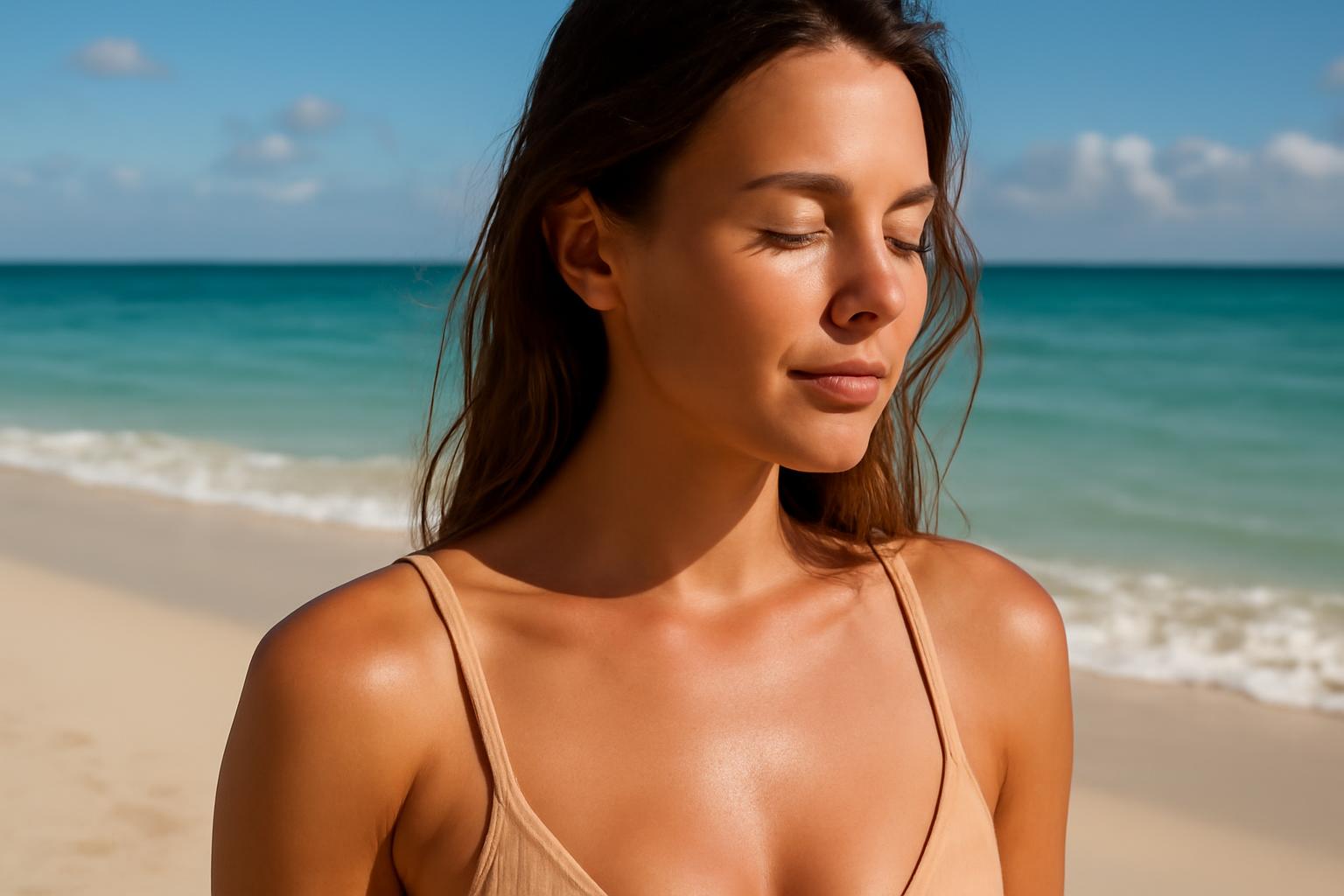
Color may remain noticeable at first, begin softening near the reported 7-10-day window and continue fading instead of disappearing at once.
The short answer: expect fading to begin around 7–10 days
A natural sun-induced tan commonly starts to lose visible intensity around 7–10 days after your last meaningful UV exposure. Some commercial articles describe this as the tan’s total duration, while others use it for the beginning of noticeable fading. Hawaiian Tropic UK gives the commonly repeated 7–10-day estimate but notes that results vary by skin type, skin color, climate, and additional exposure. Its article does not cite independent research establishing a clinical deadline. Treat the 7–10-day figure as a commercial estimate, not a universal biological rule.
If you spent several days outdoors and then returned home, the practical fading timeline begins near the end of that outdoor period.
Quick answer
- Fading begins: Commercial beauty guidance commonly places the first noticeable softening at around days 7–10 after the last substantial exposure. Coco & Eve presents this as a variable estimate rather than a fixed deadline.
- Most visible color disappears: Usually later than the first signs of fading, potentially over the next week or longer.
- Skin returns to baseline: There is no dependable date that applies to everyone. Faint residual contrast may remain after the tan stops looking pronounced.
The important distinction is between fading and complete disappearance. For some people, the color begins to soften near the end of the first week or during the second but remains visible afterward. The endpoint depends on how deep and even the original color was, the person’s individual skin response, whether peeling occurred, the body area involved, and skincare practices that remove surface cells.
The available estimates all come from commercially interested beauty, sunscreen, skincare, or sun-protective-apparel publishers. Their articles do not cite clinical studies supporting an exact duration. The range is therefore useful for planning expectations after a sunny trip, but it is not sufficient for predicting the precise day an individual tan will disappear.
What it means for a tan to “last”
When people ask how long a natural tan lasts, they may mean any of three different milestones:
- The first softening of the color
- The point when most visible contrast has disappeared
- A complete return to the person’s usual baseline
These milestones are not interchangeable. A deep, even tan may remain obvious after fading has started. A subtle tan may seem to disappear quickly because only a small loss of intensity is needed before it stops contrasting with covered skin.
Comparing vacation photographs taken in bright sunlight with your skin under dim indoor lighting can exaggerate the apparent difference.
Suppose your last substantial exposure was on a Sunday. Your color might remain noticeable for the next several days, look softer during the following week, and still be faintly visible later. That is a bounded example, not an individual schedule. Peeling could make the change appear earlier or less even, while stronger initial contrast could remain noticeable longer.
This is why saying “my tan lasted ten days” may not mean that the skin returned fully to baseline on day ten. It might mean that the tan stopped looking fresh, became less obvious, or first appeared lighter on a frequently washed area.
The reverse is also true. Color visible for a longer period does not prove that the original tan remained unchanged. It may be progressively lighter residual pigmentation. If there has been more sunlight in the meantime, some of the visible color may also be newly stimulated pigmentation rather than the uninterrupted persistence of the original tan.
Broad claims that tans last from 7 to 30 days are not precise enough to apply universally. Such ranges may combine different milestones, tanning methods, initial color depths, and individual responses. Natural tans and cosmetic self-tanners should not be grouped into one duration range because they produce color differently.
A more useful personal question is: How long does the color remain noticeably different from my normal baseline under similar lighting and conditions? Even then, the fade will usually be gradual rather than marked by a sharp endpoint.
Why a natural tan gradually disappears
Sunlight exposes skin to ultraviolet radiation and stimulates melanin-related darkening. The resulting visible color is temporary rather than permanent.
The commercial sources simplify the biology as a combination of two processes: the tanning stimulus declines when substantial UV exposure stops, while melanin-containing cells in the outer epidermis are gradually shed and replaced. Jergens describes sunlight-triggered melanin production and attributes fading to normal skin-cell turnover, but its explanation is part of a commercial skincare article rather than an independently reviewed dermatology source. See the commercial overview of melanin-related darkening and subsequent fading.
This gradual replacement helps explain why a tan normally fades rather than switching off on a particular day.
Further sunlight can stimulate additional pigmentation. It is more accurate to call that renewing or deepening the color than preserving the same melanin-containing surface cells. New exposure changes the practical starting point because the skin has received another tanning stimulus.
That distinction helps clarify common tan-maintenance claims:
- Moisturizer may improve the appearance and comfort of dry or flaky skin, but the supplied evidence does not establish that it stops biological fading.
- Exfoliation removes surface cells. Even when gentle exfoliation makes patchiness look less obvious, it does not preserve those cells.
- Extra water or particular foods are not shown by the supplied evidence to delay the loss of natural pigmentation.
- Self-tanning products add cosmetic color rather than keeping the original UV-induced pigmentation alive.
No exact skin-cell turnover figure is needed to understand the practical outcome. The key point is that visible UV-induced color is temporary and becomes lighter as the tanning stimulus declines and the outer epidermis renews.
The factors that can change the fading timeline
There is no dependable formula that assigns a fixed duration according to skin tone, climate, vacation length, or product use. Several overlapping factors instead influence how long the color remains noticeable.
| Factor | Likely effect on visible color | Strength or limits of the evidence |
|---|---|---|
| Individual skin response and baseline tone | Affects how much contrast develops and how easily residual color can be seen | Commercial sources identify skin type and color as variables, but they do not establish an exact duration for each tone. The evidence does not justify saying that darker skin always retains every tan longer. |
| Original exposure duration and intensity | More pronounced initial color may remain noticeable longer because there is more contrast to lose | This does not establish a desirable or safe tan-maximizing exposure. No risk-free UV dose is provided in the evidence. |
| Additional sunlight | Can renew or deepen pigmentation, making the color appear to persist | This adds further UV-stimulated color rather than preserving existing melanin-containing surface cells. |
| Sunburn and peeling | May make color disappear sooner or less evenly | Peeling removes surface cells, but the available sources do not quantify how many days it changes the timeline. |
| Exfoliation | Can accelerate the loss of visible surface color | The effect will depend on the routine and area. No reliable number of days can be assigned. |
| Exfoliating skincare products | May contribute to faster fading where they increase surface-cell removal | Jergens specifically identifies exfoliants and salicylic acid products, but its commercial article does not quantify their effects. |
| Frequent cleansing | May help explain why some areas, particularly the face, appear to fade earlier | This is a commercially reported observation, not an independently established rule for every person. |
| Prolonged hot-water exposure | Commercial guidance identifies it as a possible contributor to faster visible fading | No measured effect or guaranteed benefit from changing water temperature is supplied. |
| Dryness | Can make remaining color look dull, flaky, or patchy | Improving dryness may improve appearance without materially extending the underlying pigmentation. |
| Body area | Areas exposed to more washing, rubbing, or exfoliating products may look different from less-treated areas | There is no universal body-area ranking or exact timeline. |
The source identifying exfoliants, salicylic acid products, peeling, and prolonged hot-water exposure is a skincare-brand article that mixes discussion of natural tanning with self-tanning. Its observations are relevant to visible surface color but should not be treated as quantified clinical findings. Jergens lists these as possible fading factors without establishing their precise effects.
Initial depth affects perception as much as duration. If exposed and covered skin developed strong contrast, some difference may remain after substantial fading. If the original change was mild, the tan may stop being noticeable soon after it begins to soften.
Exposure history also matters, but it should not be interpreted as a reason to seek stronger color. Additional UV exposure may make the tan appear to persist because new pigmentation is being added. Sunburn followed by peeling may instead produce a faster or more irregular-looking loss of color.
Skincare effects are cumulative and difficult to isolate. A pattern of repeated cleansing or exfoliation may affect how smooth and even the fade appears, but the supplied evidence cannot support promises such as “avoiding hot water adds four days” or “a particular skin tone stays tan for three weeks.”
Why the face may fade before the rest of the body
Some people notice that facial color softens while the torso or legs still look tan. Commercial tanning articles describe this pattern, but it is best treated as a plausible observation rather than a universal rule.
The face is commonly cleansed more often than many body areas and may receive more exfoliating or active skincare. Routines that remove surface cells can make visible color fade sooner or appear less even. Coco & Eve attributes potentially faster facial fading to cleansing and skincare practices, although the company does not provide independent clinical evidence for the comparison. Its article presents faster facial fading as a possible result of routine differences.
Body areas that receive less frequent cleansing or fewer exfoliating products may appear to retain color longer. That is not guaranteed: peeling, differences in initial exposure, and variation in local care can alter the pattern.
Patchiness can also have more than one explanation:
- Different areas received different amounts of initial sunlight.
- Sun-protection or skincare products were applied unevenly.
- Peeling occurred in isolated areas.
- Cleansing or exfoliating products are used more heavily in some places.
- Dry areas make the remaining color look less uniform.
Aggressive scrubbing will remove more surface material rather than restore a natural facial tan. The general explanation above also cannot diagnose persistent, sharply irregular, changing, or otherwise concerning pigmentation. Duration alone does not identify the cause of a skin-color change.
What can—and cannot—make a tan look better for longer
Tan-maintenance advice is easier to evaluate when divided into three categories: measures that may improve appearance, measures that remove surface color, and measures that create new color.
Measures that may improve appearance
Moisturizer can help dry skin feel more comfortable and look smoother. When the skin appears flaky or dull, reducing visible dryness may make the remaining color look more even.
That is not the same as materially extending UV-induced pigmentation. The supplied commercial articles recommend moisturizing but do not provide independent evidence that it changes how long the biological tan remains. Moisturizer is therefore better understood as appearance and comfort care than as a way to lock pigment into the skin.
Lukewarm rather than prolonged hot showers are another modest, appearance-focused option found in commercial guidance. The sources suggest that prolonged hot water may contribute to dryness or visible surface shedding, but they provide no measurement of how much changing the water temperature alters tan duration. Normal bathing does not need to be avoided.
Lighting and clothing color can also make a tan look stronger or softer. They change visual contrast, not pigmentation.
Measures that remove pigmented surface cells
Exfoliation removes surface cells that contribute to visible color. Frequent or aggressive exfoliation may therefore make the tan fade faster or appear less even.
Some commercial advice recommends gentle exfoliation to reduce a dull or flaky appearance. That may create a smoother-looking fade, but it is a cosmetic tradeoff rather than pigment preservation: removing uneven surface material can improve uniformity while also removing some visible color.
If preserving the appearance matters, avoid introducing unnecessary aggressive exfoliation solely to correct minor unevenness. The available evidence does not support a particular schedule, product, or guaranteed result.
Measures that create new color
Further sunlight may produce new or deeper pigmentation. Self-tanner can add cosmetic color. Both can make someone look more tan, but neither preserves the original melanin-containing surface cells.
The mechanisms are different:
- Natural tan: Visible color following UV-stimulated pigmentation.
- Self-tanner: Cosmetic surface color added without relying on another deliberate UV session.
- Additional sunlight: New UV exposure that may stimulate further pigmentation.
- Moisturizer: Appearance and comfort care that does not create a natural tan.
Claims the available evidence does not establish
The evidence supplied for this article does not substantiate claims that a natural tan lasts longer because someone:
- drinks extra water,
- eats more beta-carotene-rich food,
- follows a detox program,
- “improves circulation,” or
- uses a particular branded tan-prolonging product.
Those practices should not be presented as proven ways to delay the loss of UV-induced pigmentation. Product marketing can also blur the difference between preserving a natural tan and adding new color with self-tanner.
A simple appearance-focused routine
To make the fading process look less dry or uneven:
- Moisturize dry areas for comfort and a smoother appearance.
- Avoid aggressive or unnecessary exfoliation.
- Use comfortable lukewarm water instead of prolonged, very hot showers when practical.
- Keep the skincare routine consistent rather than adding harsh steps to chase uneven color.
- Continue using sun protection instead of seeking more exposure to refresh the tan.
- Consider cosmetic sunless color if maintaining the appearance matters after the natural pigmentation fades.
These measures may reduce dryness, flaking, or an uneven-looking fade. They cannot guarantee that the underlying natural tan will remain for a particular number of days.
Maintaining color without seeking more UV exposure
Spending more time in sunlight may renew or deepen pigmentation, but calling that preservation conceals the tradeoff: it involves further UV exposure.
The supplied commercial guidance associates UV exposure with sunburn, premature skin aging, and skin-cancer risk. It also states that already-tanned skin does not remove the need for sunscreen. These are safety statements from a sunscreen-brand article, not substitutes for independent medical guidance. Hawaiian Tropic UK advises continued sunscreen use and identifies these UV-related risks.
Sunscreen should not be interpreted as blocking every UV ray or making intentional tanning risk-free. Follow the instructions on the product you use rather than treating existing color as sufficient protection.
If the objective is visual—such as maintaining a bronzed appearance for photographs or an event—self-tanner is the relevant alternative described in the supplied evidence. It creates separate cosmetic color instead of extending the life of the original natural tan.
Self-tanner also has its own application and fading cycle. Areas exposed to more cleansing or exfoliation may lose that cosmetic color differently, but that should not be confused with the biological fading timeline of the underlying UV-induced pigmentation.
A practical fading timeline after a sunny trip
Anchor this timeline to your last meaningful sun exposure, not the beginning of the trip.
The first several days
The tan may remain clearly noticeable, particularly if the initial color was pronounced and even. Dryness or peeling can make some areas look less uniform earlier.
Apparent stability during this period does not mean the pigmentation is permanent. It means the visible contrast has not yet declined enough to be obvious.
Around days 7–10
This is the commonly reported commercial window in which natural color may begin to soften or stop looking as fresh. One retailer article also says that a natural tan usually fades after a couple of weeks, demonstrating that “lasts” and “fades” are not being used as identical milestones. SwimZip distinguishes the 7–10-day average claim from a broader overall fade.
The first change may appear on a frequently cleansed area, or the tan may remain visible while showing less contrast against covered skin. The timing remains approximate.
During the following week or longer
Color can continue fading after the first noticeable softening. A pronounced original tan may leave residual contrast, while a subtle tan or one affected by peeling may appear closer to baseline sooner.
A broad upper limit cannot be promised from the available evidence. Longer duration claims may refer to faint residual pigmentation rather than color that remains at its original intensity.
If there is new UV exposure
That does not mean the original melanin-containing surface cells have survived longer. It means new or renewed color is being added while older visible color continues to change.
Checklist for a less dry or uneven-looking fade
- Moisturize where the skin feels dry or looks flaky.
- Avoid aggressive scrubs and unnecessary exfoliation.
- Avoid prolonged hot-water exposure where practical.
- Keep using sun protection while color remains visible.
- Use cosmetic sunless color rather than seeking deliberate UV exposure if appearance is the priority.
- Expect different body areas to fade at different apparent rates.
- Compare the color under similar lighting.
No routine described by the supplied commercial evidence can guarantee a particular duration. The most defensible expectation is a gradual process: color may remain noticeable initially, commonly begin softening near the reported 7–10-day window, and continue fading afterward.
Frequently asked questions
Does a natural tan disappear completely after 7–10 days?
Not necessarily. In this article, that commercial estimate is treated as a possible window for the first noticeable softening, not a guaranteed date for a complete return to baseline.
The initial depth of color, individual skin response, peeling, body area, cleansing, and exfoliation can all affect what remains visible. The estimate is an approximate consumer guide rather than a fixed biological deadline.
Can a natural tan remain visible for several weeks?
It can remain visible beyond the initial fading window, particularly as faint residual contrast. That does not mean it stays at its original intensity throughout that period.
A commercial retailer article says a natural tan usually fades after a couple of weeks, but it provides no independent research establishing that duration for every person. Treat longer timelines as variable descriptions of progressive fading.
Does exfoliating make a natural tan fade faster?
It can. Exfoliation removes surface cells, including melanin-containing cells contributing to the tan’s visible appearance. Frequent or aggressive exfoliation may therefore accelerate visible fading or make it look less even.
Gentle exfoliation may sometimes reduce obvious flaking and create a smoother appearance. That is an appearance tradeoff, not preservation of the pigment.
Does moisturizer actually make a natural tan last longer?
The supplied evidence does not establish that moisturizer materially prolongs the underlying UV-induced pigmentation. It may reduce dryness, visible flaking, and patchiness, making the remaining color look smoother.
Moisturizer is useful for comfort and appearance, but it should not be expected to stop normal epidermal renewal or guarantee extra days of color.
Is self-tanner the same as a natural tan?
No. A natural tan follows UV-stimulated pigmentation. A self-tanner creates separate cosmetic color without requiring another deliberate period of UV exposure.
Self-tanner can maintain the appearance of being tan after natural pigmentation begins to fade, but it does not preserve the original tan. It has its own application and maintenance cycle.
The takeaway
A natural tan commonly begins to lose visible intensity around 7–10 days after meaningful UV exposure ends, according to several commercial publishers, but the estimate is not a medically established deadline. Complete fading may take longer, and the visible timeline varies with the original color, individual skin response, peeling, body area, cleansing, and exfoliation.
Focus on keeping the skin comfortable and reducing dry or uneven-looking fading rather than trying to stop normal renewal. Continue sun protection while the color remains visible, and use cosmetic sunless color—not additional deliberate UV exposure—if maintaining the bronzed appearance is the priority.