
The Key to Tender Stone Crab Is Knowing When Not to Cook It Again
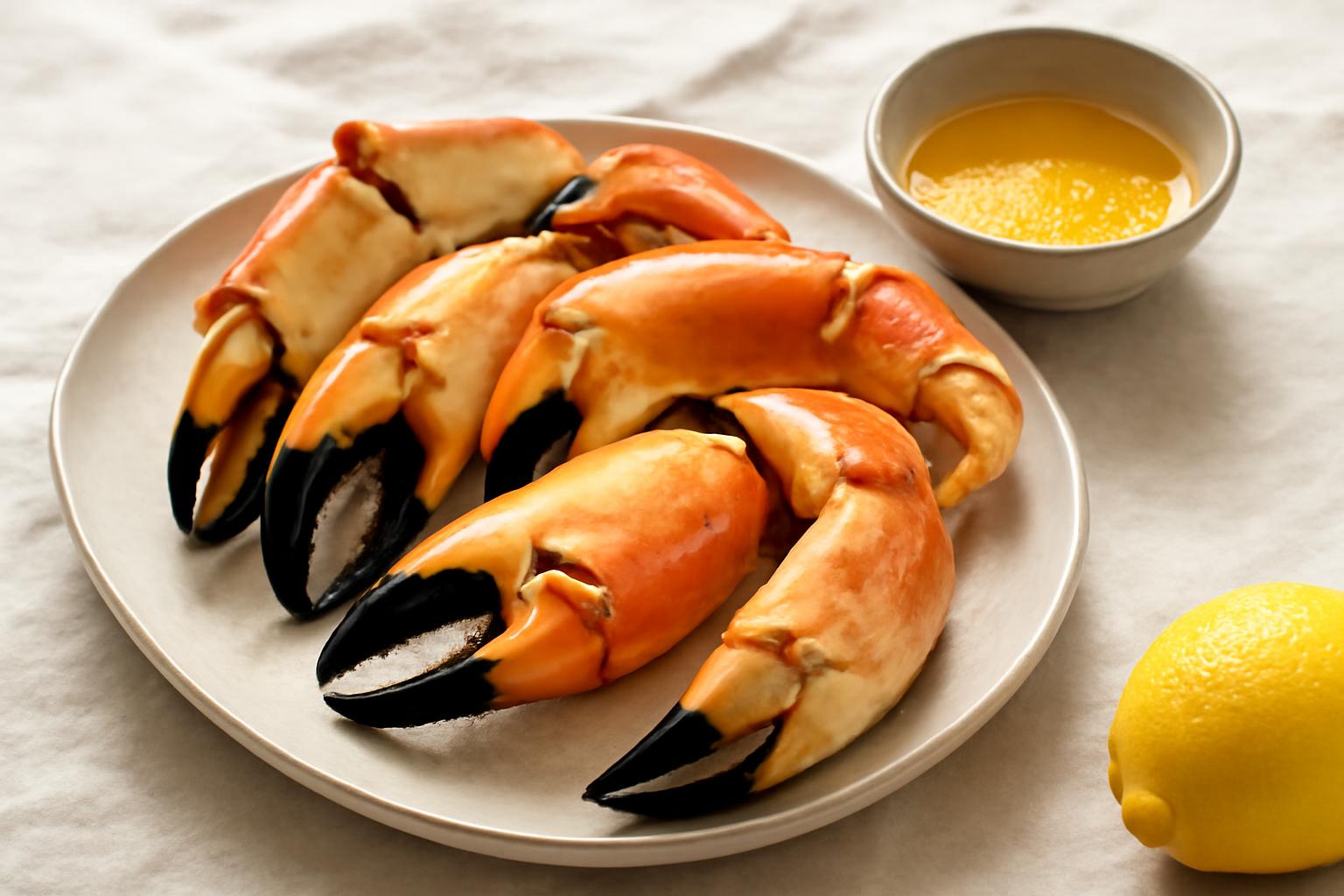
For fully thawed, chilled, precooked claws, 5-6 minutes in a covered basket above boiling water is a practical starting range.
If you are wondering how to cook stone crab claws, first determine whether they need cooking at all. Most commercially purchased claws are already cooked soon after harvest. At home, the usual task is to thaw them and either serve them chilled or warm them briefly.
That distinction is essential because the directions in this guide apply only to precooked stone crab claws. They do not establish how to cook raw claws or provide a food-safety endpoint for raw seafood.
The short version is:
- Confirm that the claws are cooked or precooked.
- Thaw frozen claws before using the main methods below.
- Serve them cold or apply only enough heat to warm them.
For the simplest preparation, serve fully thawed claws chilled. If you prefer them warm, steaming is a practical place to begin because the claws remain above the boiling water.
First, Find Out Whether the Claws Are Already Cooked
Commercial stone crab claws are typically sold precooked, but you must verify the status of your particular product. Look for package terms such as cooked, precooked, flash-cooked, or ready to eat. If the packaging is missing or unclear, ask the seafood counter, market, delivery company, or seller.
Key Largo Fisheries, for example, says stone crab claws are typically sold precooked and flash-frozen, making preparation primarily a matter of thawing, serving, or reheating. It also advises buyers to verify their specific product (see the retailer’s preparation guide).
Use this decision tree:
- Precooked and thawed: Serve chilled or warm gently.
- Precooked and frozen: Thaw before following the main methods in this guide.
- Ready to eat: Thaw and prepare according to the package.
- Raw: Do not use these reheating directions.
- Status unknown: Contact the seller rather than guessing.
The package changes the nature of the job. Precooked meat does not need another complete cooking cycle. Heating is optional and should be understood as reheating, even when a seller’s directions use the word “cook.”
Do not use shell color, shine, or general appearance as your only test of cooked status. Some commercial guides describe red or orange shells as cooked, but the supplied evidence does not establish color as a definitive food-safety test. A clear label or confirmation from the seller is a better basis for choosing a preparation method.
Package directions also take priority over generalized timing. Claw size, batch quantity, frozen or thawed condition, processing, packaging, and appliance performance can all affect preparation.
Most of the method-specific evidence available for stone crab claws comes from seafood sellers, and their recommended times are not entirely consistent. The ranges below are therefore conservative reheating estimates for confirmed precooked claws—not validated instructions for raw seafood.
Thaw Frozen Precooked Claws Before Serving or Reheating
Refrigerator thawing gives frozen claws a predictable starting state. Keep them wrapped or place them in a covered container while they thaw. Frenchy’s Stone Crab and Seafood Market recommends allowing approximately 12–18 hours in the refrigerator, making overnight thawing a useful planning estimate (review the seller’s thawing guidance).
For example, move a dinner order from the freezer to the refrigerator the previous evening.
A Key Largo Fisheries guide also presents cold-water thawing as a faster alternative.
Avoid hot-water submersion and microwave thawing. Frenchy’s warns that these methods may heat the meat unevenly, allowing some portions to warm while others remain frozen. That uneven start makes later reheating harder to control.
After thawing:
- Unwrap the claws.
- Rinse them briefly under cold running water if surface ice or loose debris remains.
- Drain them well.
- Decide whether you want cold or warm service.
Fully thawed, precooked claws do not require reheating, so choose the final serving style before applying heat.
Some sellers publish direct-from-frozen reheating estimates, but those recommendations vary. If your package provides product-specific frozen preparation instructions, follow them instead.
The Simplest Option: Serve Precooked Stone Crab Claws Cold
Fully thawed, precooked stone crab claws can be served without reheating. Cold service is a primary preparation method, not a fallback.
It also removes the main texture risk: exposing already-cooked meat to unnecessary additional heat.
Use this workflow:
- Thaw the claws in the refrigerator.
- Unwrap and briefly rinse them if necessary.
- Drain well and keep chilled.
- Crack the shells gently near serving time.
- Arrange the claws over ice.
- Add lemon and one or two simple sauces.
Use enough ice to maintain a chilled presentation, but avoid leaving cracked claws submerged in melting water. A rimmed platter set over ice allows the claws to remain visible and accessible. Place napkins, cracking tools, seafood forks, and a bowl for discarded shells nearby.
Cracking close to service is a straightforward default. Suwannee Rose’s chilled preparation similarly recommends cracking the claws immediately before they go to the table (see the chilled serving and cracking method).
Partial advance cracking is also possible when convenience matters. Tap the shells lightly, leave the loosened sections around the meat, cover the claws, and return them to the refrigerator until serving. Treat this as an optional presentation choice rather than a requirement.
Suitable accompaniments include:
- lemon wedges;
- creamy mustard sauce;
- melted or clarified butter;
- garlic-herb butter;
- citrus aioli;
- a light creamy citrus sauce.
One rich sauce and one bright accompaniment are generally sufficient. Mustard sauce with lemon, for example, adds creaminess and acidity without creating a crowded table.
For an uncomplicated platter, spread ice across a rimmed serving dish, arrange the drained claws on top, and add small bowls of mustard sauce and butter. Finish with lemon wedges and provide a separate shell bowl.
How to Steam Thawed, Precooked Stone Crab Claws
Steaming is a useful warm-service method because it keeps the claws above the boiling water. It is particularly practical for a modest batch that fits comfortably in a covered pot.
For thawed, chilled, precooked claws, approximately 5–6 minutes is a reasonable starting range. Key Largo Fisheries recommends placing precooked claws in a covered basket above boiling water for that interval (see the retailer’s steaming instructions).
Steaming instructions
- Choose a pot large enough to hold a steamer basket and the claws without preventing the lid from closing.
- Add about one inch of water.
- Position the basket above the water level.
- Bring the water to a boil.
- Arrange the thawed claws in the basket without packing them tightly.
- Cover the pot and steam for the recommended starting interval.
- Open the lid carefully, directing the steam away from your face and hands.
- Remove the claws promptly with tongs.
- Serve while warm.
The objective is to warm the meat, not subject it to another full cooking cycle. Start at the shorter end when working with smaller claws or a light batch.
Some seller guides recommend longer steaming periods. Those estimates may reflect different claw sizes, quantities, starting temperatures, equipment, or seller-specific processing. Rather than automatically extending the entire batch, open one representative claw and assess whether it is warm enough for your preference.
If necessary, return the unopened claws to the basket for a short additional interval. Do not leave them sitting in a covered pot over hot water while you finish sauces or side dishes; residual steam continues transferring heat.
These directions apply only to thawed, precooked claws.
Boiling, Baking, Grilling, and Microwaving Compared
Steaming is not the only option. Thawed, precooked claws may also be warmed by brief boiling, covered baking, moderate grilling, or cautious microwave heating.
These are alternative methods. Do not apply the full interval from one method and then repeat the process with another.
| Method | Starting state | Approximate guidance | Advantages | Principal risk |
|---|---|---|---|---|
| Steaming | Thawed, chilled, precooked | About 5–6 minutes above boiling water (retailer guidance) | No direct water immersion; suitable for small batches | Excess heating if left over active steam |
| Brief boil | Thawed, chilled, precooked | About 3–5 minutes in gently boiling water (market guidance) | Fast; no steamer basket needed | Wet presentation and rapid overheating |
| Covered baking | Thawed, chilled, precooked | About 10 minutes at 350°F (seller instructions) | Convenient for a larger single-layer batch | Retained oven and dish heat |
| Grilling | Thawed, chilled, precooked | About 300–325°F for five minutes per side (seller instructions) | Grilled presentation and surface flavor | Uneven warming and greater overcooking risk |
| Microwave | Thawed, chilled, precooked | About two minutes for one pound at medium power in one seller’s guidance (retailer timing guide) | Fast and convenient | Uneven heating; pressure in intact shells |
Brief boiling
Bring enough water to accommodate the claws to a boil, then add the thawed, precooked claws without overcrowding the pot. Use the short range in the table and remove the claws promptly with tongs.
Published boiling recommendations vary. The brief interval used here comes from guidance specifically framed as reheating previously cooked claws. It should not be treated as a method for cooking raw claws.
Drain the claws immediately rather than leaving them in the hot water after turning off the burner.
Covered baking
Arrange the thawed claws in one layer in a baking dish. Add a small amount of hot water to provide moisture, cover the dish tightly with foil, and use the temperature and interval in the table.
The objective is a lightly moistened covered environment, not a deep bath. If your batch and dish are smaller than those shown in a commercial guide, avoid adding enough water to submerge the claws.
Covered baking can accommodate a batch that will not fit comfortably in a steamer basket. Its drawback is retained heat: the oven, baking dish, water, and foil remain hot after the active heating period ends. Remove the dish from the oven and uncover it carefully when the claws are ready.
Grilling
Use moderate rather than intense heat. Thaw the claws completely, brush the shells lightly with oil, and place them away from aggressive flare-ups. Turn them once and remove them when the seller-supplied interval ends.
Shells may become very hot while the meat warms unevenly, especially when different claw sizes share the same grill.
Choose grilling when you specifically want its presentation or surface character. If the goal is simply to warm the crab with minimal intervention, steaming is easier to manage in an ordinary kitchen.
Microwaving
Microwaving is a secondary convenience method, not the default. Commercial instructions differ, and some preparation guides discourage it because of uneven heating and possible texture damage.
Seller guidance also warns that pressure can build in intact claws in a high-powered microwave. Some product instructions therefore call for cracking the claws first. This warning comes from commercial preparation guidance rather than an independent appliance-safety standard, so follow both the product package and your microwave manufacturer’s directions.
If you use a microwave:
- Confirm that the claws are thawed and precooked.
- Follow package-specific microwave instructions when available.
- Crack the shells first if the seller or appliance instructions require it.
- Arrange the claws evenly on a microwave-safe plate.
- Avoid stacking them.
- Use medium power and the short interval in the table.
- Handle the plate and shells carefully.
- Serve promptly.
Do not microwave the claws for a full interval after already steaming, boiling, baking, or grilling them.
How to Avoid Dry, Tough, or Rubbery Crab Meat
Excessive or repeated heating is the central texture mistake with precooked stone crab claws. Once you have confirmed that the product is already cooked, every additional minute of heat should serve the limited purpose of warming it.
Reheating times are estimates because results depend on:
- claw size and shell thickness;
- batch quantity;
- whether the claws are fully thawed;
- starting refrigerator temperature;
- how tightly they are packed;
- water volume and steam production;
- burner, oven, grill, or microwave performance;
- how quickly the appliance recovers after cold claws are added.
Begin with the shortest suitable interval for the confirmed starting condition. Remove the claws from active heat once they are warm enough for your preference.
Do not silently substitute frozen claws into directions written for thawed claws. Use package-specific direct-from-frozen directions when supplied rather than inventing an added interval.
Shell color cannot tell you whether the center of a precooked claw is warm. It also should not be used by itself to decide whether an unknown claw was properly cooked.
Quick troubleshooting
- The center is colder than you want: Return unopened claws to the steamer briefly rather than restarting a complete cycle.
- The meat is rubbery or chewy: Reduce additional heat and avoid holding the remaining claws over steam, in hot water, or in a warm oven.
- The presentation is waterlogged: Drain boiled or rinsed claws thoroughly and keep cold claws above, rather than submerged in, melting ice.
- The meat contains shell fragments: Use lighter taps and peel away fractured shell sections instead of continuing to hammer.
- Some claws are warm and others are cold: Avoid overcrowding and group similar sizes together.
- The shells are hot but the meat is unevenly warm: This can occur with grilling or microwaving. Use a more evenly arranged batch or switch the remaining claws to steaming.
For confirmed precooked claws, “pleasantly warm” is the relevant culinary goal. There is no need to wait for a dramatic change in shell appearance.
Crack the Shell Without Crushing the Meat
Stone crab shells are hard, but clean opening depends more on control than force.
Useful tools include:
- a purpose-made stone crab or heavy crab cracker;
- a wooden mallet;
- the back of a heavy spoon;
- a clean kitchen towel for grip and containment;
- an optional seafood fork.
Avoid flimsy tools and uncontrolled blows. The objective is to create a few manageable fractures, not reduce the shell to small pieces.
A controlled cracking sequence
- Place the claw on a stable work surface.
- Wrap it loosely in a clean towel.
- Keep your stabilizing hand away from the impact area.
- Tap the thick main shell lightly.
- Rotate the claw and tap another side if necessary.
- Tap the knuckle sections separately.
- Stop as soon as the shell fractures.
- Peel away the loosened sections.
- Check the exposed meat for shell fragments.
A commercial serving guide likewise recommends a crab cracker or mallet and gentle force to avoid driving shell pieces into the meat (review the cracking guidance).
Do not continue striking after a useful fracture line appears. Work a finger beneath a loosened edge and peel the shell away. If one section remains stubborn, apply one more controlled tap to that area rather than hammering the entire claw.
For chilled service, cracking close to serving time is the simple default. If you need to prepare ahead, partially fracture the shells, leave the pieces around the meat, cover the claws, and return them to the refrigerator.
Claws can generally remain intact for steaming, boiling, baking, or grilling unless the product instructions say otherwise. Microwave heating is the notable exception because some seller instructions call for cracking first when using a high-powered unit.
Serve the Claws with Simple Sauces and Sides
Stone crab needs little embellishment. Choose accompaniments that contribute acidity, richness, or mild spice without burying the crab.
Simple mustard dip
Combine:
- mayonnaise;
- dry mustard;
- Worcestershire sauce;
- fresh lemon juice.
Begin with mayonnaise as the base. Add dry mustard sparingly, then stir in a small amount of Worcestershire sauce and lemon juice. Taste and adjust: additional lemon makes the sauce brighter, while more mayonnaise softens the mustard.
The supplied preparation guides do not establish one standardized ratio, so adjusting the ingredients to taste is more appropriate than presenting a single formula as definitive. Prepare the sauce before warming or cracking the claws.
Butter and lemon
Melted or clarified butter with lemon is the simplest alternative. Clarified butter provides a smooth dip, but ordinary melted butter also works.
Other supported choices include:
- garlic-herb butter;
- citrus aioli;
- cocktail sauce;
- tartar sauce;
- creamy mustard sauce;
- a light lemon or lime cream sauce.
One rich dip and one acidic accompaniment are usually enough. For example, serve butter with lemon or mustard sauce with lemon wedges rather than setting out several similar creamy sauces.
Restrained side dishes include:
- crusty bread;
- a crisp salad;
- corn;
- plain or lightly seasoned rice.
Chilled platter presentation
For cold service:
- Thaw the precooked claws in the refrigerator.
- Rinse briefly if needed and drain well.
- Keep chilled until shortly before the meal.
- Crack gently.
- Arrange over ice.
- Add mustard sauce and lemon.
- Provide shell bowls, towels, and cracking tools.
This presentation avoids another heating cycle and allows most of the table setup to be completed before serving.
Warm steamed presentation
For warm service:
- Prepare the sauce or butter first.
- Set out shell bowls, towels, and cracking tools.
- Steam the fully thawed, precooked claws using the short range above.
- Remove them from the basket promptly.
- Transfer them to a platter.
- Crack at the table or give each shell a controlled preliminary tap.
- Serve immediately with butter and lemon.
The complete method comes down to three rules: verify that the claws are precooked, thaw them before choosing cold or warm service, and use as little additional heat as necessary.
If the label says raw, or the seller confirms that the claws are raw, these reheating times do not apply. The evidence used for this guide does not establish an authoritative cooking endpoint for raw stone crab claws, so obtain verified instructions applicable to that product.
Frequently Asked Questions About Cooking Stone Crab Claws
Are stone crab claws already cooked when you buy them?
Most commercially purchased stone crab claws are sold already cooked, but that is not true of every product. Confirm the status on the package or with the seller. Look for words such as cooked, precooked, flash-cooked, or ready to eat.
If they are precooked, thaw them and either serve them cold or warm them briefly. Do not rely solely on shell color or appearance.
How long do you steam precooked stone crab claws?
For fully thawed, chilled, precooked claws, approximately 5–6 minutes in a covered basket above boiling water is a practical starting range. Keep the basket above the water and remove the claws promptly.
Claw size, batch quantity, starting temperature, and equipment can affect the result. Product-specific package directions take priority.
Can you cook or reheat frozen stone crab claws without thawing them?
Some seller guides provide direct-from-frozen estimates, but their recommendations vary. Thawing first creates a more even starting condition and gives you better control over the exterior and center.
For refrigerator thawing, one seafood-market guide recommends approximately 12–18 hours. Cold water is the faster alternative identified in the supplied seller guidance. Avoid microwave or hot-water thawing because those methods may begin heating the meat unevenly.
Can you microwave stone crab claws?
You can microwave thawed, precooked claws if the product instructions permit it, but it is a secondary method. One commercial guide suggests approximately two minutes for one pound at medium power.
Microwave heating may be uneven, and commercial instructions warn that pressure may build inside intact shells. Follow the package and appliance directions, crack the claws first when instructed, arrange them evenly, and avoid repeated reheating.
What should I do if my stone crab claws are labeled raw?
Do not use the short reheating intervals in this guide. They are intended to warm claws that were cooked before purchase.
The supplied preparation evidence does not establish a dependable food-safety endpoint for raw stone crab claws across different sizes and starting conditions. Follow verified product-specific directions or obtain appropriate guidance from the seller or an authoritative food-safety source.