
The Simple Answer—and Why Your Whiskey Pour May Differ
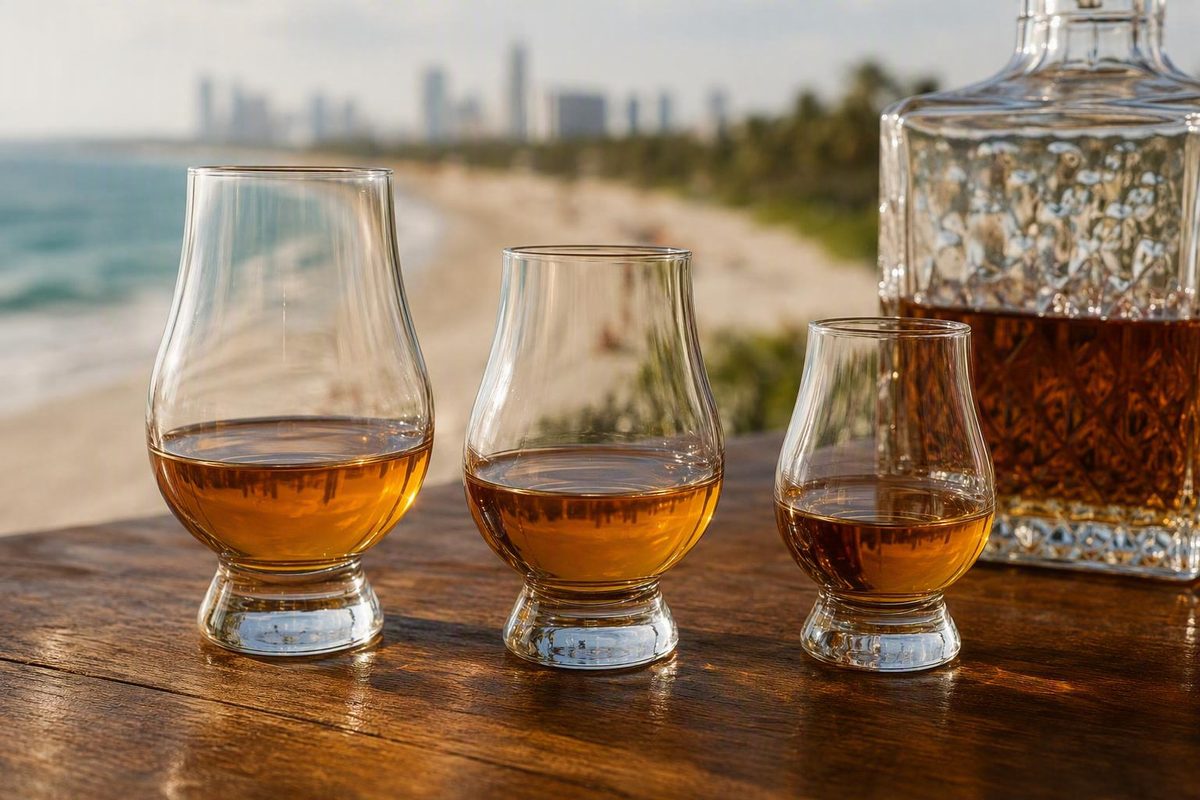
Use 1.5 fl oz (44 mL) as a starting point, then check the bar's single pour: it may be 1, 1.25, 1.5 oz or another amount.
The simple answer—and why your whiskey pour may differ
The quick answer: a typical U.S. shot is 1.5 ounces
A typical U.S. shot of whiskey contains 1.5 U.S. fluid ounces, or approximately 44 milliliters. It can also be measured as 3 U.S. tablespoons or 9 U.S. teaspoons. These figures are a common U.S. baseline, not a universal serving size that every bar or jurisdiction must use. Wine Enthusiast identifies 1.5 ounces, or 44 milliliters, as the measure many U.S. bartenders consider a standard shot.
| Common U.S. baseline | Equivalent amount |
|---|---|
| U.S. fluid ounces | 1.5 fl oz |
| Milliliters | Approximately 44–45 mL |
| U.S. tablespoons | 3 tbsp |
| U.S. teaspoons | 9 tsp |
For a cocktail recipe, home bar, or bottle-yield calculation, 1.5 fluid ounces is the most useful starting point. The qualifying words typical and common matter, however: the reference does not prove how much a particular bartender poured, how much an unmarked shot glass holds, or what another location treats as a single serving.
This answer concerns volume, not price. “How much is a shot of whiskey?” can mean either “How much liquid is in it?” or “What does it cost?” The general volume answer is approximately 1.5 ounces or 44 milliliters in a typical U.S. shot. The price depends on the whiskey and the establishment.
Why a shot is not always the same size
A shot is a customary serving rather than a perfectly uniform unit such as an ounce or milliliter. There is no federal U.S. rule requiring every whiskey shot to contain the same volume. One supplied guide describes actual pours of approximately 1.25 to 2 fluid ounces, depending on the establishment and location. Tinto’s shot-size guide explains both the 1.5-ounce convention and the absence of a federally mandated uniform pour.
Several factors can affect what arrives in the glass:
-
Venue policy: A bar may define its single pour as 1 ounce, 1.25 ounces, 1.5 ounces, or another amount.
-
Glassware: The glass may be smaller or larger than the customary reference serving.
- Jurisdiction: Serving conventions can vary by jurisdiction, although isolated examples should not be treated as a comprehensive legal guide.
- Local custom: A familiar serving in one area may differ from the customary pour elsewhere.
- Measurement method: A marked measuring tool is generally more consistent than an uncalibrated visual estimate.
This variation explains why two drinks listed as a “shot” may contain different amounts of whiskey. The menu term identifies the kind of order, but it does not always disclose a precise volume.
The 1.5-ounce baseline remains useful for recipes, conversions, bottle-yield estimates, and comparisons involving standard drinks. It simply cannot predict every establishment’s house standard.
Glass shape can also make visual comparisons unreliable.
If the exact amount matters at a venue, ask:
“How many ounces are in your single pour?”
That is more dependable than assuming that “single” always means 1.5 ounces. It may also be worth asking whether the venue uses the same measured quantity for straight shots and mixed drinks.
Shot size, shot-glass capacity, and standard drinks are different
Three related concepts are often confused:
- Customary shot volume: The amount commonly meant by a shot—in the United States, typically 1.5 fluid ounces.
- Shot-glass capacity: The maximum amount a particular glass can hold.
- Standard-drink alcohol content: A health-information unit based on the amount of pure alcohol in a serving.
Keeping these ideas separate prevents a glass or menu label from being mistaken for a precise alcohol measurement.
A shot glass is a container, not a guaranteed measurement
Shot glasses vary considerably and may hold less or more than the common 1.5-ounce reference. WebstaurantStore’s overview documents the variation in shot-glass sizes and distinguishes glass capacity from customary shot measurements.
Filling an unidentified shot glass to the rim therefore does not prove that it contains one typical U.S. shot. Nor does a glass’s maximum capacity reveal how much was actually poured. A bartender can place a measured serving into a larger glass and leave space at the top, while a smaller glass may receive only a partial fill.
Decorative and souvenir glasses are particularly unreliable as measuring devices unless they have verified volume markings. Thick bases, tapered sides, wide rims, and unusual shapes can all distort the apparent quantity.
If you want to use a particular glass as a home measure, test it with water and a marked jigger or liquid measuring cup. Note where the verified amount reaches rather than assuming that the rim represents a standard serving.
A standard drink measures pure alcohol
A U.S. standard drink is not simply one glass or one shot. It is based on a specified quantity of pure alcohol.
The National Institute on Alcohol Abuse and Alcoholism states that one U.S. standard drink contains about 0.6 fluid ounces, or 14 grams, of pure alcohol. One example is 1.5 fluid ounces of distilled spirits at 40% alcohol by volume, the concentration associated with 80-proof spirits. See the NIAAA definition of a U.S. standard drink.
A typical 1.5-ounce whiskey shot therefore equals one U.S. standard drink only when the whiskey is 40% ABV. Both volume and strength matter:
- The same volume of higher-ABV whiskey contains more pure alcohol.
- A larger pour at the same ABV contains more pure alcohol.
- A smaller pour may contain less, depending on its strength.
The glasses can look identical even when their alcohol content differs. Neither the word “shot” nor the appearance of the serving establishes the number of standard drinks by itself.
How to measure a shot accurately at home
For a repeatable home pour, use a tool designed to measure liquid volume rather than relying on the appearance of an unmarked glass.
A practical order of preference is:
- A marked jigger or small liquid measuring cup
- Standardized measuring spoons
- A clean medicine cup with clear liquid-volume markings
- A free-pour that has been calibrated and checked
- An unverified visual estimate
This ranking is practical editorial guidance: the first methods provide marked volumes, while the later methods depend increasingly on calibration and judgment.
Use a marked jigger or liquid measuring cup
Find the 1.5-fluid-ounce or approximately 44–45-milliliter mark and fill to that line. Some jiggers have several internal markings, while double-sided models can use different capacities on each end. Read the labels instead of assuming that the larger side automatically represents a typical shot.
For a measuring cup, place it on a level surface and read the liquid line at eye level when practical. Tilting the cup or looking sharply down at the markings can make the fill level harder to judge.
Use level measuring spoons
If you do not have a jigger, use 3 level U.S. tablespoons or 9 level U.S. teaspoons. A marked measuring cup can also be used at the corresponding ounce or milliliter line. This measurement guidance describes the same spoon and measuring-cup conversions and recommends checking estimated pours with a measured tool.
Use standardized measuring spoons rather than dining flatware. A spoon from a cutlery drawer is not necessarily the same size as a U.S. measuring tablespoon or teaspoon. Keep each spoonful level rather than heaped.
Tablespoons are more convenient because they require fewer transfers. Teaspoons work, but repeated transfers create more opportunities to spill or lose count.
Use a marked medicine cup carefully
A clean medicine cup can work when it has clear liquid-volume markings and is suitable for the task. Household measurement guidance includes marked medicine cups among possible substitutes when a shot glass or jigger is unavailable.
Use the marked volume rather than the cup’s rim. Its full capacity may differ from the desired pour. Keep any cup used for drink preparation separate from one needed for medication.
Calibrate a free-pour instead of trusting a count
Timed free-pouring is an estimate, not an inherently precise measurement. The result can change with the bottle, pour spout, angle, flow, technique, and amount of liquid remaining.
If you want to practice, use water:
- Pour for your chosen count.
- Transfer the water into a marked jigger or measuring cup.
- Compare the result with the intended amount.
- Adjust and repeat until the pours are reasonably consistent.
Recheck the method after changing bottles or pour spouts. A count that works with one setup may produce a different volume with another.
Direct measurement remains the better option when cocktail balance or bottle yield matters.
Treat visual cues as estimates
Finger widths, cup lines, and guesses based on glass shape are not precise. A visual cue representing 1 ounce, for example, falls short of the typical 1.5-ounce baseline.
You can calibrate a regularly used glass by pouring a measured amount of water into it and noting the fill level. That gives you a repeatable reference, but it does not turn every apparent fill into an exact measurement.
How much is a double shot?
If a venue defines its single shot as 1.5 fluid ounces, a mathematical double is:
1.5 ounces × 2 = 3 fluid ounces
That is approximately 89 milliliters.
However, “double” is a venue-defined order rather than a universally guaranteed quantity. Published guidance describes doubles broadly, often around 2 to 3 ounces, because establishments do not all begin with the same single-pour standard. Wine Enthusiast notes that a double is most likely to contain approximately 2 to 3 ounces.
A bar using a 1-ounce single could serve a 2-ounce double, while one that literally doubles a 1.5-ounce house pour could serve 3 ounces.
Do not automatically record every double as 3 ounces when comparing drinks or accounting for alcohol content. Ask how many ounces the establishment serves when the exact amount matters.
“Neat” and “on the rocks” should not be treated as universal volume terms either:
- Neat generally describes whiskey served without ice or a mixer.
- On the rocks describes whiskey served over ice.
Those phrases explain presentation, not a guaranteed pour size. The house standard still determines the quantity.
The alcohol content of a double depends on both its actual volume and the whiskey’s ABV. Two doubles of equal volume can contain different amounts of pure alcohol when their strengths differ.
How many shots are in a bottle of whiskey?
Bottle yield depends on the assumed serving size. The following estimates treat each shot as 1.5 fluid ounces, or approximately 44 milliliters.
A 750 mL bottle
A 750-milliliter bottle contains approximately 25.4 U.S. fluid ounces. The theoretical calculation is:
25.4 ÷ 1.5 = approximately 16.9 shots
For practical planning, rounding down to roughly 16 full measured pours allows for spillage, liquid left in the bottle, and inconsistent pouring. WebstaurantStore provides the 25.4-ounce bottle conversion, 16.9-shot theoretical yield, and 16-pour practical estimate.
Common bottle-size estimates
| Bottle size | Approximate 1.5-ounce shots | Practical interpretation |
|---|---|---|
| 50 mL mini | About 1.1 shots | Slightly more than one reference shot |
| 750 mL bottle | About 16.9 shots | Roughly 16 full pours in practice |
| 1 liter | Approximately 22 shots | Rounded estimate |
| 1.75 liters | Approximately 39 shots | Rounded estimate |
A 50-milliliter mini bottle contains approximately 1.7 fluid ounces, making it slightly larger than the 1.5-ounce reference shot. The same bottle-yield guide estimates approximately 22 shots from a 1-liter bottle and 39 from a 1.75-liter bottle, assuming 1.5-ounce servings. These bottle yields are rounded estimates rather than guaranteed serving counts.
Actual yield will be lower when pours are generous, whiskey is spilled, or liquid remains in the bottle. It may be higher when servings are smaller than the assumed baseline.
How to calculate any other bottle size
Use the same unit for both the bottle and the serving:
Bottle volume in fluid ounces ÷ 1.5 = estimated number of shots
or:
Bottle volume in milliliters ÷ approximately 44 = estimated number of shots
For practical planning, round down instead of assuming that every theoretical fraction becomes a complete serving. If a recipe uses a different quantity, calculate from the recipe amount rather than from the word “shot.”
If “how much” means price, check the specific bar
If you mean how much a shot of whiskey costs, there is no supported national or Miami-specific price to provide here. The available evidence establishes customary serving volume and bottle yield, not current menu prices.
A listed price also does not reveal the pour size unless the establishment states the number of ounces.
For an exact comparison, check the current menu and ask two separate questions:
- What does a single shot of this whiskey cost?
- How many ounces are in the single pour?
Asking both prevents price and quantity from being confused. A lower price may accompany a smaller pour, a different whiskey, or simply a different pricing policy.
Frequently asked questions
How many milliliters are in a shot of whiskey?
Use the quick-reference conversion near the beginning of this article. The metric figure is approximate because the customary U.S. baseline does not convert to a whole number of milliliters. If a recipe specifies an exact metric quantity, follow the recipe rather than replacing it automatically with a generic shot.
Is one shot of whiskey equal to one U.S. standard drink?
It can be, but not automatically. The pour volume and the whiskey’s ABV must both match the U.S. standard-drink definition described above. The word “shot” alone does not establish the amount of pure alcohol.
Can I measure a shot with a tablespoon?
Yes. Use standardized, level measuring spoons and the conversion in the quick-reference table. Do not substitute an ordinary dining spoon, because household cutlery is not a dependable liquid-volume measure.
Is every shot glass 1.5 ounces?
No. Shot-glass capacities vary, and capacity does not prove how much was actually poured. Verify the glass with water and a marked measure before using it as a measuring tool.
How many 1.5-ounce shots are in a 750 mL bottle?
The theoretical and practical yields are shown in the bottle table above. Use the theoretical figure for conversion and the lower practical estimate when planning for spills or inconsistent pours.
The bottom line
In the United States, treat a typical whiskey shot as 1.5 fluid ounces, approximately 44 milliliters, 3 tablespoons, or 9 teaspoons. It is a common convention rather than a universal rule, so measure the pour at home and ask about the house standard at a bar.
For alcohol-content comparisons, remember the essential qualification: 1.5 ounces counts as one U.S. standard drink only when the whiskey is 40% ABV. That equivalence follows the NIAAA definition of a U.S. standard drink.