
How to Build a Key West Trip Around the Experiences You Actually Want
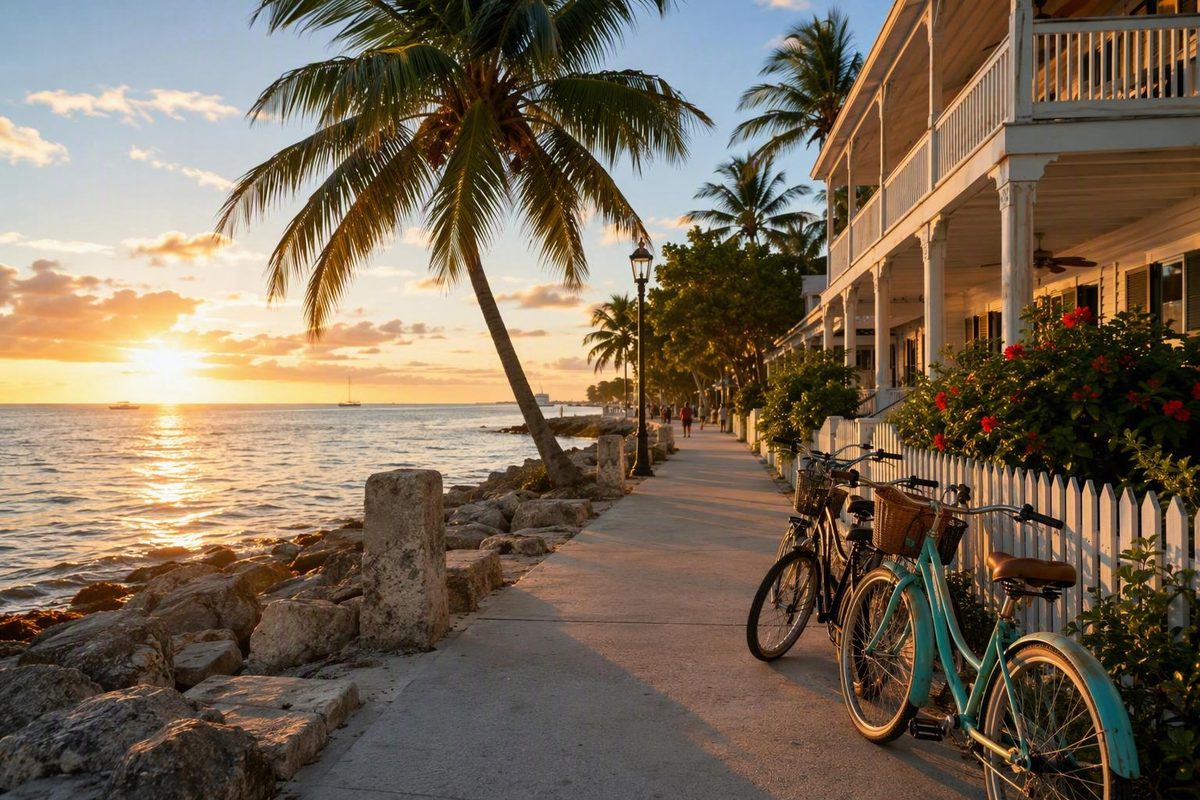
For most first-time visitors with one day, Dry Tortugas displaces nearly all Old Town, food and neighborhood time. Plans for one to three days show the trade-offs.
The most rewarding things to do in Key West do not need to become an enormous checklist. For a balanced first visit, choose four anchors:
- Explore historic Old Town.
- Tour either the Hemingway Home or Truman Little White House.
- Spend time on or beside the water.
- Try a distinctive local food and finish with a sunset at Mallory Square, on a boat, or along the waterfront.
These experiences recur across Key West travel guides, which establishes their prominence—not their objective superiority. Your ideal trip may emphasize architecture over nightlife, sailing over swimming, or free gardens over ticketed museums.
The practical rule is one major commitment per half day. Build around that commitment, then add nearby stops that can be removed if lunch runs long, the heat becomes tiring, or the weather changes.
This is an evergreen planning framework synthesized from travel guides rather than a real-time operating guide or account of firsthand inspection. Before traveling, use official park, attraction, transportation, municipal, marine-weather, and tour-operator channels to confirm details that can change.
Start Here: Choose the Right Key West Experiences for Your Trip
Before making reservations, decide what you want Key West to feel like. A history-focused visitor could spend most of a weekend among old houses, museums, forts, and neighborhood streets. A water-oriented traveler might prioritize snorkeling, kayaking, or sailing and treat Old Town as an evening walk. Neither approach is incomplete.
The following table uses broad planning bands rather than current schedules or prices. They are comparative estimates based on the way these activities are presented in multi-day itineraries and tour categories, not promises about a specific venue or operator. “High” cost means a ticketed excursion is likely to be one of the larger activity expenses in the itinerary; it does not indicate a verified price.
| Experience | Typical commitment | Physical effort | Swimming dependence | Weather dependence | Likely cost | Plan ahead? |
|---|---|---|---|---|---|---|
| Old Town walking | Under two hours or half day | Varies with route and conditions | None | Moderate | Free to low | Usually flexible |
| Historic home | Under two hours | Venue-specific | None | Low | Moderate | Prudent in busy periods |
| Museum | Under two hours | Venue-specific | None | Low | Free to moderate | Check current hours |
| Beach time | Under two hours or half day | Varies | Optional | High | Free to moderate | Usually flexible |
| Reef snorkeling | Half day | Moderate | Commonly required; confirm | High | High | Yes |
| Mangrove kayaking | Half day | Moderate | Confirm operator requirements | High | High | Yes |
| Sightseeing sail | Under two hours or half day | Generally lower exertion than paddling | Usually none unless a swim stop is included | High | High | Yes |
| Sandbar trip | Half day | Varies by itinerary | Often central; confirm | High | High | Yes |
| Sunset cruise | Under two hours or half day | Usually low, apart from boarding | Usually none; confirm | High | High | Yes |
| Dry Tortugas | Full day by the commonly described ferry plan; potentially shorter by seaplane | Varies by chosen activities | Optional | Very high | High | Strongly prudent |
These categories reflect the range of historic, beach, water, and tour experiences commonly marketed in Key West; actual duration, exertion, inclusions, and participant requirements are operator-specific. Travel accounts commonly arrange snorkeling, sailing, and kayaking as half-day commitments and Dry Tortugas by ferry as a full-day excursion, but current details must be confirmed directly before building the rest of the itinerary around them.
A historic home or museum is a substantive experience because it can provide context for the people, architecture, economy, and maritime history of the island. By comparison, the Southernmost Point buoy and Mile Marker 0 are brief photo opportunities. The buoy is associated with the southernmost point of the continental United States, while Mile Marker 0 marks the end of U.S. Highway 1 in this budget-oriented Key West account.
Stop for either photograph if the line is short and the image matters to you. Do not sacrifice an hour you would rather spend in a garden, museum, neighborhood, or on the water.
A useful selection formula is:
- For history: Hemingway Home or Truman Little White House
- For water: sail, snorkel, kayak, sandbar trip, or beach
- For local atmosphere: Bahama Village, residential Old Town, Duval Street, or the Historic Seaport
- For food: Key lime pie plus seafood, Cuban coffee, or a Conch-influenced meal
- For sunset: Mallory Square, a cruise, beach, pier, park, or waterfront walk
Confirm admission, accessibility, operating hours, reservation rules, closures, and transportation directly with the relevant venue or operator. For beaches and public spaces, consult current City of Key West or park information; for marine excursions, check the operator’s status and the official marine forecast.
Explore Old Town for History, Architecture, Shopping, and Nightlife
Old Town works best as a connected district rather than a series of isolated destinations. A practical core links the Hemingway Home and Museum, Key West Lighthouse, Bahama Village, Duval Street, the Historic Seaport, and Mallory Square.
Begin toward the southern side of Old Town if you want the Southernmost Point photograph. From there, move through Bahama Village toward the historic-home cluster. The Hemingway Home occupies a Spanish Colonial-style house and presents the writer’s Key West legacy; it is also known for its cats as described in this one-day Key West guide. The Key West Lighthouse is nearby, making the two easier to combine than attractions at opposite ends of the district.
Avoid trying to fit the lighthouse, two historic homes, several museums, and a beach into the same morning. Choose the site that matches your strongest interest, then treat anything else as optional.
The Truman Little White House is the principal presidential-history alternative. Supplied travel accounts report that Harry S. Truman used it as a working winter White House and spent 175 days of his presidency there in this 48-hour Key West overview. It is the more relevant choice for visitors interested in presidential activity and 20th-century political history; the Hemingway Home better suits a literary-history focus. Travelers with more time can visit both without treating either as universally essential.
If maritime history interests you, select one or two related attractions rather than assuming every museum belongs on a first-visit itinerary:
- Key West Shipwreck Museum
- Mel Fisher Maritime Museum
- Custom House
- Key West Aquarium
- Key West Lighthouse and its museum
Travel guides describe the Shipwreck Museum as featuring salvaged material and interpretive exhibits, while the lighthouse includes displays connected with nautical history. The Mel Fisher Maritime Museum, Custom House, and aquarium offer different routes into shipwreck, regional, artistic, and marine subjects within broader Old Town itineraries. Use the official page for each venue to check its current exhibition focus, admission arrangements, and accessibility rather than relying on a general guide.
Duval Street presents a genuine trade-off. It concentrates shops, restaurants, bars, galleries, entertainment, and nightlife, making it efficient for travelers who want energy and variety. It can also feel commercially oriented. Visitors seeking a quieter experience can spend less time there and more time along residential lanes, in Bahama Village, around the Historic Seaport, or beside the waterfront.
Key West Cemetery and self-guided historic routes provide lower-cost ways to engage with local history and architecture. Approach the cemetery as a memorial and historical place rather than a novelty stop. On residential streets, pay attention to porches, rooflines, tropical vegetation, narrow lots, and the relationship between older homes and the street.
A low-backtracking sequence is:
- Southernmost Point area, if desired
- Bahama Village
- Hemingway Home and Key West Lighthouse
- Duval Street or quieter parallel streets
- Truman Little White House or one maritime museum
- Historic Seaport
- Mallory Square for sunset
This is a directional framework, not a promise that every traveler can or should walk the complete route. Heat, rain, mobility requirements, queues, and attraction hours may make a shorter cluster or a paid ride more sensible.
Do not infer accessibility from the attraction type or from the word “museum.” Check the official accessibility information for the specific building and contact the venue if your needs are not clearly addressed.
Choose a Water Activity That Fits Your Comfort Level
Water experiences are a central part of Key West’s visitor market. Commonly featured options include snorkeling, sailing, kayaking, sandbar excursions, fishing, dolphin watching, jet-ski tours, and sunset cruises. The right choice depends less on popularity than on how much exertion, swimming, speed, and uncertainty you enjoy.
Choose sailing when you want scenery and time on the water without making physical activity the focus. Some sails are primarily sightseeing trips; others add snorkeling or swimming. Read the complete itinerary rather than assuming that every trip labeled “sail” has the same format.
Choose mangrove kayaking for active nature exploration at a slower pace. Travel accounts describe opportunities to encounter birds, iguanas, rays, fish, and other wildlife, but no sighting is guaranteed. Ask whether the route includes narrow mangrove passages, how long participants paddle, and whether tandem kayaks are available.
Choose snorkeling if you are comfortable in the water and want marine scenery to be the main event. One cruise-stop guide notes that reef selection may depend on weather and tour volume, illustrating why an advertised destination should not be treated as guaranteed.
Choose a sandbar trip for a social outing centered on shallow water, swimming, floating, and relaxation. It may not suit someone seeking extensive reef interpretation or a quiet nature experience, and water participation may be a substantial part of the trip.
Choose fishing or jet skiing when the specialized activity itself is the priority. Ask what experience is expected, what instruction is included, and whether age, identification, licensing, passenger, or operating restrictions apply.
Choose a sunset cruise when sailing is part of the appeal. Atmosphere varies: one boat may emphasize quiet sightseeing, while another may be more social. Group size, vessel design, seating, music, route, and drink service can change the experience considerably.
Non-swimmers still have many land-based and lower-participation choices, including sightseeing sails, sunset cruises, trolley or train tours, historic homes, museums, gardens, cafés, and waterfront walks. However, do not assume a boat is suitable for a non-swimmer merely because swimming is not advertised.
Before booking a marine activity, ask:
- What is the total duration, including check-in?
- How large is the group?
- Is swimming required, optional, or absent?
- What flotation devices are supplied?
- Are there minimum ages or participant restrictions?
- How does boarding work?
- What equipment is included?
- Is there shade?
- Is a restroom available?
- Are food and drinking water included?
- What is the cancellation or rebooking policy?
- What happens if weather or marine conditions change?
Travelers concerned about motion sickness or managing health limitations should review the vessel type, trip length, route, boarding process, and operator rules before paying. Seek individualized professional advice where appropriate rather than treating a general activity description as a medical or suitability assessment.
Compare Smathers Beach, Higgs Beach, and Fort Zachary Taylor
Key West is surrounded by water, but it should not be presented as a conventional broad, soft-sand beach destination. Supplied guides describe some local shores as narrow, rocky, or mixed in texture.
That does not make beach time unrewarding. It means the choice should depend on the combination of space, nearby attractions, historical interest, and water access you want.
| Beach | Likely strengths | Shoreline caveats | Nearby attractions | Snorkeling potential | Family or group appeal | Possible expenses |
|---|---|---|---|---|---|---|
| Smathers Beach | More room for a conventional beach stop; commonly associated with water-sport rentals | Conditions and shoreline can change | Atlantic-side waterfront | Not the main reason to choose it | May suit groups wanting more beach space; verify facilities and conditions | Rentals, parking, food, or transport |
| Higgs Beach | Combines beach time with cultural, memorial, garden, and recreation stops | Do not assume calm water or ideal sand | White Street Pier, African Cemetery memorial, AIDS Memorial, West Martello Garden | Variable | Useful when a group wants more than swimming | Equipment, food, transport, or parking |
| Fort Zachary Taylor | Combines a historic fort, beach, trails, and possible shore snorkeling | Frequently described as rocky; water shoes may help | Historic fort and picnic areas | Possible, never guaranteed | Useful for mixed history-and-beach interests | Admission and incidental purchases may apply |
Smathers is identified in one three-day itinerary as Key West’s largest public beach and is commonly associated with greater beach space and water-sport rentals in comparison with other local shores. Consider it when the priority is spreading out beside the water rather than pairing a beach with a major historical site.
Higgs Beach supports a mixed-interest outing because White Street Pier, the African Cemetery memorial, the AIDS Memorial, West Martello Garden, and recreation features are in the same general area. It may suit a group in which not everyone wants to spend the entire visit swimming or sunbathing.
Fort Zachary Taylor Historic State Park combines a historic fort, a beach, picnic areas, and the possibility of snorkeling from shore. Several supplied guides describe the shoreline as rocky and recommend considering water shoes. That is not a guarantee that water shoes will resolve every condition, nor does it establish that snorkeling will be clear, calm, or worthwhile on a particular day.
Use current city or state-park information before choosing a beach. Check lifeguard coverage, water quality, swimming advisories, accessibility, parking, admission, shade, restrooms, rentals, concessions, and any facility closures. Never infer safe conditions for children, calm water, clear visibility, or parking availability from a general itinerary.
Decide Whether Dry Tortugas Belongs in Your Itinerary
Dry Tortugas National Park is not another stop on an Old Town walk. It is a major offshore excursion centered on Fort Jefferson, beaches, marine scenery, swimming, and snorkeling.
Its appeal is straightforward: the journey offers a remote national-park setting and historic fort that feel distinct from urban Key West. Its cost is itinerary space. Multiple supplied accounts describe the ferry journey as approximately 2.5 hours each way, making the standard ferry excursion a full-day commitment in this multi-day Key West itinerary.
At a high level, the transportation choices are:
- Ferry: More transit time and greater exposure to sea conditions, creating a conventional full-day excursion under the plans described by the supplied sources.
- Seaplane: Faster transportation that may permit a shorter visit, subject to current schedule, price, capacity, baggage rules, and weather.
- Camping: A separate planning category requiring direct research into reservations, equipment, food, drinking water, capacity, and park regulations.
A shorter seaplane visit and a full-day ferry trip are not interchangeable. Neither is universally sufficient. Some visitors mainly want to tour Fort Jefferson; others want an unhurried combination of the fort, beach, swimming, and snorkeling. Decide what you expect to do before choosing transportation.
Dry Tortugas may fit when:
- Remote-park scenery is a leading priority.
- Fort Jefferson is a major reason for the trip.
- You have enough time to preserve a separate block for Key West itself.
- Transportation is confirmed and the cancellation terms are acceptable.
- Everyone in the group is comfortable with the journey and activity requirements.
For most first-time visitors with only one day in Key West, Dry Tortugas is a difficult fit because it displaces nearly all local Old Town, food, and neighborhood time. A traveler whose overriding priority is Fort Jefferson may accept that trade-off, but it should be a deliberate choice rather than an add-on.
Before paying, confirm through the National Park Service and the relevant transportation provider:
- Current availability and departure point
- Total door-to-door time
- Check-in and return procedures
- Cancellation and rebooking terms
- Meal and drinking-water provisions
- Snorkeling equipment and flotation arrangements
- Shade and sun-protection needs
- Mobility and boarding considerations
- Baggage restrictions
- Seasickness planning
- What happens if weather interrupts transportation
Do not build the rest of the trip around an assumed departure until transportation is secured. Keep a land-based alternative available in case conditions change.
Find Free and Lower-Cost Things to Do
A free-focused Key West day can still include history, gardens, memorials, waterfront views, and sunset. It works best as two geographic modules rather than one continuous walking route.
Higgs Beach and West Martello cluster:
- A self-guided historic segment
- West Martello Tower and Garden
- White Street Pier
- Higgs Beach
- African Cemetery memorial
Truman Waterfront and Old Town cluster:
- Truman Waterfront Park
- Florida Keys Eco-Discovery Center
- Historic Seaport
- Mallory Square
Combining both clusters in one day may require a bicycle, taxi, ride service, or other transportation, especially in heat or rain. Do not assume that “free route” means every stop is conveniently walkable from the previous one.
The Pelican Path is described as a self-guided route covering 51 historic buildings. The Key West Historic Marker Tour and Florida Stories app provide additional self-guided options, although app availability, device compatibility, and current content should be checked before relying on them using this regional guide to free Key West activities.
The same guide describes West Martello as an unfinished Civil War-era fort that later became the Key West Garden Club’s botanical garden. Pair it with Higgs Beach and White Street Pier because they occupy the same general area. The nearby African Cemetery memorial adds an important historical dimension and should be approached respectfully.
Truman Waterfront Park and the Florida Keys Eco-Discovery Center form another useful cluster. From there, continue toward the Historic Seaport and Mallory Square if time and conditions allow. Neighborhood streets, public waterfront walks, the Southernmost Point photograph, and the Mallory Square sunset gathering are among the prominent no-admission experiences described in the supplied guides.
“Free admission” does not mean a cost-free day. You may still pay for:
- Parking
- Transportation
- Bicycle rental
- Food and drinks
- Beach equipment
- Donations
- Nearby ticketed attractions
The Coast Guard Cutter Ingham, for example, is near Truman Waterfront but should not be assumed to be free. Walking through Key West Cemetery may involve no admission charge while an organized historical tour may charge a fee.
A sensible value strategy is to combine several free stops with one paid priority. That might be the Hemingway Home, Truman Little White House, a maritime museum, snorkeling excursion, or sunset cruise. Avoid fixed daily-budget promises: lodging, transportation, food, parking, and tours can make the overall trip expensive even when much of the sightseeing has no admission charge.
Plan Food and Sunset Around the Day, Not as Afterthoughts
Food and sunset work best as structural parts of the itinerary. A pie stop can create a break between walking segments; a waterfront meal can bridge the gap between a museum and sunset; dinner in Bahama Village can prevent another cross-town trip late in the day.
Key lime pie is the recurring local food experience across the supplied travel guides. Kermit’s and Blue Heaven are frequently mentioned examples, not definitive winners. Try one if time is limited, or compare two preparations as part of a self-guided tasting route. Confirm current hours, menus, reservations, and dietary information directly with the restaurant.
Expand the tasting beyond dessert:
- Start with Cuban coffee.
- Add seafood for lunch.
- Try Key lime pie during an afternoon break.
- Choose a Bahamian- or Conch-influenced meal later in the day.
This creates variety without requiring a formal food tour. It also lets you adjust portions and timing around other activities. These labels encompass distinct culinary traditions, so use restaurant descriptions rather than assuming every seafood or Caribbean-style menu represents the same history or influence.
For sunset, choose the atmosphere rather than chasing a supposedly perfect view.
Mallory Square is the lively, no-admission option. Supplied guides describe a sunset gathering with performers, vendors, artists, and crafts. Crowds are part of the experience and can affect sightlines; boats may also pass through the view.
A sunset cruise moves the evening onto the water. Choose it when sailing is part of the appeal, not because you expect a guaranteed unobstructed sunset. Weather, clouds, vessel layout, route, and passenger numbers all affect the experience.
Piers, beaches, parks, and waterfront walks offer simpler alternatives. They may involve less commitment, but no location can guarantee seating, solitude, favorable weather, or a clear horizon.
If the evening continues onto Duval Street, arrange the return before drinking. Do not drive or cycle while impaired. Check late-night taxi, ride, shuttle, or walking arrangements in advance, and keep the group’s lodging location in mind.
Use These Realistic One-, Two-, and Three-Day Plans
These itineraries use one major commitment per half day. Meals, queues, heat breaks, transportation, and unstructured time are part of the plan rather than inconveniences to be eliminated.
One day in Key West
Morning: Begin in southern Old Town or Bahama Village. Choose one historic attraction: the Hemingway Home, Truman Little White House, or Key West Lighthouse. Walk nearby residential streets instead of adding another ticketed site immediately.
Midday: Stop for lunch, Cuban coffee, or Key lime pie. Allow time indoors or in shade.
Afternoon: Choose one:
- Fort Zachary Taylor for fort and beach time
- Historic Seaport for a lower-commitment waterfront afternoon
- A short sailing or water excursion, if check-in and return times fit comfortably
Evening: Watch sunset at Mallory Square or take a sunset sail. Have dinner nearby rather than crossing the island again.
The Southernmost Point and Mile Marker 0 are removable additions. Skip either if the queue is long or the stop forces an inconvenient detour.
Cruise-stop variation
Stay in or near Old Town. Choose one historic home or museum, walk through Bahama Village or along Duval Street, eat nearby, and visit the Historic Seaport or Mallory Square only if the timing aligns with the ship’s all-aboard requirement.
Omit Dry Tortugas, long marine excursions, and any sunset plan that conflicts with boarding. Build in a substantial return margin rather than relying on the final possible ride or walking estimate.
Two days in Key West
Day one: Old Town and sunset
- Morning: Hemingway Home or Truman Little White House
- Late morning: Lighthouse, Bahama Village, or residential architecture
- Lunch and heat break
- Afternoon: One maritime museum, Duval Street, or Historic Seaport
- Evening: Mallory Square, a waterfront sunset, or sunset cruise
Day two: Water plus one nearby land experience
- One half day: Snorkel, kayak, sail, fishing trip, or sandbar excursion
- Opposite half day: Higgs Beach and West Martello Garden, Fort Zachary Taylor, a neighborhood walk, or waterfront time
- Evening: Flexible dinner without another ticketed commitment
If marine conditions look questionable, change the order or replace the excursion with museums, gardens, and food stops.
Three days with Dry Tortugas
Day one: Old Town history, Bahama Village, Historic Seaport, and sunset Day two: Local water activity plus Smathers, Higgs, or Fort Zachary Taylor Day three: Dry Tortugas, but only after transportation is secured and the total commitment fits
Keep the evening after Dry Tortugas light. A complicated reservation or late-night plan can make an already long travel day unnecessarily rigid.
Three days without Dry Tortugas
A local alternative can offer more variety:
Day one: Hemingway Home or Truman Little White House, lighthouse or museum, Duval Street or quieter Old Town, sunset Day two: Mangrove kayaking or snorkeling, followed by a beach and relaxed dinner Day three: West Martello Garden, Higgs Beach district, Eco-Discovery Center, Key West Cemetery, Historic Seaport, food tasting, or a second neighborhood-focused walk
This version suits travelers who prefer shorter outings, want more flexibility around weather, or do not want to spend much of a day in transit.
For Miami-based visitors, one supplied guide estimates the drive at about 3 hours 45 minutes in favorable traffic and warns that congestion can substantially extend it in its first-time Key West planning advice. An overnight stay is therefore more practical than an activity-heavy same-day round trip for many travelers, though it is not mandatory. For a same-day return, reduce the plan to one compact Old Town cluster and allow for traffic, breaks, and driver fatigue.
Get Around Without a Car and Keep a Weather Backup
Old Town is commonly described as compact and practical to explore on foot, while parking is characterized as limited or costly. That does not mean every visitor should walk everywhere. Heat, rain, mobility requirements, lodging location, and beach plans may justify combining several modes.
Walking works for compact clusters involving the Hemingway Home, lighthouse, Bahama Village, Duval Street, Truman Little White House, Historic Seaport, and Mallory Square. It becomes less practical when the route repeatedly crosses the district or extends to farther beaches.
Bicycles increase range, but riders should consider heat, traffic, visibility, secure parking, and their comfort around vehicles and pedestrians. Do not cycle while impaired.
Trolleys and sightseeing trains can provide orientation and reduce continuous walking. Current prices, routes, frequencies, stops, accessibility, and hop-on privileges may change, so verify the exact service before using it as the foundation of the day.
Taxis and app-based rides can fill gaps between lodging, beaches, Old Town, and excursion departure points. Availability and cost vary.
Hotel shuttles may be useful when offered, but do not book lodging on the assumption that one exists. Confirm its route, hours, capacity, reservation procedure, and accessibility directly with the property.
A practical car-free pattern is to walk within Old Town and use paid transportation for beaches, lodging outside the center, or any gap that would create excessive exertion.
Keep an indoor substitution list for rain, heat, or canceled boat trips:
- Hemingway Home
- Truman Little White House
- Shipwreck Museum
- Mel Fisher Maritime Museum
- Custom House
- Butterfly and Nature Conservancy
- Aquarium
- Florida Keys Eco-Discovery Center
- Cooking experience
- Café or flexible meal stop
Every boat-based itinerary should have at least one land-based alternative that does not depend on a difficult last-minute reservation.
Season also affects the balance between price, comfort, and disruption. Mid-December through April is commonly characterized as a milder peak period. Lower-priced periods may overlap with greater heat and humidity, while the Atlantic hurricane season runs from June through November according to this seasonal Key West overview. Traveling during hurricane season does not mean disruption is certain, but flexible reservations and close forecast monitoring become more important.
During the week before travel, verify:
- Official weather forecast
- Official marine forecast and advisories
- Ferry, seaplane, or tour status
- Attraction and park closures
- Current operating hours
- Reservation requirements
- Parking rules
- Beach and water conditions
- Accessibility requirements
- Cancellation and rebooking terms
Frequently Asked Questions
What are the essential things to do in Key West for a first visit?
Choose one Old Town history cluster, one water or beach experience, one distinctive food stop, and one sunset plan. A balanced day might include the Hemingway Home or Truman Little White House, a neighborhood walk, Fort Zachary Taylor or a short sail, Key lime pie, and Mallory Square.
The Southernmost Point, Mile Marker 0, extra museums, and shopping are optional. Their prominence does not make them mandatory.
Can you explore Key West without renting a car?
Yes, many Old Town attractions can be grouped into walkable clusters, with bicycles, sightseeing transportation, taxis, rides, or verified hotel shuttles filling longer gaps. Walking is most efficient when nearby attractions are grouped rather than connected through repeated cross-town trips.
A car may still be convenient for some lodging locations or wider Florida Keys travel, but parking can add cost and inconvenience. Choose transportation according to mobility, weather, luggage, lodging, and the places you actually intend to visit.
Is Dry Tortugas National Park worth a full day?
It can be, particularly when Fort Jefferson, remote marine scenery, swimming, and snorkeling are leading priorities. The commonly described ferry plan consumes most of a day because travel alone is reported at approximately 2.5 hours each way. Seaplane transportation is faster but involves different schedules, costs, capacity limits, baggage rules, and weather exposure.
It is not automatically the right choice for a first or short visit. Skip it if the excursion would displace the Old Town, food, local water, or neighborhood experiences you value more.
What are the best free things to do in Key West?
Prominent no-admission options include self-guided historic walks, West Martello Garden, White Street Pier, Higgs Beach, the African Cemetery memorial, Truman Waterfront Park, the Eco-Discovery Center, the Historic Seaport, neighborhood walks, and Mallory Square at sunset.
Free admission does not cover parking, transportation, food, rentals, donations, or nearby paid attractions. Combining several free stops with one paid priority usually creates a more useful value plan than trying to make every part of the trip cost-free.
What can you do in Key West when it rains or boat trips are canceled?
Replace the marine block with a historic home, maritime museum, Custom House, aquarium, Butterfly and Nature Conservancy, Eco-Discovery Center, cooking activity, café, or extended meal. Use short dry windows for nearby Old Town walks rather than committing to a long exposed route.
A satisfying first trip ultimately needs only one Old Town cluster, one water or beach choice, a distinctive food stop, and a sunset plan. Add Dry Tortugas only when its substantial commitment fits. Keep photo stops and secondary museums removable, and verify official hours, fees, accessibility, reservations, closures, forecasts, and marine conditions shortly before traveling.