
How to Find Colombian Coffee That Earns Its Premium Label
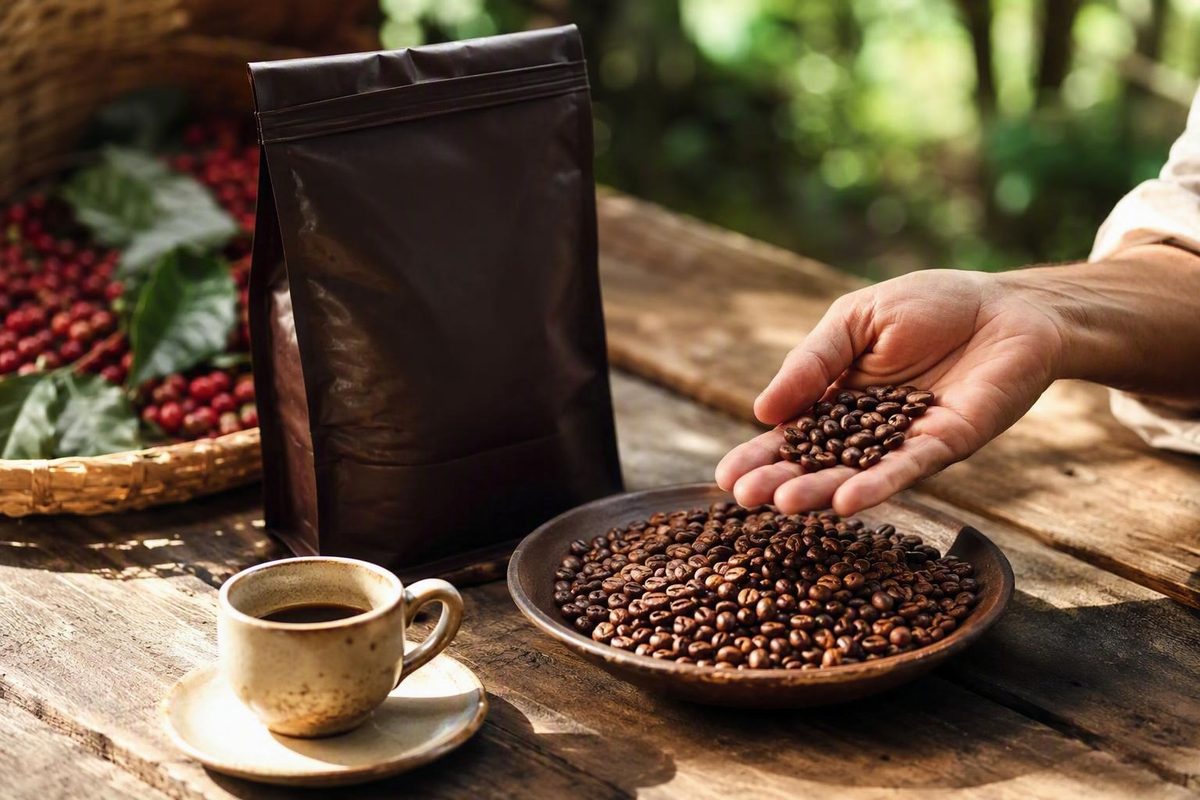
Paying more may be reasonable when the bag has a current roast date, lot-level traceability, detailed processing information and credible sensory documentation.
A bag can say “premium Colombian coffee” in gold lettering and still reveal little about the beans inside. Across the retail listings and commercial guides reviewed for this article, premium appears on mass-market products, regional coffees, single-farm lots, large Supremo beans, limited releases, and ordinary blends. The reviewed sources do not apply a consistent definition.
That does not mean a premium price is never justified. It means the justification should come from details you can evaluate: origin, processing, harvest, roast date, packaging, intended flavor, and any sensory evidence tied to the coffee actually being sold.
This guide explains how to decode those signals, compare prices fairly, and choose Colombian beans for the flavors and brewing methods you enjoy. The evidence is primarily seller and retailer material, so product descriptions are treated as claims—not independent proof or hands-on tasting results.
What “premium” means—and why the word alone proves little
Within the reviewed market evidence, premium is best treated as a claim that needs support rather than as a recognized grade. Sellers commonly connect it with traceability, careful processing, suitable roasting, and freshness, but they apply the term inconsistently. One commercial buyer’s guide similarly treats “100% Colombian” as a starting point rather than proof of how carefully a coffee was grown, processed, roasted, or delivered (Cumbre Coffee’s buyer’s guide).
“100% Colombian” identifies the stated country of origin. It does not disclose:
- the region, municipality, cooperative, farm, producer, or lot;
- the coffee variety;
- the growing altitude;
- how cherries were selected;
- whether the coffee was washed, naturally processed, honey processed, or handled another way;
- the harvest or crop period;
- when the beans were roasted;
- how they were stored before sale;
- whether the current lot has been professionally evaluated; or
- whether the resulting cup will suit your preferences.
Origin matters, but origin alone cannot establish quality. Two bags carrying the same country name may differ substantially in sourcing precision, freshness, roast style, processing, and flavor.
A practical six-part definition of premium
For this guide, a Colombian coffee deserves serious premium consideration when it performs well in six areas:
- Traceability: The seller provides more detail than country alone, preferably identifying a region, cooperative, farm, producer, microlot, or production lot.
- Processing and harvest disclosure: The process is named, and crop-year, harvest-period, arrival, or release information helps identify the green coffee.
- Roast freshness and care: The actual bag carries a clear roast date, and the roast style suits the intended flavor.
- Credible sensory evidence: Tasting notes, quality-control information, or professional evaluation can be connected to the coffee or exact lot being sold.
- Value: Price is normalized by weight and assessed alongside freshness, format, traceability, and evidence.
- Supporting disclosures: Packaging, certification, and storage information are specific enough to evaluate rather than merely decorative.
Packaging belongs in the last category. Heat remains a storage-condition issue.
Altitude can also provide useful context. It may help explain growing conditions or bean density, but it cannot prove careful picking, sound processing, proper storage, or skillful roasting. Treat elevation as part of the coffee’s identity, not as an automatic quality award.
The same caution applies to processing. A well-executed washed process may support clarity and consistency, but the word washed does not reveal whether fermentation, drying, transport, storage, and roasting were handled well.
Signals that deserve less weight
Price, attractive packaging, seller-hosted ratings, subscriptions, and words such as gourmet, reserve, elite, and luxury are secondary signals at best. A subscription may improve convenience. Attractive packaging may make a good gift. A larger bag may reduce the price per ounce. None independently proves better flavor.
Keep four evidence categories separate as you shop:
- Documented product facts: Information visibly supplied for the particular product, such as net weight, format, or displayed price.
- Seller or marketplace claims: Statements about flavor, sourcing, freshness, certification, or quality that have not been independently confirmed.
- Regional tendencies: Broad expectations that may help you create a shortlist but cannot predict every lot.
- Unavailable information: Details that are not disclosed and should not be filled in by assumption.
Missing information does not prove a coffee is poor. It is, however, a valid reason to hesitate before paying more.
Decode the bag: Colombian, Arabica, Supremo, Excelso, single-origin, and blend
Coffee labels compress complicated information into a few appealing terms. Understanding what those terms communicate—and what they omit—helps prevent you from paying extra for the wrong reason.
Colombian
Colombian coffee means coffee identified as having been grown in Colombia. It does not specify a roast level, grade, processing method, freshness standard, flavor profile, or level of traceability.
A country-only designation can still describe an enjoyable everyday coffee. It is simply less informative than a label naming Huila, Nariño, Santander, Antioquia, or another region—and much less informative than one identifying a cooperative, farm, producer, or lot.
Arabica
“100% Arabica” is a species claim. It does not establish that cherries were harvested at ideal ripeness, defects were carefully removed, the coffee is traceable, or the beans were recently roasted. It also cannot guarantee that you will prefer the flavor.
Treat Arabica as one part of the coffee’s identification, not as a synonym for premium or specialty grade.
Supremo and Excelso
Supremo and Excelso are commonly misread as flavor rankings. A commercial Colombian-label guide describes Supremo as a larger bean-size classification and Excelso as a somewhat smaller classification, while cautioning that Supremo does not inherently deliver superior flavor (Eldorado’s Colombian terminology guide).
It cannot reveal how carefully the coffee was harvested, processed, stored, or roasted. A smaller, traceable, carefully handled Excelso lot may be more compelling than a vaguely sourced Supremo coffee.
If a package says only “Colombian Supremo,” continue looking for region, process, harvest, roast date, and product-specific sensory information.
Single-origin
Single-origin does not always represent the same level of geographic precision. Depending on the seller, it may mean:
- one country;
- one growing region;
- one cooperative or producer group;
- one farm or estate;
- one microlot; or
- one separately identified production lot.
“Single-origin Colombia” is less specific than “Huila.” A named Huila cooperative provides more information still, while farm-and-lot identification may allow harvest and sensory records to be connected to the beans in the bag.
Reward specificity, but do not confuse it with guaranteed quality. A named farm can produce uneven lots, while a well-managed regional cooperative may produce excellent coffee.
Blend
A blend combines coffees to create a target result. That target may be consistency, sweetness, body, espresso performance, cost control, or a profile that remains recognizable when individual components change.
Single-origin coffees often foreground geographic character and seasonal variation. Blends more often prioritize consistency and balance. Neither structure guarantees better coffee. A transparent, freshly roasted blend may be a stronger purchase than an old or poorly documented single-origin bag. A supplier’s explanation of the distinction likewise notes that single-origin flavor can vary with agricultural conditions, while blends can be built around a repeatable profile (Gaviña Coffee Solutions on single origins and blends).
An annotated label checklist
Use this checklist before putting a bag in your cart:
| Label field | Useful disclosure | What it does not prove |
|---|---|---|
| Origin specificity | Region, municipality, cooperative, farm, producer, microlot, or lot | That the coffee tastes good |
| Variety | A named variety or documented mix | Careful harvesting or processing |
| Altitude | A farm or lot range with location context | Automatic sweetness or complexity |
| Process | Washed, natural, honey, or a clearly described experimental method | That the process was executed well |
| Harvest or crop | Harvest period, crop year, arrival date, or release information | That the roasted bag is fresh |
| Roast date | A clearly printed date for the actual bag | That the roast profile suits your taste |
| Tasting notes | Specific notes associated with this coffee | Added ingredients or guaranteed flavors |
| Certification | Named scheme, claim holder, scope, and traceable documentation | Superior flavor or roast freshness |
| Cupping score | Score linked to an identifiable lot, date, evaluator, and method | Direct comparability with unrelated scores |
| Package size | Exact net weight | Better value without a unit-price calculation |
Specificity gives you more to investigate. It does not make sensory quality inevitable.
A six-part quality checklist for comparing Colombian coffee
A consistent rubric is more useful than asking whether a bag merely looks premium.
1. Traceability
Rank origin information roughly as follows:
- Colombia only;
- named Colombian region;
- municipality, subregion, or cooperative;
- farm, estate, or producer;
- microlot or lot-specific identification.
This is an information ranking, not an automatic quality ranking. Greater specificity makes it easier to verify claims and understand the coffee’s identity, but it cannot promise a better cup.
Check whether the traceability applies to the coffee currently sold or merely describes a long-running product line. If a coffee changes seasonally but the product page does not, old tasting notes and scores may not apply to the current batch.
2. Processing and harvest disclosure
In washed processing, the fruit and mucilage are removed before the coffee seed is fully dried. The method commonly includes depulping, fermentation or another mucilage-removal stage, washing, and controlled drying. Retail coffee guides often associate washed coffees with clean, defined profiles, but the process name alone does not establish quality (Colipse’s Colombian coffee guide).
They may also be polarizing. Experimental means the method and expected profile deserve closer attention—not that the coffee is automatically superior.
Look for a harvest season, crop year, arrival date, or release note as well. Harvest and roast information answer different questions:
- Harvest information helps identify the agricultural lot or season.
- Roast information tells you when green coffee became the roasted product you will brew.
A coffee may be recently roasted from an older crop. It may still be enjoyable, but the two dates should not be treated as interchangeable.
3. Roast freshness and care
Prioritize a visible roast date.
There is no universal number of days after which all roasted coffee becomes bad. Roast level, packaging, storage, grinding, and individual preference all matter. Buy an amount you can use at a comfortable pace and observe how the coffee changes after opening.
Whole beans provide more control because you can grind immediately before brewing. Pre-ground coffee exchanges some of that control for convenience. Neither format can compensate for unknown roast age or poor storage.
4. Credible sensory evidence
Not all flavor evidence carries equal weight:
- Roaster tasting notes describe the intended profile but remain seller-provided.
- Customer ratings may reflect service, shipping, packaging, or personal taste as much as cup quality.
- Professional reviews can be useful when the reviewer, tasting date, methodology, and coffee identity are clear.
- Exact-lot cupping records are the strongest comparison aid when they identify the lot, crop, evaluator, protocol, and score.
Do not give a number substantial weight unless it can be connected to the coffee currently being sold. A score for a previous harvest, a different blend, or a similarly named product may be irrelevant.
Notes such as citrus, caramel, cocoa, nuts, flowers, or red fruit normally describe perceived aromas and flavors. They do not usually indicate that those ingredients were added.
5. Value
Normalize the price before comparing bags:
Price per ounce = total coffee price ÷ net ounces
Then assess what accompanies that price. A more expensive coffee may be reasonable if it offers a current roast date, lot-level traceability, detailed processing information, and credible sensory documentation. It may also be overpriced branding.
A cheaper coffee may offer excellent everyday value, or it may omit information you care about. The unit price is a starting point, not a verdict.
6. Supporting disclosures
Evaluate packaging, certification, and selling conditions separately from flavor.
For certification, identify:
- the specific scheme;
- who is making the claim;
- whether the claim applies to the product, producer, supply chain, or seller;
- whether supporting documentation is available; and
- what the certification actually covers.
A sourcing, labor, trade, or environmental certification may address important practices.
Subscriptions should also be evaluated as purchasing arrangements rather than quality signals. Compare the ordinary price, discounted price, shipment frequency, bag size, cancellation terms, roast-date policy, and whether the coffee or lot may change.
Compact red-flag list
Pause before paying a premium when you encounter:
- no roast date;
- vague or country-only origin;
- unsupported premium, gourmet, or elite language;
- no clear net weight;
- ratings without a meaningful sample or disclosed method;
- a professional score that cannot be tied to the exact coffee;
- tasting notes copied across unrelated products;
- a starting price with no corresponding package size;
- certification language without an identified scheme and scope; or
- a subscription discount that obscures the ordinary unit price.
One red flag does not prove bad coffee. Several together make the premium difficult to evaluate.
Choose a Colombian region by flavor preference—not reputation alone
Regional descriptions are shopping shortcuts, not fixed flavor rules. Variety, farm conditions, ripeness, processing, harvest, roasting, storage, water, grinding, and extraction can all alter what reaches your cup.
Even so, recurring commercial descriptions can help you build a shortlist.
Southwestern origins: brightness, fruit, and aromatic detail
Huila, Cauca, and Nariño are often associated in commercial guides with brighter acidity, fruit, floral character, sweetness, or greater complexity. Individual coffees may suggest citrus, red fruit, stone fruit, flowers, caramel, or cocoa.
These regions are reasonable places to explore when you want clarity or a lively pour-over. Do not buy the regional name alone, however. A dark roast may subdue delicate qualities, while an experimental process may create a profile far removed from the region’s more conventional washed coffees.
Northern origins: body, chocolate, and nuts
Santander and Sierra Nevada are often described as leaning toward fuller body, lower perceived acidity, and chocolate or nut tones. Those tendencies may suit automatic drip, French press, espresso, or milk-based drinks.
The region cannot promise that result. A light roast or unusual process can shift the profile substantially.
Central origins and the Coffee Triangle
Antioquia and Caldas are well represented in the Colombian coffee market and may encompass balanced, sweet, familiar profiles as well as more distinctive lots. Their diversity makes rigid flavor promises especially unhelpful.
The Coffee Triangle consists of Caldas, Quindío, and Risaralda, according to the regional overview in a retailer’s Colombian coffee guide (Colipse’s regional overview). The term provides geographic context; it is not a quality grade.
Region-and-preference starting points
| Desired experience | Regions to explore | Roast starting point | Caveat |
|---|---|---|---|
| Floral and delicate | Nariño; selected Huila or Cauca lots | Light | Process and roast can overpower delicate aromas |
| Citrus or red-fruit brightness | Huila, Cauca, Nariño | Light to medium-light | Acidity varies by lot and brewing method |
| Caramel, sweetness, and balance | Antioquia, Caldas, Quindío, Risaralda, Huila | Medium | “Balanced” can describe very different cups |
| Chocolate or nut-forward body | Santander, Sierra Nevada, selected Antioquia or Cauca coffees | Medium to medium-dark | Darker roasting can create chocolate-like notes regardless of region |
| Fruit-forward or wine-like intensity | Disclosed experimental lots from any region | Light to medium | Fermentation character can be exciting or distracting |
| Espresso with milk | Any region with documented sweetness and body | Medium to medium-dark | Freshness and roast development matter more than regional prestige |
A commercial regional overview similarly contrasts heavier-bodied northern tendencies with brighter, more complex southwestern profiles while noting that Colombia produces both traditional balanced coffees and experimentally processed, fruit-forward styles (Trade Coffee’s Colombian regions guide).
A clearly documented coffee from a less fashionable region can be a stronger candidate than a celebrated regional name with no farm, process, harvest, or roast information. Traceability helps explain what you are paying for; reputation alone asks you to assume.
Match roast level and format to the cup you want
There is no universally best roast for Colombian coffee. Roast level changes which characteristics are most visible, so the right choice depends on whether you value origin clarity, balance, or roast intensity.
Light roast
Light roasts tend to foreground acidity, fruit, floral aromas, and distinctions among lots. They are a logical starting point for a traceable Nariño, Huila, or Cauca coffee described as delicate, citrusy, or fruit-forward.
Medium roast
Medium roast is an approachable starting point for buyers seeking balance.
That versatility can work for automatic drip, pour-over, French press, and some espresso preparations. Medium is not inherently better; it simply occupies a middle position between origin emphasis and roast emphasis.
Medium-dark and dark roast
As the roast becomes more assertive, regional differences may become harder to detect. If you are paying extra for a highly traceable floral lot, a very dark roast may obscure the qualities that justified the price.
Choose medium-dark or dark coffee when roast character and body are priorities—not because darker color automatically indicates greater strength or quality.
Whole bean or ground?
Choose whole bean if you have a capable grinder and want control over grind size. Grinding immediately before brewing lets you adapt the coffee for drip, pour-over, French press, or espresso.
Choose pre-ground when convenience, consistency, or limited equipment matters more. Confirm that the grind suits your brewer and favor a package size you can use without prolonged storage.
Whole bean is not automatically superior. Stale beans, unsuitable equipment, or an incorrect grind setting can produce a worse cup than appropriately ground coffee used promptly.
Package size and subscriptions
Calculate how quickly you consume coffee. A large bag or subscription may lower the unit price, but the saving is not useful if the coffee loses the aromas you bought it for before you finish it.
Before subscribing, check:
- ordinary and subscription prices;
- net weight;
- shipment frequency;
- pause and cancellation options;
- whether each shipment carries a roast date;
- whether the coffee remains the same lot; and
- how much unopened coffee you already have.
Buy a modest quantity first. A successful first bag tells you more than a discount banner.
Decaf belongs in the comparison
Decaf is a legitimate buying category, not an inferior fallback. Evaluate it through the same framework: origin, processing, decaffeination method, harvest information, roast date, format, and price.
For example, Don Pablo’s collection displayed a Colombian Swiss Water Process decaf alongside Colombian Supremo and estate products, blends, espresso-style products, and a limited-release Geisha. That demonstrates format breadth, but the collection page does not establish detailed traceability or premium quality for every item—and it does not show that every blend or style-based product consists exclusively of Colombian coffee (Don Pablo’s coffee collection).
Brew for clarity, balance, or body
A regional label sets expectations; brewing determines how much of that potential you perceive. Grind, water, ratio, temperature, contact time, agitation, and filtration all influence acidity, sweetness, strength, bitterness, and body.
For clarity: pour-over
Pour-over is a useful starting point for lighter, floral, citrusy, or fruit-forward coffee.
Begin with a medium-fine grind. If the coffee tastes sour, thin, or weak, grind slightly finer or increase extraction carefully. If it tastes bitter, dry, or hollow, grind coarser or shorten the brew. Change one variable at a time.
For balance: automatic drip
Automatic drip is versatile for light-medium and medium roasts. A suitable machine, medium grind, and pleasant-tasting water can produce sweetness and clarity without manual pouring.
Measure coffee and water rather than relying only on an unmarked scoop. If the result is too strong, determine whether the problem is concentration or over-extraction before simply reducing the dose. Strength and extraction are related but not identical.
For body and sweetness: French press
Start with a coarse grind and approximately 60–70 grams of coffee per liter of water, then adjust for your coffee, grinder, brewer, and preferred strength. That range comes from a seller’s method and should be treated as an adjustable house recipe rather than a universal standard (Dios Mio Coffee’s French press guide).
If the cup is silty or harsh, try a coarser grind, gentler plunge, or shorter contact time. If it is weak and flat, grind slightly finer or increase the dose.
For concentrated sweetness and milk drinks: espresso or moka-style brewing
For espresso or moka-style coffee, prioritize sweetness, body, solubility, and performance with milk rather than choosing by Colombian region alone.
A regional single-origin can make excellent espresso, but the origin label cannot predict how it will behave under pressure. Look for roaster guidance, a visible roast date, and tasting notes suited to your goal.
Practical grind starting points
| Brewing method | Starting grind |
|---|---|
| Cold brew | Coarse to extra coarse |
| French press | Coarse |
| Automatic drip | Medium |
| Pour-over | Medium-fine |
| Moka-style brewer | Fine, but generally not as fine as some espresso settings |
| Espresso | Fine |
These are broad categories, not universal grinder numbers. Burr geometry, calibration, roast level, dose, and brewer design affect the correct setting.
An adjustable brewing routine
- Weigh coffee and water when possible.
- Use water that tastes pleasant on its own.
- Begin with a sensible recipe for your brewer.
- Keep dose and water amount stable.
- Change one variable—usually grind—at a time.
- Record the result in plain terms: sour, bitter, weak, dry, sweet, clear, heavy, or balanced.
- Repeat before making another adjustment.
Do not assume that a disappointing first cup proves the beans are poor. Equally, do not keep forcing a coffee to work if its roast style or flavor profile is fundamentally different from what you enjoy.
Compare products and prices without manufacturing a “best” winner
The supplied evidence cannot support a defensible ranking of the best premium Colombian coffee. Most information comes from sellers or marketplaces, exact-lot details are sparse, and no controlled blind tasting of similarly fresh samples is available.
A fair comparison should document what was displayed, clearly attribute seller claims, and leave unavailable fields blank instead of manufacturing a winner.
Illustrative market comparison
The following table uses undated captured listing information supplied for this review. It is not a current-price table. Prices, configurations, discounts, stock, ratings, subscriptions, and marketplace features must be checked directly before purchase.
| Product or collection | Captured size and price | Format and roast | Stated origin or grade | Process and roast date | Displayed score or certification claim | Major evidence gap |
|---|---|---|---|---|---|---|
| Mystic Monk Colombian | 12 oz at $14.95; about $1.25/oz (captured product page) | Ground or whole bean; medium | Seller-described Colombian Excelso Arabica | Process unclear; roast date not shown | Seller promoted a 93-point review | Region, farm, harvest, process, roast date, and applicability of the review |
| Split Oak Colombian listing | 12 oz at $19.99; $1.67/oz (captured marketplace listing) | Whole bean; medium | Listing-described Colombian Arabica | Not shown | Marketplace displayed Fairtrade-related sustainability features, but certificate identity and scope were unavailable | Region, farm, altitude, process, harvest, roast date, and certification documentation |
| ColombianCoffee.us collection | Sizes and prices varied; unit prices were often unavailable (captured collection) | Multiple formats and roasts | Regional, single-origin, Supremo, Excelso, and marketing labels | Inconsistent across listings | Product-dependent | Comparable sizes and consistent sourcing, process, and freshness disclosures |
| Don Pablo collection | Prices varied by product and configuration; unit prices could not be mapped reliably | Whole bean, decaf, blends, espresso styles, and other products | Supremo, estate, decaf, Geisha, and collection-level labels | Generally incomplete in the captured collection data | Seller-hosted review counts appeared | Package-price mapping, product composition, lot traceability, harvest, process, and roast date |
Mystic Monk’s captured page displayed a 12-ounce medium roast in ground or whole-bean form for a one-time price of $14.95 and described nutty, chocolate, and citrus notes. Those are seller-presented details, not findings from an independent tasting.
The page also promoted a 93-point review. That score should not be treated as verified without checking the original review and confirming that it applies to the exact coffee currently offered. The linked review identifier was not obviously Colombian-specific in the supplied evidence, increasing the need for direct verification.
Split Oak’s captured marketplace listing displayed a 12-ounce, whole-bean, medium-roast Colombian coffee for $19.99, equivalent to $1.67 per ounce. It also displayed Fairtrade-related sustainability information, but the evidence did not provide a certificate number or clarify the certification’s scope. The listing did not identify a Colombian region, farm, altitude, process, harvest, or roast date.
The ColombianCoffee.us collection illustrates the breadth of the market. It displayed regional and single-origin labels including Antioquia, Sierra Nevada, Nariño, Caldas, and Andes, along with Supremo, Excelso, premium, and other marketing terms. Package sizes, unit prices, sourcing details, processing, and roast dates were not consistently available across the captured listings.
These examples demonstrate why price comparisons need more than two numbers. At minimum, compare:
- the same package size or calculated price per ounce;
- whole-bean versus ground format;
- roast level;
- roast-date visibility;
- origin precision;
- processing disclosure;
- harvest information;
- certification identity and scope;
- exact-lot sensory evidence; and
- shipping or subscription conditions.
A lower unit price may be attractive for everyday coffee even when traceability is limited. A higher price may be reasonable for a fresh, transparent microlot. The problem arises when the premium is large but the information supporting it is small.
A purchase decision tree
- Choose the experience. Decide whether you want floral clarity, bright fruit, caramel balance, chocolate-and-nut body, espresso intensity, decaf, or convenience.
- Choose the brewing method. A pour-over purchase may differ from a coffee intended for French press, espresso, or milk drinks.
- Shortlist adequately documented coffees. Favor named regions, producers, processes, harvest information, and clear formats.
- Verify roast information. Look for a roast date or ask how the bag will be dated.
- Normalize the price. Convert every candidate to price per ounce using the ordinary purchase price.
- Assess evidence gaps. Note what is documented, seller-claimed, independently reviewable, or unavailable.
- Buy a modest quantity. Test the coffee with your water, grinder, and brewer.
- Subscribe or buy in bulk only after success. A discount is worthwhile only when you enjoy the coffee and can consume it at a suitable pace.
The following frequently asked questions address the label and purchasing issues buyers encounter most often.
Does Colombian Supremo mean the coffee is higher quality?
No. Supremo generally denotes a larger bean-size classification. It does not guarantee better harvesting, processing, freshness, traceability, roasting, or cup quality.
Bean size may help with sorting and roast management, but it is only one physical characteristic. Compare Supremo and Excelso coffees using region, producer, process, harvest, roast date, sensory evidence, and normalized price.
Is single-origin Colombian coffee always better than a blend?
No. Single-origin and blend describe sourcing structures, not a quality hierarchy.
A specific single-origin coffee may offer greater geographic character and transparency, but it can vary between harvests. A blend may be designed for consistency, sweetness, espresso performance, or value. The better choice is the one with suitable freshness, adequate documentation, and a flavor profile you enjoy.
Also check how the seller defines single-origin. A country-level Colombian coffee is less specific than one naming a region, cooperative, farm, or lot.
What does Colombian coffee typically taste like?
Colombian coffee is often described in commercial guides as balanced and sweet, with possible impressions of caramel, brown sugar, cocoa, nuts, citrus, red fruit, or flowers. These are tendencies rather than a national flavor formula.
Northern origins are frequently associated with fuller body and chocolate or nut notes, while southwestern regions are often connected with brighter fruit, floral aromas, and more pronounced acidity. Processing and roasting can change those expectations substantially.
Tasting notes normally describe perceived characteristics, not added flavorings.
How should premium Colombian coffee be stored after opening?
Keep coffee sealed in a cool, dry, dark place away from oxygen, direct light, heat, moisture, and strong odors. Use the original resealable package if it closes effectively, or transfer the beans to an appropriate airtight container. Commercial home-brewing guidance consistently identifies oxygen, light, heat, and moisture as factors in aroma and flavor loss (Eldorado’s storage and brewing guide).
Buy a quantity that fits your consumption rather than relying on one universal freshness deadline. Grind only what you need when practical, and consider dividing a large supply into smaller sealed portions so the entire amount is not repeatedly exposed.
How much should premium Colombian coffee cost?
There is no single correct price. Retail cost varies with package size, green-coffee cost, scarcity, processing, roasting, packaging, distribution, format, and seller positioning.
Calculate the price per ounce, then compare what the price buys: roast-date visibility, traceability, processing disclosure, harvest information, credible sensory evidence, and certification scope. Treat captured prices as historical examples unless you have checked the live listing yourself.
A trustworthy premium purchase begins with questions rather than branding: Where did the coffee come from? How specifically is that origin documented? How was it processed? When was it harvested and roasted? What evidence supports its sensory claims? Does the normalized price reflect those disclosures?
Choose according to flavor and brewing method, buy a manageable quantity first, and treat missing information as a reason to continue comparing—not as permission to assume quality.