
Miami Metrorail vs. Metromover: The Visitor’s Decision Guide
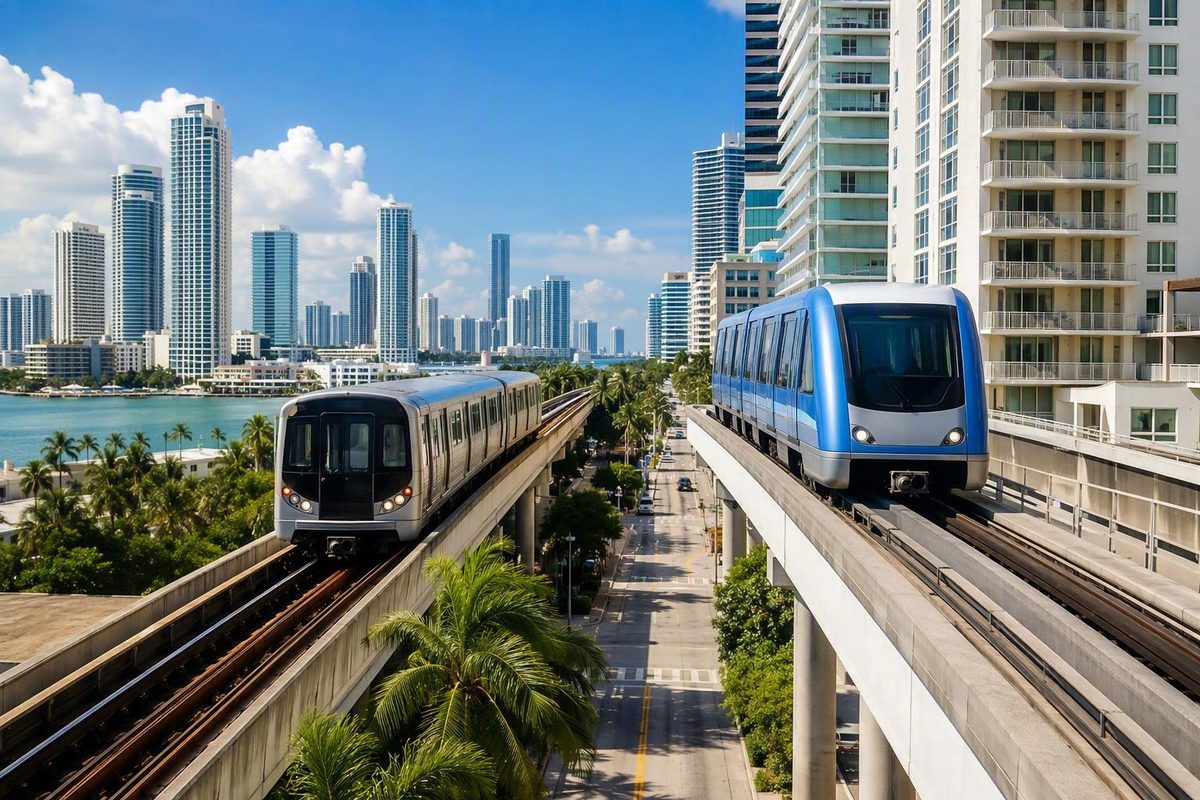
Use Metrorail for Miami Airport and longer north-south trips; use free Metromover for short Downtown, Omni and Brickell connections.
Metrorail and Metromover are not competing versions of the same train. Metrorail is the paid regional spine for reaching Miami International Airport and neighborhoods beyond the urban core. Metromover is the free Downtown circulator for short trips within Downtown, Omni and Brickell. In many useful visitor journeys, you ride both.
The difference at a glance
| Metrorail | Metromover | |
|---|---|---|
| Best for | Airport trips and longer journeys north or south of Downtown | Short hops around Downtown, Omni and Brickell |
| Geographic role | A 25-mile system linking MIA, Downtown and communities from Kendall to northwest Miami-Dade | A compact elevated network with 21 stations and three loops |
| Regular fare | $2.25 | Free |
| Regular hours | 5 a.m.–midnight | 5:30 a.m.–10 p.m. |
| What visitors must check | Green versus Orange Line, especially for MIA | Inner, Omni or Brickell Loop and the car’s displayed destination |
Miami-Dade lists contactless payment, EASY Card, EASY Ticket and the GO Miami-Dade Transit app as Metrorail payment options; fare gates do not accept cash. The regular rail fare is $2.25. Metrorail runs from 5 a.m. to midnight daily.
Metromover is free and serves 21 stations across the Inner, Omni and Brickell loops. Its regular hours are 5:30 a.m. to 10 p.m. daily, so do not assume it will cover the final leg of a late-night Metrorail trip.
Choose Metrorail for the airport and longer cross-city movement
Metrorail is the one of these two systems that reaches Miami International Airport. The Orange Line serves MIA, while the Green Line runs between Palmetto and Dadeland South. The shared central corridor makes Metrorail useful for moving between Downtown and areas to the south, including the South Miami and Coral Gables corridor—not for circulating among closely spaced Downtown attractions.
Airport routing requires extra attention on weekends. Miami-Dade says weekend Orange Line trains operate only as an Airport Shuttle between Earlington Heights and MIA, so airport-bound passengers must transfer at Earlington Heights. Look at the line and destination display before boarding rather than relying only on the platform direction.
Choose Metrorail when your trip begins or ends at MIA, crosses several neighborhoods, or continues beyond the Metromover zone. For a broader mobility strategy involving buses and other parts of the county, use the separate car-free Miami planning guide.
Choose Metromover inside Downtown, Omni and Brickell
Metromover works best as a local distributor. Its official map places visitor-facing stops near Bayside, Bayfront Park, Museum Park, Miami Worldcenter and the Adrienne Arsht Center, while the Brickell Loop extends south to Financial District. The official Metromover map also identifies Government Center as a Metrorail connection.
That makes Government Center a straightforward interchange when Metrorail gets you into the core but your final destination is closer to a Metromover stop. Because Metromover has three loops, check the digital display above the platform map and the approaching car’s destination. Miami-Dade says cars arrive approximately every 90 seconds in rush hours and every three minutes off-peak under regular service, so correcting a loop mistake may be easy—but reading the display first is easier.
Use Metromover when both ends of your journey sit inside its compact service area. It can remove a long, hot or rainy walk from a Downtown day, but it cannot replace Metrorail for MIA or destinations outside Downtown, Omni and Brickell. It also does not extend to Miami Beach; visitors staying there will need another mode before either rail system becomes useful.
Three common visitor decisions
MIA to Downtown
Take Metrorail from the airport. For a destination near a Downtown Metromover stop, change at Government Center and finish on the appropriate loop. On weekends, account for the required Airport Shuttle transfer at Earlington Heights on the airport segment.
Downtown sightseeing
Use Metromover if the stops fit your plans. The map is more useful than memorizing every station: identify whether the destination lies on the Inner, Omni or Brickell Loop, then confirm the displayed destination before boarding. A walkable cluster may still be simpler on foot; the mover earns its place when heat, rain, luggage or distance makes that walk unattractive.
A hotel in Brickell with plans elsewhere in Miami
Use Metromover for short Brickell-and-Downtown movement, then switch to Metrorail when the trip leaves the mover’s limited zone. Starting on Metromover merely because it is free can add a needless transfer if the hotel is already closer to Brickell Metrorail station.
Check service conditions before leaving
Schedules and access can change during maintenance. Miami-Dade maintains an elevator and escalator status page and says units may be temporarily unavailable for maintenance or repairs. For Metromover riders using a wheelchair or mobility aid, the operator says backup accessible service is available within 30 minutes on request if a station elevator is inoperable. Check the GO Miami-Dade Transit app or official alerts immediately before an airport trip, timed admission or late return.