
Metromover Is Free While Miami-Dade Studies a Fare
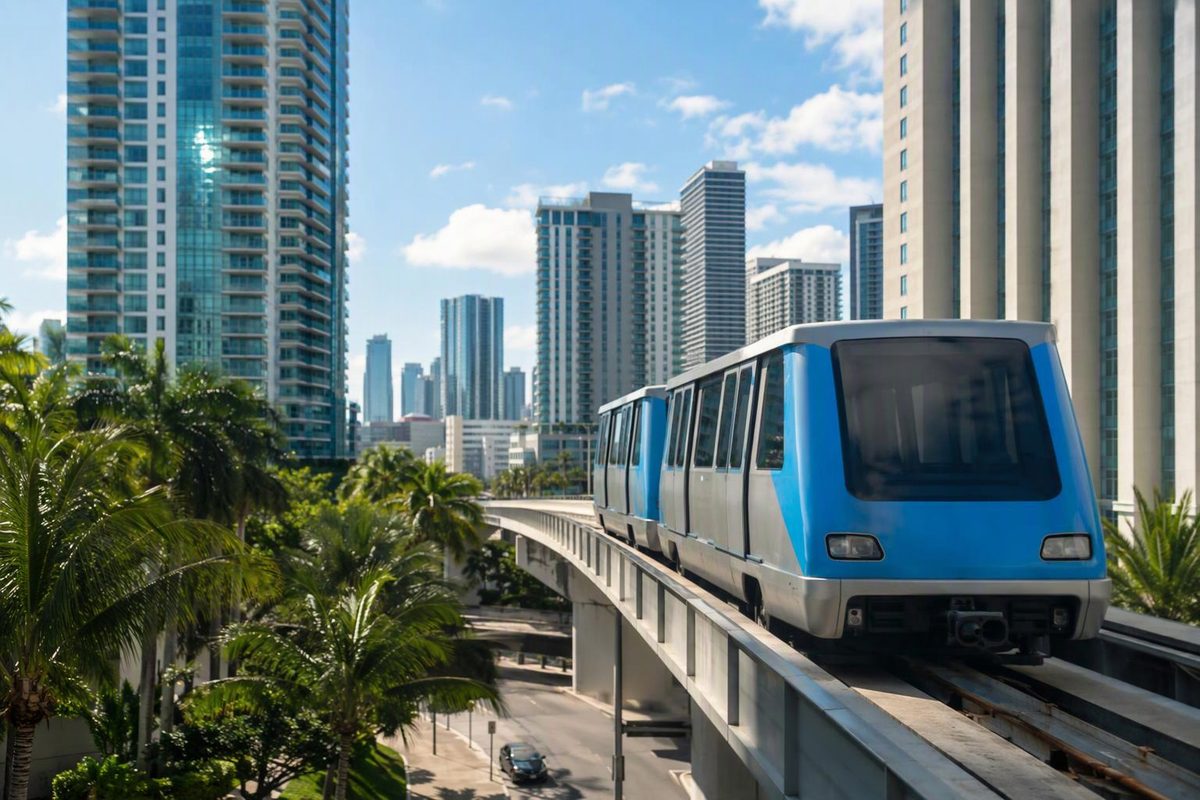
Metromover remains free while Miami-Dade studies whether fares are feasible. See what is approved, what remains unknown, and what riders pay now.
No fare has been approved. Miami’s Metromover is still free as of September 30, 2026. Miami-Dade commissioners requested a report on whether charging riders would be feasible, but the county has not established a price, start date or payment system.
The county’s current Metromover service page identifies it as a free service. The February 2026 official transit fare guide also lists the Metromover fare as “FREE.” Riders do not need to add a Metromover charge to a Downtown or Brickell trip budget under the rules now in effect.
Enter the rides you expect to take; the calculator separates today’s known cost from the unresolved fare proposal.
Current-Fare Trip Calculator
Use whole rides. A future Metromover fare is not calculated because no price has been approved.
Possible future Metromover charge: —
| Service | Fare Per Ride | Current Cost |
|---|---|---|
| Metromover | $0 | $0.00 |
| Metrorail/Metrobus | $2.25 | $4.50 |
Source: Miami-Dade’s February 2026 transit fare guide. This comparison uses the listed regular base fare; a future Metromover price is unknown.
Miami-Dade Requested a Study, Not a Fare
At the county’s first budget hearing on September 3, commissioners advanced a proposal to study the feasibility of collecting fares on Metromover. That action began a review of the idea. It did not authorize the county to start charging passengers.
WLRN reported that Commissioner René Garcia supported charging, arguing that bus and Metrorail riders pay while Metromover passengers do not. Commissioner Vicki Lopez responded that the system also transports everyday workers.
The county’s memorandum for the second budget hearing says Commissioner Raquel Regalado presented the motion requesting a Department of Transportation and Public Works report. The requested study is expected to examine several connected questions:
- What new fare-collection technology would be needed
- What infrastructure and staffing collection would require
- How different fare levels could reduce ridership
- How the People’s Transportation Plan subsidizes Metromover
- Whether the cost of collecting fares would exceed the resulting revenue
Those are questions for the report, not parts of an adopted fare policy. The county has not announced which technology it might use, where payment equipment would go, how riders would pay or what a ride would cost.
The requested analysis also does not guarantee that Metromover will eventually charge a fare. A feasibility study can support a proposal, identify conditions under which it might work or conclude that collecting a fare would not be worthwhile. Until the county releases its findings and takes further action, the outcome remains unresolved.
Collection Costs Could Determine Whether a Fare Makes Sense
The amount paid by each passenger would not be the only financial issue. Miami-Dade would also have to account for the cost of collecting that money.
According to the county memorandum, earlier reviews concluded that fare collection would probably cost more than it generated, partly because ridership could decline. Officials want to revisit that conclusion because fare-collection technology has changed.
That history explains why the requested report covers technology, infrastructure, staffing, ridership and revenue together. Gross fare revenue would not by itself show whether a policy benefits the transit system. The county would need to compare that revenue with collection costs and consider the effect that charging could have on use of the service.
The memo does not provide an approved fare or a current estimate of how much revenue a Metromover charge would produce. It also does not establish how much ridership would change at any particular price. Those figures remain unknown rather than zero.
The People’s Transportation Plan subsidy is another part of the requested review. Metromover being free to board does not mean the service operates without public support. The study is expected to examine that subsidy alongside the potential costs and proceeds of fare collection.
Budget Adoption Did Not Make Metromover Paid
Miami-Dade adopted its FY 2026–27 budget at the second hearing on September 17, as the county’s budget update confirms. The adoption of that budget did not establish a Metromover fare.
The distinction matters because discussion during a budget process can be mistaken for a final change in what passengers must pay. In this case, the concrete action was a request for a departmental report. Riders were not given a fare amount, an implementation date or new payment instructions.
A traveler therefore should not treat the budget vote as a notice that free service has ended. The county’s own service page and fare guide continue to identify Metromover as free.
A future change would need more than general support for examining the idea. Riders would need an approved price and enough implementation information to know when and how the charge applies. None of those details has been announced for Metromover.
The Wider Transit-Fare Proposal Is Separate
Mayor Daniella Levine Cava separately encouraged commissioners to consider increasing the regular $2.25 transit fare to $2.75. Her September 15 memo says that increase was not included as an amendment to the proposed budget.
The Miami Herald reported after the final hearing that commissioners could revisit a 25- or 50-cent increase later in the fall. That discussion concerns the regular transit fare and should not be presented as an announced Metromover price.
The county has not said that a future Metromover fare would equal the regular Metrorail or Metrobus fare. It has not selected either $2.25 or $2.75 as a Metromover charge. Applying one of those numbers to Metromover would turn a separate proposal into a price the county has not adopted.
The proposals can be separated this way:
- Metromover: Free under the current fare guide; a feasibility report has been requested.
- Metrorail and Metrobus: The regular base fare is $2.25 under the February 2026 fare guide.
- Suggested regular-fare increase: A move from $2.25 to $2.75 was encouraged but was not included as a budget amendment.
- Possible future Metromover price: Unknown.
A report about charging on one service and a proposal to increase an existing fare on other services are not interchangeable. Neither provides a basis for adding a speculative Metromover charge to a trip budget.
Current Trip Budgets Should Use a $0 Metromover Fare
Under the current rules, the known base fares are straightforward:
| Service | Current Base Fare | Future Change |
|---|---|---|
| Metromover | $0 | Under study; unknown |
| Metrorail | $2.25 | Separate proposal discussed |
| Metrobus | $2.25 | Separate proposal discussed |
A trip using only Metromover currently has no Metromover fare. A trip combining it with Metrorail or Metrobus should include the applicable $2.25 regular base fare for those paid services, but no additional Metromover charge.
For example, the fare calculator above multiplies current Metromover rides by $0 and regular Metrorail or Metrobus rides by $2.25. It does not calculate a future Metromover total because the county has supplied no approved price to use. Treating that missing price as an estimate would create false precision.
The same distinction applies when comparing routes. A Metromover segment does not currently increase the fare calculation, while a regular ride on Metrorail or Metrobus does. Other eligibility, pass or transfer circumstances are outside the limited base-fare comparison shown here.
Metromover Still Serves 21 Stations
Metromover serves 21 stations from Financial District in Brickell to School Board in the Omni area, according to the county service page. Its free status currently applies to the Metromover service described by Miami-Dade, including trips among Brickell, Downtown, Government Center and the museum district.
That makes the system useful for short journeys within its service area without adding a fare for each Metromover boarding. It does not mean every part of a larger Miami transit trip is free. Reaching the area by Metrorail or Metrobus can still involve the regular fare for those services.
The practical route choice depends on which system reaches the destination, not just which one charges a fare. Our Metromover versus Metrorail guide explains the difference between the two systems. Travelers planning several neighborhoods can also place Metromover within a broader car-free Miami plan.
A Future Fare Still Lacks Essential Details
The county has not announced several details that riders would need before a Metromover fare could be treated as real:
- The amount charged per ride or under another fare structure
- The date collection would begin
- The technology passengers would use to pay
- The infrastructure changes required at stations
- Any staffing plan connected to collection
- The expected effect on ridership
- Whether revenue would exceed collection costs
These are not minor gaps. Without a price, there is nothing definite to budget. Without a start date, there is no trip period to which a new charge can be applied. Without payment rules, riders cannot know what they would need at a station.
The requested study may address some or all of those matters, but a report should not automatically be treated as implementation. The county would still need to publish any decision that changes the current free service.
Claims that Metromover “will cost $2.25” or “will rise to $2.75” go beyond the available county information. Those amounts come from the existing regular fare and a separate proposed increase, not an approved Metromover policy.
What Later Travelers Should Check
Anyone traveling later in 2026 or beyond should check Miami-Dade’s Metromover service page shortly before departure. The most useful confirmation will be a county notice that states whether the service remains free or gives a specific fare, effective date and payment instructions.
News about the feasibility report may indicate where the discussion is heading, but it should be read for the exact action described. A released study, a commissioner’s statement, a proposal and an adopted fare are different stages. Only a definite county change would replace the current $0 fare used in a travel budget.
For now, plan Metromover trips at $0. Budget the regular $2.25 base fare when the itinerary includes Metrorail or Metrobus, and leave any possible future Metromover charge marked as unknown rather than assigning it one of the figures from the separate fare debate.