
Best Cruises from Miami: How to Choose the Right Trip
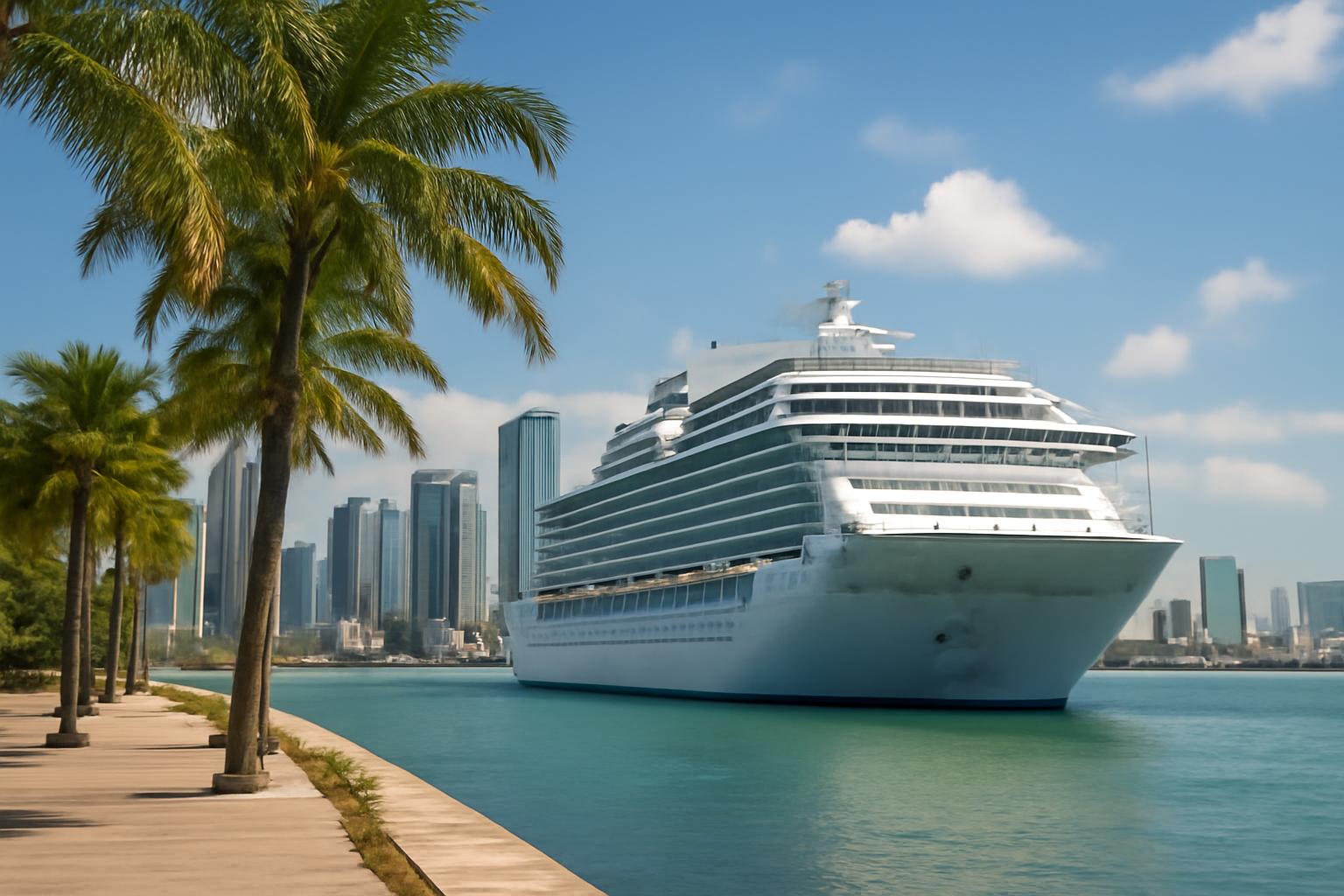
Icon of the Seas suits fun-loving families and feels a little like Disney World, with an over-the-top, massive sprawl. Your group and trip length change the pick.
Overview
The best cruise from Miami depends on three things: who is traveling, how many nights you have, and whether the ship itself or the ports matter more to you. Activity-focused families point toward one kind of ship, couples seeking a refined trip toward another, and adults-only travelers toward a different line entirely. There is no single winner for everyone.
That is why this guide works through scenarios instead of a ranked list. The traveler-fit judgments here draw mainly on one editorial source, the U.S. News roundup of the best cruises from Miami, so treat them as well-argued starting points rather than universal verdicts. The itinerary, duration, and price details come from official cruise-line pages and marketplace listings, and every one of those is date-sensitive. Cruise Critic, for example, notes that its average cruise prices are updated nightly, which tells you how quickly a quoted fare can go stale.
The method this article follows is simple: match the experience to your traveling party first, then narrow by trip length and route, then decide whether the ship or the itinerary should drive the final call, then compare fares by what they actually include. The last step is the one most shortlists skip. A ship that “sails from South Florida” may split its schedule between Miami and Fort Lauderdale, so you always confirm the exact departure port for your specific date before you pay a deposit. Each section below handles one of those steps.
Best Miami cruises by traveler type
Start with the people in your cabin, because the evidence supports genuinely different answers for different groups. The U.S. News editorial review of Miami cruises draws sharp contrasts between an activity-packed mega-ship, a more polished premium ship, an adults-only line, and a fare-inclusive luxury line, and those contrasts matter more than any overall ranking.
For families with kids of mixed ages, U.S. News describes Royal Caribbean’s Icon of the Seas as the pick for “fun-loving travelers and families with kids of varying ages,” saying the ship “feels a little bit like Disney World with over-the-top everything and a truly massive sprawl.” For couples, the same source says Celebrity Beyond “shines brightest for couples, multigenerational families with older children, and travelers who want luxury without the ultra-luxury price tag.” If you want no children aboard at all, U.S. News notes that Virgin Voyages is an adults-only line, so you will not find kids on Resilient Lady or any of its other ships. And for travelers who want the fare to cover nearly everything, U.S. News points out that on Regent Seven Seas ships, specialty dining and shore excursions are included in the cruise fare.
The matrix below condenses those supported scenarios into one comparison you can scan.
| Traveling party | Supported fit (per U.S. News) | Why it fits | Main tradeoff to check |
|---|---|---|---|
| Family with kids of varying ages, activity-first | Icon of the Seas (Royal Caribbean) | Described as over-the-top, activity-packed, appealing across age ranges | Very large ship; long walking distances; you may feel torn about leaving the ship in port |
| Couple or multigenerational group with older children | Celebrity Beyond | “Shines brightest for couples, multigenerational families with older children, and travelers who want luxury without the ultra-luxury price tag” | Premium positioning; confirm whether your date departs Miami or Fort Lauderdale |
| Adults-only group or child-free trip | Virgin Voyages (Resilient Lady) | Adults-only line, so no kids on board; premium fare with significant inclusions | Higher price point than mainstream lines; verify current Miami itineraries for your dates |
| Premium or luxury traveler who values inclusions | Regent Seven Seas | Specialty dining and shore excursions included in the fare | Ultra-inclusive fares run higher up front; compare total trip cost, not just the headline |
| Budget-conscious traveler | No defensible single winner; use a comparison method | Advertised fares include different items, so the cheapest headline is not always the cheapest trip | Compare fare plus gratuities, drinks, Wi-Fi, dining, and transfers across two or three quotes |
Notice the last row deliberately names a method instead of a ship. The supplied evidence includes dated fare examples and disclosures, but nothing that establishes a market-wide cheapest or best-value option, and any article that names one without that evidence is guessing. The price section later in this guide shows you how to run that comparison yourself.
One more note on the adults-only row: U.S. News reports that during the 2025-2026 season, Resilient Lady’s new destinations include Puerto Plata in the Dominican Republic, San Juan, Costa Maya, and Charlotte Amalie in St. Thomas, with all sailings originating from Miami. That is a dated claim about one season, so confirm it against live inventory before you plan around it.
Cruise lines, destinations, and trip lengths from Miami
Miami gives you an unusually wide field to choose from, which is exactly why a filtering method helps. Expedia’s Miami departure page states that just about every major cruise line offers cruises out of Miami, including Carnival, MSC Cruises, and Royal Caribbean, and Cruise Critic’s Miami port page adds Norwegian (NCL) to the list of lines popular at the port.
The destinations cluster in predictable directions. According to Cruise Critic, cruises from Miami most commonly go to the USA, the Caribbean, the U.S. Virgin Islands, the Eastern Caribbean, and the Western Caribbean. Royal Caribbean’s Miami page fills in what that looks like on the ground: sailings to Puerto Rico for Old San Juan’s architecture, or to St. Thomas and St. Maarten for beach-focused days.
Trip lengths sort into a few standard formats, and the lines themselves describe them consistently. Royal Caribbean lists weekend Bahamas sailings on Wonder of the Seas, four- to five-night Caribbean escapes on Freedom of the Seas, and seven-night itineraries on Icon of the Seas from the Miami cruise port. MSC’s Miami page describes the same split from its side: quick weekend escapes and weeklong sailings, with seven-night itineraries reaching the Eastern and Western Caribbean. Celebrity’s Beyond listings even include a selected eight-night format, a Miami roundtrip to Aruba, Bonaire, and Curacao.
So your real duration choice is usually between a two- to five-night getaway and a seven-night (or slightly longer) Caribbean route. The next section compares those head to head.
Short getaways versus seven-night Caribbean cruises
The honest way to frame this decision: trip length changes destination reach, not just calendar days. Royal Caribbean’s weekend sailings from Miami go to the Bahamas, and it also lists four- to five-night Caribbean escapes, so check the specific itinerary rather than assuming every short cruise has the same reach. A seven-night sailing has enough sea time to reach the Eastern or Western Caribbean. Royal Caribbean’s Miami lineup reflects exactly this split, with weekend Bahamas runs on Wonder of the Seas and seven-night adventures on Icon of the Seas, and MSC states that its weeklong Miami cruises visit the Eastern and Western Caribbean.
Private destinations complicate the picture in a useful way. These are line-controlled islands that function differently from an ordinary port call. MSC notes its weeklong Miami itineraries often still stop at Ocean Cay, its private island, and Celebrity’s Beyond search listings show a seven-night Miami roundtrip that calls at Perfect Day CocoCay in the Bahamas alongside Cozumel and Grand Cayman. If a beach-day-style private island is a priority for your group, filter for itineraries that include one rather than assuming every Bahamas stop works the same way.
| Factor | Short getaway (2 to 5 nights) | Seven-night Caribbean cruise |
|---|---|---|
| Typical reach from Miami | Bahamas on Royal Caribbean weekend sailings; destinations for other two- to five-night sailings vary, so check each itinerary | Eastern or Western Caribbean (MSC weeklong routes; Royal Caribbean 7-night Icon itineraries) |
| Supported examples | Wonder of the Seas weekend Bahamas; Freedom of the Seas 4-5 night Caribbean escapes | Icon of the Seas 7-night from Miami; Celebrity Beyond 7-night Miami roundtrips |
| Private-destination stops | Common on Bahamas-focused routes | Still possible: MSC weeklong routes often stop at Ocean Cay; a listed Beyond 7-night Miami roundtrip includes Perfect Day CocoCay |
| Best when | You have limited vacation days or want a low-commitment first cruise | You want multiple distinct islands and more sea days to enjoy the ship |
| Watch for | Fewer ports overall; the ship experience dominates a short trip | Longer commitment; port lineup matters more, so read the full itinerary |
If you are a first-time cruiser unsure whether cruising suits you, the short format is a low-risk trial. If your goal is island variety, the seven-night format is where the Eastern and Western Caribbean genuinely open up.
Choose the ship experience or the itinerary first
Once you know your trip length, decide which question leads: “what will we do on board?” or “where will we wake up?” Two ships from the same shortlist show why this ordering changes the answer.
Icon of the Seas is the clearest case of the ship as the destination. U.S. News writes that no matter your Icon itinerary, “you’ll visit beautiful places – but you can expect to feel torn about spending any time off the ship, because it’s just that jampacked with things to do.” If your family measures a vacation in waterslides, shows, and activity variety, that is a feature. If you picture long, unhurried days exploring each port, it is a warning: you would be paying for onboard capacity you will not use, and you might do better on a ship where the itinerary leads.
Scale itself is a tradeoff, not just a selling point. U.S. News cautions that Icon “really is huge, and walking from end to end can be a hike, so those with limited mobility or endurance might want to look into a smaller ship.” The same source frames Icon as best for fun-loving travelers and families with kids of varying ages, while Celebrity Beyond “shines brightest for couples, multigenerational families with older children, and travelers who want luxury without the ultra-luxury price tag.” Travelers who want quieter spaces, a dining-forward atmosphere, and less sensory intensity have a supported alternative in the premium tier rather than needing to size down to a budget option.
One practical check applies to any high-demand ship, and it is a prebooking habit rather than a documented failure rate: before you commit, look at how the line handles reservations for specialty dining, headline entertainment, and shore excursions. Some experiences require advance booking through the line’s app or website, and popular time slots can be taken by the time you board. The supplied evidence does not establish how often that happens on any specific ship, so treat this as a step in your comparison, not a reason to rule a ship out. Ask each line what you can reserve before sailing and when those booking windows open, then factor that into which ship actually delivers the trip you are imagining.
How to compare cruise prices, inclusions, and value
Compare fares by what they include, not by the headline number, because advertised prices from different lines are built differently. Here is a concrete, dated snapshot to make that real. On Celebrity’s own Beyond cruise search page, a seven-night Grand Cayman, Mexico and Perfect Day roundtrip from Miami showed an average per-person price of $848 USD including taxes and fees, valid for a September 20, 2026 sailing. The same page listed a seven-night Tortola, St. Maarten and Puerto Plata Miami roundtrip at $879 USD for October 25, 2026, and an eight-night Aruba, Bonaire and Curacao Miami roundtrip at $1,073 USD for October 9, 2027. Those numbers are examples of what one ship cost on specific dates when the page was captured, nothing more. Cruise Critic states that its lowest pricing comes from a third-party supplier and that average prices are updated nightly, and Expedia’s Miami listings note that displayed prices are per traveler, valid within the last 24 hours, apply to US and Canadian residents, include taxes, fees, and port expenses, and may carry a fuel supplement. Every one of those disclosures is a reason to re-quote before you decide.
Inclusions are where “cheap” and “expensive” fares stop being comparable. U.S. News reports that Virgin Voyages sits in the premium category, higher than mainstream lines but with significantly more included: Wi-Fi, all restaurants, gratuities, group fitness classes, and basic beverages including sodas and juices. On Regent Seven Seas, per the same source, specialty dining and shore excursions are included in the fare. A mainstream fare that looks hundreds of dollars cheaper can close much of that gap once you add the extras your group would actually buy.
The supplied evidence does not provide an apples-to-apples total vacation cost across lines, and this guide will not invent one. Instead, build a simple worksheet for each quote you are considering and price these categories yourself:
- Cabin category and the fare’s stated inclusions (taxes, fees, port expenses)
- Gratuities, if not included
- Drinks packages or per-drink spending for your group
- Specialty dining and Wi-Fi
- Getting to the port, plus parking or transfers
Run two or three real quotes through that worksheet for the same travel dates and party size, and the value picture usually becomes obvious. The fare with the lowest headline is sometimes the best deal and sometimes not; the worksheet, not the ad, tells you which.
Verify Miami departures for your exact travel dates
Never assume a recommended ship leaves from Miami on your date. This is the single most common way a good shortlist turns into a booking mistake, because ships reposition and some split their season between South Florida ports.
Celebrity Beyond is the perfect demonstration. Celebrity’s Caribbean overview describes Beyond and Celebrity Reflection as “sailing year round from South Florida,” and its listed departure ports include both Miami and Fort Lauderdale (along with Tampa, Port Canaveral, and San Juan). On Celebrity’s Beyond search page, captured with fares valid for 2026 and 2027 dates, the same ship showed a seven-night Grand Cayman, Mexico and Perfect Day itinerary roundtrip from Miami (September 20, 2026) and a seven-night Grand Cayman, Mexico and Bahamas itinerary roundtrip from Fort Lauderdale (April 11, 2027), Same ship, same region, different homeport depending on the date. “South Florida” in marketing copy is not a promise of PortMiami.
To pin down your actual departure, run this check on the cruise line’s own booking search:
- Search by ship name, then filter or read for the roundtrip port on each result.
- Open the specific sailing date you want and confirm the itinerary starts and ends at Miami, Florida.
- Note the date you checked, since inventory and schedules change.
- Recheck the departure port on your booking confirmation and again before final payment.
Be aware of what the available evidence does not cover: it confirms specific dated examples but does not establish a complete, verified 2026 through 2028 Miami schedule for every ship mentioned in this guide. Treat any schedule claim, including the examples above, as accurate only as of its capture date, and let the line’s live inventory be the final word.
PortMiami planning essentials
The good news for car-free travelers: you do not need a rental car to start a cruise from Miami. MSC’s Miami page states that traveling from Miami International Airport (MIA) to PortMiami typically takes 20 minutes by car over a distance of approximately nine miles, and that travel time varies by time of day due to traffic, so plan accordingly. A taxi or rideshare covers that hop, and building in a buffer for traffic is cheaper than missing a ship.
Your terminal assignment is not guesswork either, but it is also not something to assume. MSC notes that its ships depart from cruise terminals at PortMiami and directs guests to check their cruise documentation for the assigned terminal along with parking information. That advice generalizes well as a habit: whatever line you sail, your documents, not a blog post, tell you which terminal to head for, so read them before embarkation morning rather than in the rideshare.
If you are flying in, a pre-cruise night in Miami is optional, not required, and the evidence here supports keeping it that way. Royal Caribbean’s Miami page notes there is plenty to do before your cruise out of Miami, and if you have the vacation days, a night in a walkable neighborhood near downtown makes embarkation morning calm instead of rushed. If you do not, the short MIA-to-port transfer makes a same-day arrival workable, provided your flight lands with a comfortable margin before boarding cutoff. Check your line’s boarding window in your cruise documents and decide from there.
Travel documents for closed-loop cruises
For one narrow group of travelers, a passport is not the only option, and the rule comes from an official source. Under the U.S. Customs and Border Protection final rule effective June 1, 2009, documented in CBP’s bulletin, U.S. citizen cruise passengers traveling entirely within the Western Hemisphere may present a government-issued photo identification document together with one of the following when returning to the United States: an original or copy of a birth certificate, a Consular Report of Birth Abroad issued by the Department of State, or a Certificate of Naturalization issued by USCIS.
Every condition matters. Per the same CBP rule, the passenger must board the cruise ship at a port or place within the United States and must return on the same ship to the same U.S. port or place from where they originally departed. That is what makes a cruise “closed-loop.” A Miami roundtrip on one ship can qualify; an itinerary that starts in Miami and ends anywhere else does not. The CBP rule also provides alternatives to the passport requirement for children under 16, but the exact documentation rules for minors should be verified with CBP and your cruise line for your specific itinerary.
This exception says nothing about non-U.S. citizens, itineraries outside the Western Hemisphere, or ports that require passports regardless of U.S. entry rules. If anyone in your party is not a U.S. citizen, or your itinerary is not a same-ship, same-port roundtrip, verify requirements for your specific sailing with the cruise line and official government sources before booking. Many cruise lines also recommend passports even when the exception applies, so ask your line directly.
Seasonality and accessibility checks before booking
Two checks remain before you book, and honesty requires saying up front that the supplied evidence supports neither a month-by-month weather recommendation nor a cross-line accessibility ranking. What it supports is knowing which questions to ask.
On seasonality: Caribbean and Bahamas itineraries operate year-round from Miami, but conditions are not identical year-round, and the Atlantic hurricane season overlaps part of the cruising calendar. This guide will not tell you the best month to sail, because no source in its evidence base establishes one. What you can do is make seasonality part of your booking decision rather than an afterthought. Before committing to a date, review the cruise line’s policies on itinerary changes and missed ports, understand what happens to your fare if a sailing is modified for weather, and consider travel protection if a disrupted itinerary would seriously hurt the trip. Lines routinely adjust routes around weather, so the practical question is not “will the weather be perfect” but “what are my options if the itinerary changes,” and the answer lives in your fare terms.
On accessibility: the evidence offers one concrete, useful caution rather than a comparison, and the next section turns that caution into a verification checklist you can run with any line. If anyone in your party has mobility, sensory, or endurance considerations, treat that checklist as required reading before you pay a deposit, because ship scale and terminal logistics vary in ways marketing pages rarely spell out.
Accessibility details to verify
The one directly supported data point is about scale. U.S. News cautions that Icon of the Seas “really is huge, and walking from end to end can be a hike, so those with limited mobility or endurance might want to look into a smaller ship.” That is not a verdict on any line’s accessibility program; it is a reminder that a ship’s headline features and its day-to-day walkability are different questions.
Before booking, confirm these details directly with the cruise line and, for embarkation questions, with PortMiami:
- Accessible cabin availability, dimensions, and booking process for your specific sailing
- Typical walking distances on board and elevator access between the decks you will use most
- Embarkation and disembarkation assistance, including wheelchair assistance procedures at the terminal
- Which ports on your itinerary are docked versus tendered, since tender boats can complicate or prevent access for some mobility devices
- Terminal accessibility arrangements for your assigned PortMiami terminal, which your cruise documents will identify
Get answers in writing where you can, and get them before final payment rather than after. The supplied evidence cannot tell you which Miami ship handles accessibility best, but a line that answers these questions clearly and specifically for your sailing is giving you the information a booking decision actually needs.