
One Flexible Pistachio Latte, Served Iced or Warm
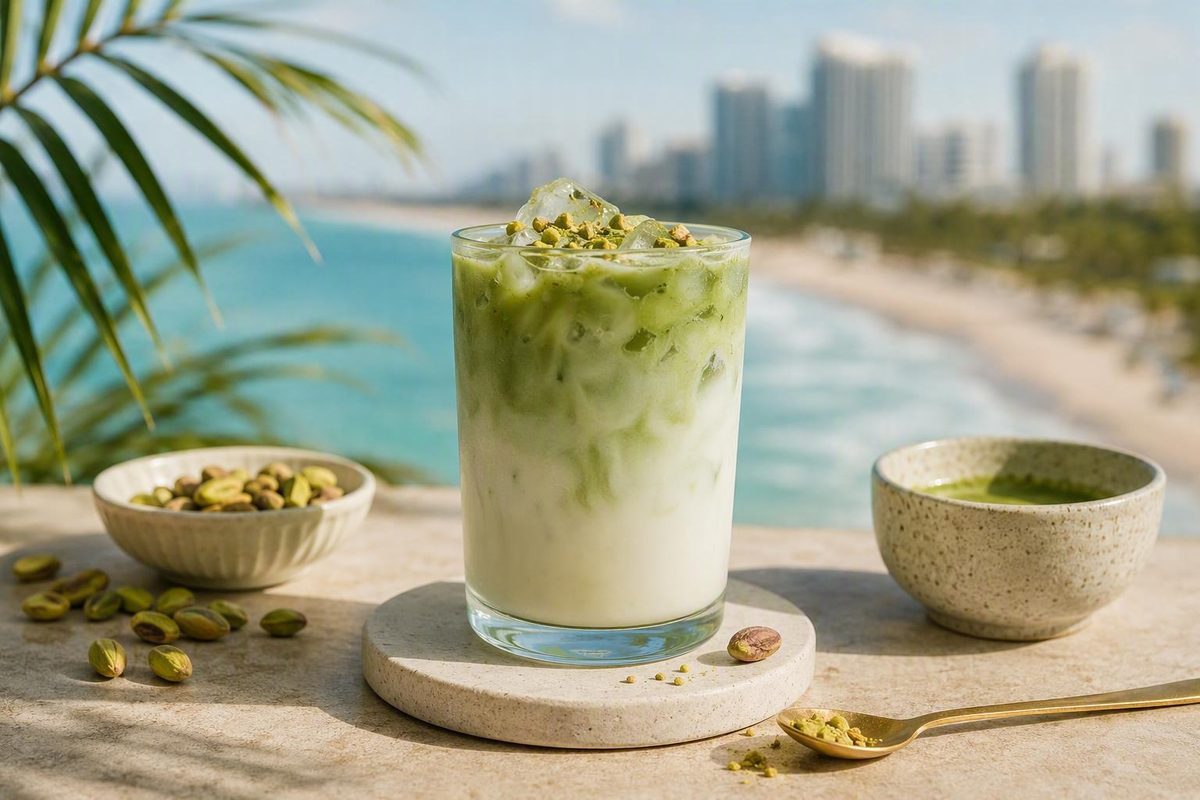
Start with 1 tsp matcha, 50 ml warm water, 1 cup milk and 1-2 tbsp sweetened pistachio cream. Adapt it for syrup, paste or pistachio milk.
A pistachio matcha latte has three core components: matcha whisked with warm water, milk, and a pistachio ingredient. The main decision is whether the pistachio flavor comes from syrup, sweetened cream, unsweetened paste, butter, or pistachio milk.
For a practical starting point, use 1 teaspoon matcha, about 50 milliliters warm water, 1 cup milk, and 1–2 tablespoons sweetened pistachio cream or paste. Serve the latte over ice or combine the base with gently warmed milk.
This guide synthesizes published recipes rather than presenting an independently tested house formula. Treat the quantities as an adaptable starting point, not a universal ideal.
A Flexible One-Serving Pistachio Matcha Latte Formula
This formula makes one generous latte:
- Matcha: 1 teaspoon, approximately 2 grams
- Warm water: 50 milliliters, about 3 tablespoons plus 1 teaspoon
- Milk: 1 cup, or 250 milliliters
- Sweetened pistachio cream or paste: 1–2 tablespoons
- Ice: enough to fill a serving glass, for the iced version
- Optional sweetener: only after mixing and tasting
The starting ratio adapts a published one-serving recipe containing 1 teaspoon or 2 grams matcha, 50 milliliters water at about 70–80°C, 2 tablespoons sweetened pistachio cream, and 1 cup or 250 milliliters milk. That recipe lists a total preparation time of five minutes. (Strawberry in the Desert)
Other shortcut recipes list approximately five to ten minutes of preparation and cooking time. One ten-minute version uses ½ teaspoon matcha, ¼ cup water, 1½ ounces pistachio syrup, and ¾ cup milk. (Dash of Jazz) Homemade pistachio milk takes substantially longer because the nuts must be soaked before blending and straining.
Pistachio-allergy warning: This drink contains pistachio and is unsuitable for someone with a pistachio or relevant tree-nut allergy.
Adjust the matcha strength
Published recipes vary substantially in matcha strength. The syrup-based recipe above uses ½ teaspoon matcha with ¾ cup milk, while a pistachio-cardamom version uses 2 teaspoons matcha with 1 cup pistachio milk and 2 ounces water. (Rishi Tea)
For one latte, use this source-based adjustment framework:
- Mild: approximately ½ teaspoon matcha
- Standard starting point: 1 teaspoon matcha
- Strong: up to 2 teaspoons matcha
These are reference points drawn from different published recipes, not tested strength grades. More matcha can make the tea both more prominent and more bitter. If a latte tastes too intense, try adding milk or reducing the matcha before compensating with extra sugar.
What each ingredient does
- Matcha supplies the tea flavor and color.
- Warm water disperses the matcha before it encounters milk or a thick pistachio product.
- Milk provides most of the volume and softens the matcha.
- Pistachio syrup, cream, paste, butter, or milk supplies the pistachio component, although each format behaves differently.
- Sweetener may be useful when the pistachio product is unsweetened.
- Ice chills the cold version and gradually dilutes it as it melts.
For the fastest preparation, use commercial syrup or smooth sweetened cream. Choose unsweetened paste or butter if you want to control the sugar separately. When using pistachio milk, treat it as the milk component rather than as a concentrated spoonful of flavoring.
Choose Your Pistachio Ingredient: Syrup, Cream, Paste, or Milk
They therefore cannot be treated as spoon-for-spoon equivalents.
| Pistachio format | Preparation effort | Built-in sweetness | Mixing needs | Role in the drink |
|---|---|---|---|---|
| Commercial syrup | Very low | Usually sweetened | Can be stirred into milk or the assembled drink | Concentrated flavoring and sweetener |
| Sweetened cream or spread | Low | Usually moderate to high | Whisk into the warm matcha base; loosen if necessary | Flavoring, texture, and primary sweetener |
| Unsweetened paste or butter | Low to moderate | Little or none | Loosen with warm liquid before adding the remaining milk | Concentrated flavor and body |
| Pistachio milk | Low if purchased; high if homemade | Product-dependent | Stir or shake according to the package directions | Replaces some or all of the regular milk |
Commercial pistachio syrup
Syrup is a convenient option because it contributes both pistachio flavor and sweetness. A manufacturer-published formula uses 2 tablespoons, or 1 ounce, pistachio syrup with 1 teaspoon matcha, ¼ cup water, and ½ cup milk. (Torani)
Begin with 1 tablespoon if the latte will also contain sweetened milk, vanilla syrup, sweet foam, or another source of sugar. Add more only after mixing and tasting. For an iced latte, syrup may be stirred into the milk or the completed drink. For a hot latte, it can be whisked into the warm matcha base.
Sweetened pistachio cream or spread
Use 1–2 tablespoons as the starting range in the core formula. A sweetened cream can supply pistachio flavor, additional body, and most or all of the drink’s sugar.
Begin without honey, sugar, maple syrup, agave, or condensed milk. Add another sweetener only after the complete latte has been mixed and tasted. Check the product label to determine whether the cream is sweetened and whether it meets your dietary requirements.
Unsweetened paste or pistachio butter
A thick paste may remain lumpy if added directly to a full glass of cold milk. Put it in a small cup and whisk it with a small amount of warm milk or prepared matcha. Once the mixture is smoother and pourable, add the remaining liquid.
For a lighter reference formula, one published recipe uses 1 teaspoon pistachio butter, 1 teaspoon matcha, ¼ cup water, and ½ cup milk. Its hot method adds the butter to prepared matcha, while its iced method mixes the butter into warmed milk before pouring it over ice. (Mochi Mommy)
That formula demonstrates how one recipe uses concentrated butter, but it does not establish a direct conversion for other pastes or sweetened creams. Loosening a thick product can improve dispersion without guaranteeing that it will remain perfectly suspended.
Pistachio milk
Pistachio milk replaces some or all of the dairy, oat, soy, almond, coconut, or other milk. It does not replace syrup or paste in equal quantities: a cup of pistachio milk is the liquid base, while a tablespoon of syrup or paste is a concentrated addition.
For the standard formula, replace the regular milk with 1 cup pistachio milk. Taste the assembled drink before adding syrup, paste, or another sweetener. The evidence does not establish which pistachio format provides the strongest or most natural flavor under controlled conditions.
Whatever product you select, determine whether it is already sweetened before adding honey, sugar, maple syrup, agave, condensed milk, or flavored foam.
Prepare Smooth Matcha Without Boiling Water
Use water at approximately 160–175°F or 70–80°C. Published matcha guidance recommends this range, along with sifting the powder before whisking. (AIYA Matcha)
Individual pistachio matcha recipes also specify temperatures within that range. The pistachio-cardamom recipe uses 165°F water, while a homemade-pistachio-milk recipe uses 175°F water.
Several preparation guides associate water hotter than approximately 176°F or 80°C with greater bitterness. The practical reason to avoid freshly boiling water is flavor; there is no need to claim that it definitively destroys nutrients or literally scorches the powder. (Naoki Matcha)
Use this preparation sequence
- Start with a dry bowl or mixing cup.
- Sift the matcha through a small fine-mesh sieve.
- Add the measured warm water.
- Whisk until evenly suspended and lightly frothy.
- Add the pistachio component. Whisk thick cream or paste into the warm base; syrup may be added here or later.
- Combine the base with cold or gently warmed milk.
Move the whisk rapidly in a W, M, or short zig-zag pattern. No supplied comparison establishes that one of these motions is scientifically superior; each is a practical way to mix the powder energetically.
Matcha particles are suspended rather than technically dissolved. Effective mixing helps distribute them, but some settling can still occur while the drink stands. Stirring the latte again before finishing it is normal.
Tools that work
In descending order of specialization, use:
- Bamboo matcha whisk
- Handheld electric frother
- Small conventional whisk
- Sealed jar or bottle for shaking
A bamboo whisk is useful but not essential for a home latte. A spoon can wet the powder, but published preparation guidance identifies whisking, frothing, or bottle shaking as more effective options for achieving an even suspension.
Choosing and storing matcha
“Ceremonial” and “culinary” are not consistently regulated grade labels. Some sellers recommend culinary matcha for flavored lattes, while others prefer products marketed as ceremonial grade. Neither label should be treated as a universal requirement.
Choose fresh matcha with a single listed ingredient—matcha green tea powder—that suits your taste and budget. Keep it in an airtight, light-protective container away from heat, air, light, and moisture. Close the container promptly after measuring rather than relying on an unsupported universal shelf-life promise.
How to Make an Iced Pistachio Matcha Latte
The following method uses the source-based core formula: 1 teaspoon or about 2 grams matcha, 50 milliliters warm water, 1 cup milk, and 1–2 tablespoons sweetened pistachio cream or paste. It has not been independently tested as a combined house recipe.
Ingredients
- 1 teaspoon matcha, approximately 2 grams
- 50 milliliters warm water at 160–175°F or 70–80°C
- 1 cup chilled milk
- 1–2 tablespoons sweetened pistachio cream or paste
- Ice
- Optional sweetener, to taste
Method
-
Sift the matcha. Pass approximately 1 teaspoon or 2 grams of matcha through a fine sieve into a dry bowl or mixing cup.
-
Prepare the matcha base. Add 50 milliliters warm, non-boiling water. Whisk with a bamboo whisk, frother, or small whisk until the powder is evenly suspended and the surface is lightly frothy.
-
Incorporate the pistachio ingredient. Whisk 1 tablespoon sweetened cream or smooth paste into the warm matcha. Use the second tablespoon for a more pronounced pistachio component. If the product is very thick, loosen it separately with a little warm milk or prepared matcha before combining.
-
Build the milk layer. Fill a serving glass with ice and add 1 cup chilled milk.
-
Pour and finish. Slowly pour the pistachio-matcha mixture over the milk. This may produce visible layers, but they are temporary and mainly decorative. Stir before drinking for more even distribution.
A published iced variation uses 1 teaspoon matcha with 2 tablespoons water at about 175°F, 1–2 tablespoons pistachio paste, and 1 cup milk, assembling the components in layers over ice. (Aprika Matcha)
Assembly notes by pistachio format
If using syrup: Start with 1 tablespoon and stir it into the chilled milk or completed drink. Increase gradually if needed. Do not add another sweetener until you have tasted the latte.
If using sweetened cream: Whisk 1–2 tablespoons into the warm matcha base. The finished drink is only dairy-free if both the milk and the cream contain no dairy ingredients.
If using unsweetened paste or butter: Loosen it with a little warm liquid first. Add a separate sweetener only after tasting.
If using pistachio milk: Use it in place of the regular milk. Do not add it by the tablespoon as though it were concentrated syrup or paste.
Adjust after tasting
Make one change at a time:
- Add more of the same pistachio ingredient for greater pistachio presence.
- Add more milk if the matcha is too intense.
- Add a measured amount of sweetener if the pistachio product is not sweet enough.
- Add more prepared matcha if the milk or syrup overwhelms the tea.
Changing the matcha, milk, pistachio ingredient, and sugar simultaneously makes it difficult to identify which adjustment improved the drink.
How to Make the Latte Hot
A hot pistachio matcha latte is better prepared by keeping the matcha and milk separate until the final assembly. This gives you more control over the matcha suspension and the distribution of thick pistachio products.
Ingredients
- 1 teaspoon matcha, approximately 2 grams
- 50 milliliters warm water at 160–175°F or 70–80°C
- 1 cup milk
- 1–2 tablespoons sweetened pistachio cream or paste
- Optional sweetener, to taste
These quantities repeat the cited core formula and remain an adaptable editorial synthesis rather than an independently tested recipe.
Method
-
Sift the matcha into a dry, heat-resistant bowl or mixing cup.
-
Add the warm water and whisk until the matcha is evenly suspended and lightly frothy.
-
Blend in the pistachio ingredient. Syrup may be whisked directly into the matcha. Add cream, butter, or paste gradually, loosening a particularly thick product with a little warm milk first.
-
Warm the milk gently. Stop before it boils. Froth it if desired with a frother, whisk, or another suitable tool.
-
Combine the components. Pour the warmed milk into the pistachio-matcha base and stir until evenly distributed.
-
Taste before sweetening. Add a small amount of honey, maple syrup, agave, sugar, or another preferred sweetener only if necessary.
When using pistachio milk, warm it and treat it as the milk component. Syrup, cream, butter, and concentrated paste are additions to milk rather than replacements for the entire cup of liquid.
No available comparison establishes one milk, serving temperature, or frothing tool as objectively superior. The practical aim is gently warmed milk and a well-mixed matcha-pistachio base.
Milk, Sweetener, and Café-Style Additions
Published recipes use dairy milk as well as oat, almond, coconut, soy, and pistachio milk. Choose according to dietary needs, availability, desired body, and flavor. The supplied evidence does not support ranking one as universally best.
Making it vegan or dairy-free
For a vegan drink, use plant-based milk and verify that the pistachio product, syrup, sweetener, foam, and garnishes contain no animal-derived ingredients.
Honey is not vegan. A latte made with plant milk is not automatically vegan or dairy-free if its sweetened pistachio cream or foam contains dairy.
Control sweetness according to the pistachio format
With commercial syrup: Taste before adding another source of sugar.
With sweetened cream or spread: Begin without additional sweetener. Reassess after adding the full amount of milk.
With unsweetened paste or butter: Consider honey, maple syrup, agave, sugar, simple syrup, or another preferred sweetener. Add a small amount and mix completely before adding more.
With pistachio milk: Check whether the product is sweetened. Homemade milk containing dates or honey also contributes sweetness.
Optional matcha cold foam
For an optional topping, whisk or froth:
- 2 tablespoons heavy cream or the foam base specified by the recipe
- ½ teaspoon matcha
- ½ teaspoon sugar
These quantities come from a brand-published iced latte recipe that also documents a homemade pistachio syrup. (Califia Farms)
A plant-based product may work if it is intended for foaming, but identical performance across dairy and plant products should not be assumed. Cold foam adds another sweet, creamy matcha layer and may change the balance of the underlying drink.
Flavor and garnish ideas
Try one addition at a time:
- Crushed pistachios
- A pinch of cardamom
- A light dusting of cinnamon
- A small amount of vanilla
- A very small pinch of sea salt
- Sprinkles for decoration
Cold foam, crushed nuts, sprinkles, and visible layers are optional. The basic latte needs only prepared matcha, milk, and a pistachio component.
Allergen reminder: Crushed pistachios add more pistachio to a drink that already contains this allergen. Do not serve the latte to someone with a pistachio or relevant tree-nut allergy.
From-Scratch Options: Pistachio Syrup and Pistachio Milk
Homemade syrup and pistachio milk require more elapsed time than a shortcut latte. Syrup must be cooked and cooled, while pistachio milk requires soaking, blending, and straining.
Homemade pistachio syrup
The following formula and timing come from the cited brand-published iced latte recipe.
Ingredients
- ⅓ cup chopped pistachios
- ½ cup sugar
- ½ cup water
- Pinch of vanilla bean paste
Method
- Combine the pistachios, sugar, water, and vanilla bean paste in a small saucepan.
- Heat over medium-low heat for 5 minutes.
- Remove from the heat and cool for 15 minutes.
- Strain into a clean container.
- Add the syrup gradually to a hot or iced latte, tasting before adding more.
The source provides the ingredients and cooking and cooling times but does not establish a definitive batch yield or refrigerated storage period. Allow at least the documented 20 minutes of cooking and cooling time before straining.
Homemade pistachio milk with dates
This version uses 1 cup raw shelled pistachios, 4 Medjool dates, and 3 cups fresh water. The pistachios are soaked overnight and then blended for 1–2 minutes before straining. (Tea Cachai)
Ingredients
- 1 cup raw shelled pistachios
- 4 Medjool dates
- 3 cups water, plus additional water for soaking
Method
- Cover the pistachios with water and soak them overnight.
- Drain the soaking water.
- Put the softened pistachios in a blender with the dates and 3 cups fresh water.
- Blend for 1–2 minutes.
- Strain through cheesecloth or a nut-milk bag.
- Use the finished pistachio milk as the latte’s milk component.
The recipe author recommends refrigerating this homemade milk and using it within three to four days. That is the author’s recommendation for this method, not a validated universal storage rule for every kitchen or refrigerator.
Most of the elapsed preparation time comes from the overnight soak; the active work consists mainly of draining, blending, and straining.
Pistachio-cardamom milk variation
For a spiced alternative, use:
- ¾ cup pistachios
- 4 cups filtered water
- 2 tablespoons honey
- 3 lightly crushed cardamom pods
Soak the pistachios for four hours or overnight, then drain and rinse them. Blend them with the filtered water, honey, and cardamom before straining. The accompanying latte uses 1 cup of this milk, 2 teaspoons matcha, and 2 ounces water at 165°F.
This variation is not vegan as written because it contains honey. It is also stronger in matcha than the standard formula in this guide, so use less matcha if you prefer a milder drink.
The supplied evidence does not support a universal shelf life for homemade syrup or pistachio milk.
Troubleshooting Clumps, Bitterness, Separation, and Weak Flavor
Problem: The matcha is clumpy
Likely cause: The powder was not sifted, went directly into milk, or was mixed only with a spoon.
Fix: Sift the matcha into a dry vessel and whisk it with warm water before adding milk. Use a bamboo whisk, handheld frother, small whisk, or sealed-container shaking method.
If clumps have already formed, whisk the matcha again or pass it through a fine strainer before adding the other ingredients.
Problem: The matcha tastes overly bitter
Likely cause: The water was too hot, the matcha dose was too high for the milk volume, or the selected matcha tastes more assertive than expected.
Fix: Keep the water around 160–175°F or 70–80°C. Reduce the matcha from 1 teaspoon toward ½ teaspoon, or add more milk. Try those corrections before adding a large amount of sugar.
Problem: The pistachio paste remains lumpy
Likely cause: A thick paste or butter was added directly to cold milk.
Fix: Whisk the paste with a small amount of warm milk or prepared matcha. Add the remaining liquid after the mixture becomes smoother and more pourable.
This technique may improve dispersion, but it does not guarantee permanent uniformity.
Problem: The pistachio or matcha settles
Likely cause: Matcha particles and nut solids remain suspended in the liquid and may settle while the drink stands.
Fix: Stir before drinking and again if the latte sits for several minutes. For an iced drink, use a straw or long spoon to redistribute material near the bottom.
Problem: The pistachio flavor is weak
Fix: Increase the same pistachio ingredient gradually. Do not assume that equal amounts of milk, syrup, cream, and paste provide equivalent flavor.
A compatible syrup or paste can be added to pistachio milk for more concentration, but it will also change the sweetness and texture.
Problem: The drink is too sweet
Likely cause: Sweetened syrup or cream was combined with another sweetener before the completed latte was tasted.
Fix: Use less syrup or cream next time and omit the separate sweetener. In the current drink, adding unsweetened milk or prepared matcha may reduce perceived sweetness, although it will increase the total volume.
Problem: The iced layers turn muddy
Fix: For presentation, add ice and milk first, then pour the matcha slowly over the upper ice. Even carefully assembled layers are temporary. Stirring before drinking is appropriate because it distributes the matcha and pistachio more evenly.
Problem: The foam is thin or collapses
Fix: Use a product intended for whipping or frothing and avoid adding excessive syrup or liquid. Results vary among dairy and plant-based products.
This drink contains pistachio. Its vegan and dairy-free status depends on every ingredient selected. Calories, sugar, and caffeine also vary with the exact products and quantities, so one generalized nutrition figure would not accurately describe every version.
Frequently Asked Questions
Can I make a pistachio matcha latte without a bamboo whisk?
Yes. Sift the matcha first, then use a handheld electric frother, small conventional whisk, or sealed jar or bottle. A bamboo whisk is useful but not required.
Should I use pistachio syrup, paste, cream, or pistachio milk?
Use syrup for speed and easy sweetening. Choose sweetened cream for flavor, body, and sweetness in one ingredient. Use unsweetened paste or butter when you want to control the sugar separately, loosening it with warm liquid first.
Use pistachio milk when the pistachio ingredient will replace the regular milk. It is not a direct substitute for concentrated syrup or paste.
What temperature should the water be for a matcha latte?
Aim for approximately 160–175°F or 70–80°C. This is warm enough for effective mixing while avoiding freshly boiling water, which several preparation guides associate with greater bitterness.
Can a pistachio matcha latte be vegan or dairy-free?
Yes, if every selected ingredient qualifies. Use plant-based milk and verify the pistachio cream, syrup, paste, sweetener, foam, and garnish. Honey is not vegan, and plant milk alone does not establish that the entire drink is vegan or dairy-free.
The latte still contains pistachio.
Do I need ceremonial-grade matcha for this recipe?
No. Ceremonial and culinary labels are not consistently regulated, and published advice differs over which is preferable for lattes.
Choose fresh, single-ingredient matcha that suits your taste and budget. Store it in an airtight, light-protective container away from heat, light, air, and moisture.
The central method is the same for every version: choose the pistachio ingredient according to the time available and whether it is already sweetened, sift and whisk the matcha separately with non-boiling water, and then add cold or gently warmed milk. Adjust one ingredient at a time after tasting rather than treating syrup, cream, paste, butter, and pistachio milk as equivalents. Because every version contains pistachio, do not serve it to someone with a pistachio or relevant tree-nut allergy.