
How to Explore Miami’s Warehouse-to-Arts Neighborhood
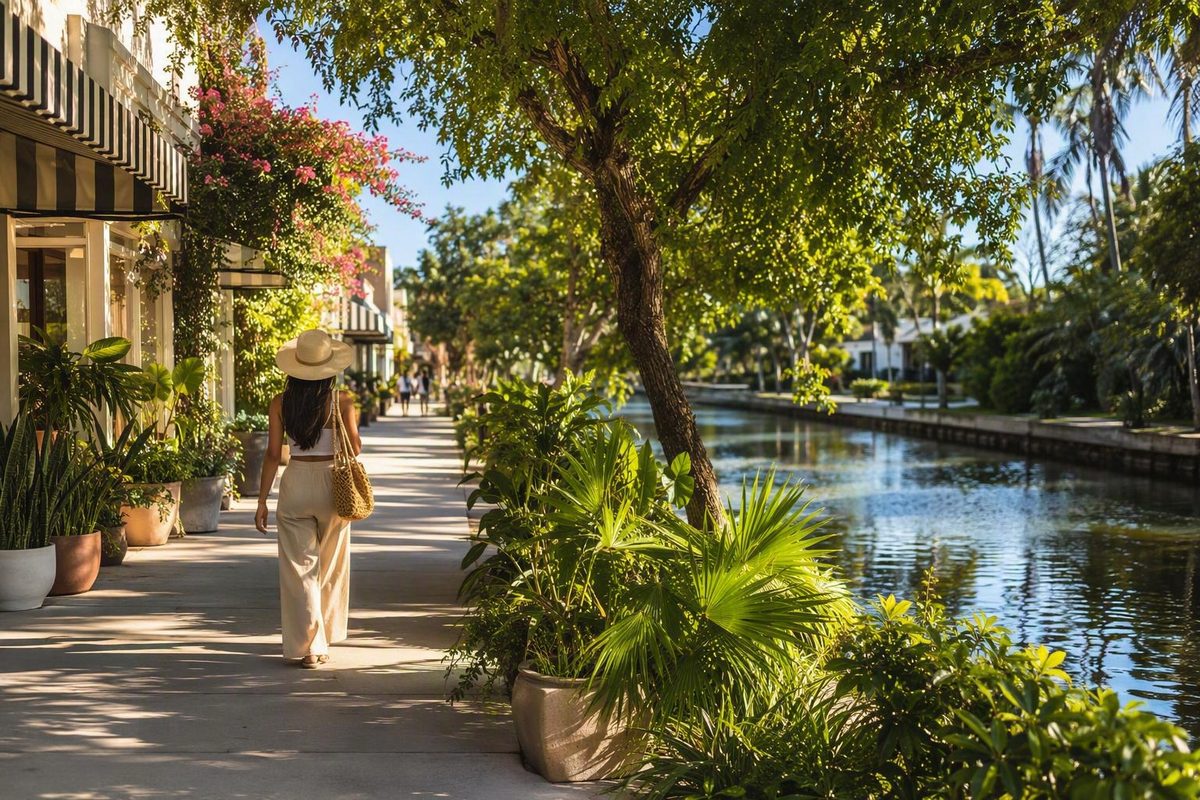
Use three-hour or full-day plans organized by cluster, with food, art and shopping leads, address checks, and guidance for getting around.
Little River is a historic Miami neighborhood—and the name of the waterway along its northern edge. Visitors encounter a patchwork of homes, low-rise warehouses, industrial properties, restaurants, galleries, studios, boutiques, farms, murals, and community institutions.
That distinction shapes how to visit. Little River works best when you choose one destination as an anchor, group nearby stops, and verify every address and schedule shortly before leaving. It also helps to distinguish the neighborhood from the Little River waterway, the separate places called Little Haiti and West Little River, and the approximately 25-acre real-estate project marketed under the Little River name by AJ Capital Partners.
Related: Miami Rainy-Day Discovery Plan That Adapts.
Little River at a glance: neighborhood, waterway, and location
Little River is a neighborhood in Miami, Florida. It takes its name from the Little River waterway running along its northern edge, where the water also helps define part of the City of Miami’s northern boundary.
The neighborhood is generally described as south of El Portal, north of Little Haiti, west of Palm Grove, and east of West Little River. In broader visitor terms, it sits north of Wynwood and the Miami Design District. Miami Shores is nearby to the northeast, although it is not part of Little River.
These descriptions are useful for orientation, but they should not be mistaken for a surveyed boundary. Neighborhood labels can shift between maps, real-estate listings, lifestyle coverage, and ordinary local usage. A venue described as “Little River” by one guide may sit in an adjacent area under a narrower definition.
Some references associate Little River with ZIP codes 33138 and 33150 in their neighborhood summaries. ZIP codes organize mail delivery; they do not create definitive neighborhood borders. The same warning applies to coordinates and map pins: a selected point can help locate a neighborhood, but it cannot show where the entire neighborhood begins or ends.
Naming note
Little River, Little Haiti, and West Little River are separate places. Little River is the Miami neighborhood covered in this guide. Little Haiti lies generally to its south, while West Little River is a distinct community to its west. Do not use the three names interchangeably when booking a ride, checking an address, or choosing accommodations.
The term becomes more flexible in dining, design, and travel coverage. Some guides use “Little River” for a broader visitor district that includes nearby blocks. That can be practical when planning an outing across adjoining areas, but it means the actual street address matters more than the neighborhood label attached to a listing.
For a first visit, three corridors are especially useful for orientation:
- NW 2nd Avenue, where published guides place several restaurants, cafés, and shops close together
- NW Miami Court, associated with restaurants, retail, and creative spaces
- NE 2nd Avenue, where food, shopping, and other destinations appear farther east and north
These are planning corridors, not boundary lines. Build your map from the current addresses of the places you intend to visit rather than from a generic Little River pin.
From natural river to an incorporated Miami neighborhood
Little River’s history begins before the present creative-business district and before the modern canal system. Neighborhood summaries place its establishment in the late 1800s and its incorporation into the City of Miami in 1925. The surrounding settlement took its name from the natural waterway along its northern edge.
A concise timeline provides useful context:
- Late 1800s: The settlement associated with Little River became established.
- Early 20th century: Agriculture, transportation, settlement, and commercial activity shaped the surrounding area.
- 1925: Little River was incorporated into Miami.
- 20th century: Residential, agricultural, commercial, religious, and industrial uses developed alongside one another.
- Late 20th and early 21st centuries: Farms, workshops, warehouses, community institutions, and small businesses continued operating as new creative and hospitality businesses began reusing commercial properties.
- 2010s onward: Real-estate investment and adaptive-reuse projects brought greater attention from development and travel publications.
The Little River Conservancy describes the original Little River as one of Miami’s natural waterways draining toward Biscayne Bay. According to the organization, the river once followed a natural course east from around present-day North Miami Avenue before reaching the bay. The Conservancy says dredging and other alterations transformed the natural waterway into the C-7 canal, and it identifies an aerial photograph from 1924 as having been taken one year before that work in its account of the river.
That account comes from a local advocacy organization rather than a comprehensive government history, so its detailed historical and environmental assertions should be treated as attributed claims. The central point remains useful: the “river” in Little River is not simply a modern branding device. A real waterway gave the neighborhood its name, but the channel visible today has been substantially engineered and serves a drainage function.
The Conservancy also provides a length for the present Little River/C-7 system, but it is unclear whether that measurement describes the channel, a wider drainage route, or another geography. It should not be used as a settled measurement of the original natural river.
Little River’s history also resists a simple “warehouses became fashionable businesses” narrative. Agriculture, worship, food, industry, and residential life have long coexisted here.
St. Mary’s originated as the Little River Mission Club in 1929 and later became the cathedral church of the Archdiocese of Miami. Earth N Us Farm is reported to have been established in 1977. Older neighborhood guides also associate Little River with Little River Cooperative, Miami Industrial Arts, production facilities, food businesses, and agricultural uses. These accounts establish historical association more reliably than current visitor access.
That continuity matters. New restaurants and galleries may be why some visitors first hear about Little River, but they did not create the neighborhood. Nor does the available evidence support presenting one highway project or the growth of shopping malls as the sole, established cause of an earlier decline. Those explanations appear in lifestyle accounts without enough corroboration to be treated as settled history.
A better interpretation is layered: a natural waterway became an engineered drainage channel; an early settlement became part of Miami; homes and religious institutions grew alongside farms, workshops, and industrial properties; and newer dining, art, retail, and real-estate activity entered an already inhabited and culturally complex place.
What Little River is known for today
Little River is known to visitors for independent dining, coffee, contemporary art, fashion, design shopping, creative production, and adaptive reuse. Those destinations are embedded among single-family homes, low-rise apartment buildings, warehouses, auto-oriented industrial properties, murals, churches, farms, workshops, and ordinary neighborhood services.
Converted warehouses and reused commercial buildings are central to the area’s current creative-business identity. Former industrial or utilitarian spaces can accommodate galleries, restaurants, studios, showrooms, and makers. The result feels less continuous and purpose-built than a conventional shopping district.
Lifestyle writers and developers have characterized Little River as an “emerging” arts and dining district. That wording reflects increased investment and destination coverage, not an official designation or objective ranking. A 2025 travel feature, for example, highlighted repurposed warehouses, independent businesses, galleries, restaurants, and shops while placing them within a predominantly Haitian community in its portrait of contemporary Little River.
The Haitian and wider Caribbean context should not be treated as background decoration for redevelopment. Food, religious institutions, multilingual community life, and the relationship with neighboring Little Haiti all contribute to the area’s identity. So do agricultural, industrial, and craft uses that do not fit neatly into an arts-district label.
The main visitor themes include:
- Independent food and drink: coffee, pizza, natural wine, Haitian and Caribbean cooking, multi-vendor dining, and reservation-oriented restaurants
- Contemporary art: nonprofit spaces, project rooms, commercial galleries, studios, exhibitions, and event-based programs
- Fashion and design: small boutiques, independent labels, jewelry, floral design, and interiors
- Creative production: workshops, studios, makerspaces, photography or film uses, and industrial arts
- Urban agriculture: farms, nurseries, gardens, and food-growing projects associated with the neighborhood
- Community institutions: churches, religious life, longstanding businesses, and organizations serving residents
- Adaptive reuse: warehouses, storefronts, and other commercial buildings renovated for newer tenants
The most important expectation is spatial. Little River is not a continuous tourist strip where you can arrive at one end and browse for miles. It is a collection of destinations embedded in residential and industrial streets. One compact group may support a short walk, but the next place on your list could be far enough away to require a separate ride.
A successful first visit is therefore built around a specific café, restaurant, gallery, shop, or scheduled community program—not the vague instruction to “go to Little River and wander.”
Where to eat, drink, shop, and see art
Source-review status: September 6, 2026
This shortlist reflects third-party guides and articles reviewed through the date above. It does not mean every venue was independently verified as open on that date. Before visiting, check the venue’s official website, official social account, reservation platform, or direct contact for its current operating status, address, hours, opening days, admission rules, reservation policy, age restrictions, accessibility, and public-access conditions.
Food and drink anchors
Imperial Moto Café is a possible daytime anchor for visitors who want coffee before browsing the western cluster. Published guides place it on NW 2nd Avenue and describe a concept combining café service with motorcycle culture. Confirm its current hours before pairing it with shops or galleries that may open later.
La Natural is associated in local coverage with sourdough pizza, vegetable-focused starters, and natural wine. It may suit a food-led daytime or evening visit, subject to current service days and seating arrangements.
Naomi’s Garden is the shortlist’s clearest Haitian and Caribbean food lead. Including it can provide cultural context that an itinerary limited to newer hospitality and design businesses would miss.
The Citadel is described as a multi-vendor dining destination. Because its reported address is farther northeast than the compact NW 2nd Avenue and NW Miami Court groups, it makes more sense as an eastern anchor than as an automatic extension of a western walking route.
Their formats, service schedules, demand, and booking rules make them more suitable as planned evening endpoints than as assumed walk-in stops.
A local guide updated in 2026 reported the following addresses: Imperial Moto Café, 7299 NW 2nd Avenue; La Natural, 7289 NW 2nd Avenue; Ogawa, 7223 NW 2nd Avenue; Sunny’s, 7357 NW Miami Court; Naomi’s Garden, 650 NW 71st Street; and The Citadel, 8300 NE 2nd Avenue in its Little River dining and culture directory. These addresses help illustrate the clusters, but they should be rechecked before being entered into navigation.
Do not use meal totals from old personal newsletters as current budget guidance. Menus, taxes, service charges, prices, and portion sizes change, and one writer’s order is not a dependable estimate for another visitor.
Shopping and design leads
Published guides place several fashion and design businesses in or near the western cluster:
- Simonett — reported at 7297 NW 2nd Avenue
- Eliou — reported at 160 NW 73rd Street
- Rose Coloured Floral — reported at 7338 NW Miami Court
- La Sala de Moniomi — reported at 7275 NW 1st Court, Unit 102
Farther east, Carolina K was reported at 7924 NE 2nd Avenue, Suite 103. That location is better suited to an eastern route than to a tightly timed circuit around NW 2nd Avenue.
Treat these as planning leads rather than guaranteed storefront experiences. Small design businesses may change hours, operate by appointment, focus on online sales, close temporarily for production, or relocate before third-party guides are updated. Confirm whether each address is a public shop, a showroom, a studio, or an appointment-only space.
A practical strategy is to choose one store that matters most, verify it through an official channel, and identify one nearby alternative. Avoid crossing the neighborhood solely for an unconfirmed listing.
Galleries and project spaces
The main art leads in published guides include:
- Dimensions Variable — reported at 101 NE 79th Street
- Locust Projects — reported at 297 NE 67th Street
- Primary Projects — reported at 7410 NW Miami Court
Their reported distribution illustrates why the phrase “Little River art walk” can be misleading. These spaces do not necessarily form one uninterrupted pedestrian circuit.
Gallery access may depend on an active exhibition, public opening hours, scheduled events, registration, or an appointment. A listed address does not guarantee walk-in admission. If art is your priority, verify one exhibition with dependable public access and build the rest of the outing around its location.
Community, craft, agriculture, and religious sites
Little River also has places that broaden the neighborhood story beyond dining and retail:
- St. Mary’s Cathedral, whose local roots extend to the Little River Mission Club
- Earth N Us Farm, associated with urban agriculture and community life
- Little River Cooperative, historically connected with farming and plant cultivation
- Miami Industrial Arts, described in older guides as a makerspace for wood, metal, and ceramics
These are not conventional attractions. A cathedral is an active religious institution; visitors should confirm public hours, dress and behave respectfully, and avoid disrupting worship or private events. Farms and makerspaces may restrict access to scheduled programs, volunteers, members, clients, or invited guests.
An undated neighborhood guide associates these institutions and creative spaces with Little River in its broader place directory. Because the guide lacks a dependable update date, use it to understand the area’s historical mix of uses—not as evidence that every site currently welcomes drop-in visitors.
A practical three-hour or full-day Little River plan
The most efficient itinerary is organized around clusters. Choose one verified destination, add no more than two nearby stops, and reserve cross-neighborhood travel for a deliberate second phase.
Because the evidence pack does not establish current operating days or public-access rules, the routes below are planning frameworks rather than guaranteed same-day itineraries. Confirm every component through official channels before departure.
A three-hour daytime visit
The most compact published group is around NW 2nd Avenue and nearby NW Miami Court. A workable sequence is:
- Start with coffee on NW 2nd Avenue. Imperial Moto Café is the published lead, subject to current verification.
- Add one nearby shop. Simonett or another confirmed western-cluster business may fit, depending on opening hours and access.
- Choose one art or design stop. Primary Projects, reported on NW Miami Court, is a possible lead only if a current exhibition or public event is confirmed.
- Finish with lunch. La Natural or Naomi’s Garden can complete the outing, depending on current service hours and how far you want to move.
This route works because the first three leads are reported within the same general western cluster. It does not require adding The Citadel or an NE 2nd Avenue shop simply because a neighborhood guide lists them under the same district name.
Before leaving, check that the café, shop, gallery, and restaurant are all open during compatible hours. If the gallery lacks confirmed access, simplify the plan to coffee, one shop, and lunch rather than replacing it with a distant stop.
A longer visit
For a half-day or full day, use two clusters instead of stretching one walking route across the wider area.
First cluster: late morning through lunch
- Begin with a verified café on or near NW 2nd Avenue.
- Visit one confirmed shop in the western cluster.
- Add Primary Projects or another art space only if public access is documented for that day.
- Eat lunch nearby.
Second cluster: afternoon and evening
- Move by car or rideshare to an eastern destination on or near NE 2nd Avenue.
- Use Carolina K, The Citadel, or another verified business as the second anchor.
- If an art space farther east has a confirmed exhibition and public hours, visit it before dinner.
- Finish with a reservation-based meal or a flexible multi-vendor option.
Sunny’s or Ogawa may serve as an evening endpoint if you hold a confirmed reservation. A flexible restaurant or multi-vendor destination may be more practical if you do not want the entire day tied to a precise dinner time.
Community institutions, farms, and makerspaces should be added only when their official channels confirm a public event, tour, service, volunteer session, or other appropriate form of access. Do not substitute a historical listing for permission to enter.
Use corridors to reduce backtracking
NW 2nd Avenue, NW Miami Court, and NE 2nd Avenue are useful orientation corridors because multiple published addresses cluster around them. They are not interchangeable, and the distance between them can make an improvised route inefficient.
Within one cluster, short walks may be practical. Moving between dispersed clusters may be easier by car or rideshare. That does not mean every connecting block is unsuitable for walking; it means distance, crossings, weather, construction, and individual mobility needs can change the experience.
Choose an anchor and a backup
Your primary anchor should be the place you would still enjoy if everything else fell through. The backup should be nearby, open during the same period, and preferably indoors.
Two useful patterns are:
-
Primary: a confirmed gallery exhibition Backup: a café or public shop in the same cluster Meal: a restaurant with verified service hours
-
Primary: a lunch reservation Backup: a café or multi-vendor dining venue Optional addition: one confirmed boutique nearby
This structure is more resilient than a list of six essential stops operating on unrelated schedules.
Build a weather fallback
Miami rain can interrupt even a geographically efficient route. When the forecast is unstable, prioritize indoor anchors such as a café, restaurant, gallery, shop, or food hall. Use dry periods for short outdoor links instead of committing to a long walking circuit.
That approach follows the broader strategy in Miami Finder’s rainy-day discovery plan: keep indoor anchors dependable and let the weather determine the length of outdoor segments. It does not establish that a specific Little River venue will be open during a storm, so current confirmation remains essential.
Avoid relying on exact walking times, promised parking, or assumed accessibility. A mapping app’s fastest route may not reflect current construction, sidewalk conditions, crossings, heat exposure, or an individual traveler’s mobility needs.
Getting there and moving around
Published descriptions support walking within selected business clusters but characterize the broader area as predominantly car-oriented. A visitor without a car can still plan a focused outing, but should not assume the entire neighborhood functions as one continuous pedestrian district.
A practical no-car structure is:
- Route directly to a verified first venue.
- Walk only among confirmed nearby stops.
- Use a rideshare or another suitable connection for a dispersed second cluster.
- Arrange the return around your final destination rather than the neighborhood name.
This neighborhood-clustering approach is consistent with Miami Finder’s broader guide to exploring Miami without renting a car. That general guide does not establish Little River-specific transit routes, fares, schedules, sidewalk conditions, or bicycle facilities.
Entering only “Little River” into a map or ride app can produce an arbitrary point. Different platforms select different coordinates for the neighborhood, and neither point defines its boundaries or necessarily places you near your intended venue.
For travel from Miami International Airport, Uber reports historical averages of approximately 9 miles, 19 minutes, and $29 between the airport and the company’s selected Little River point on its route page. These figures are rough benchmarks, not guarantees. Traffic, demand, surge pricing, road construction, terminal pickup location, and the exact destination can substantially change the route, duration, and price.
Always route to the first venue’s complete street address. This is especially important when distinguishing an NW 2nd Avenue destination from one on NE 2nd Avenue or near the edge of a broadly defined district.
For evening plans, decide how you will leave before dinner or an event begins. Check current ride availability and pickup instructions, and allow extra flexibility during major events or periods of heavy demand. Available forum comments about nighttime walking and rideshares are anecdotal and insufficient to characterize Little River as either safe or unsafe.
Drivers should verify parking conditions for the exact property. Availability, prices, time limits, towing restrictions, loading areas, and private-lot rules can vary and may change. Travelers with mobility needs should ask the venue about entrances, restrooms, interior circulation, seating, and the path from the drop-off point. A neighborhood-level description cannot establish accessibility for a particular business.
Redevelopment, adaptive reuse, and what remains unresolved
This strategy can preserve portions of the built environment while introducing new uses, but it does not by itself answer questions about affordability, ownership, displacement, or who benefits from change.
According to reporting published in 2022, Miami-based MVW Partners began investing in the area in 2014. The article described a portfolio of renovated and proposed properties and reported plans involving existing structures, multifamily housing, commercial space, and a future Oolite Arts campus in its account of Little River investment.
Those details were announcements or plans reported at the time, not proof that every project was later completed. A travel article published in 2025 still described the Oolite Arts Little River campus as planned for 2026. The available evidence does not establish its current completion or opening status.
AJ Capital Partners says it acquired a majority stake in the Little River project from MVW Partners in 2021, with MVW remaining the on-site local partner. The developer describes the project as an adaptive-reuse and urban-infill development totaling approximately 25 acres.
The roughly 24- or 25-acre figure refers to a developer-controlled portfolio or project—not the official size or boundary of the entire Little River neighborhood. It should not be used to draw a neighborhood map, determine whether a venue is “inside” Little River, or describe the scale of the surrounding residential community.
The developers’ stated strategy includes renovating commercial buildings, recruiting food, art, retail, and creative tenants, and adding urban infill. Their language about retaining neighborhood character and championing local talent describes intention and positioning, not demonstrated outcomes.
Important questions remain unresolved. The supplied evidence does not establish:
- how redevelopment has affected residential rents or commercial leases;
- whether residents or businesses have been displaced;
- how affordability has changed within a consistently defined boundary;
- whether longtime residents support or oppose particular projects;
- how resident tenure has changed;
- how many legacy businesses have stayed, relocated, or closed;
- whether promised community benefits have been delivered; or
- who has gained financially from appreciation and redevelopment.
Those gaps do not prove that the effects were positive or negative. They mean a visitor guide should not claim either conclusion.
Little River is better understood as a layered neighborhood than as a redevelopment success story or a checklist of fashionable venues. Creative businesses and destination restaurants operate near industrial buildings, homes, farms, religious institutions, Haitian and Caribbean community life, and the altered waterway that gave the area its name.
Is Little River the same as Little Haiti or West Little River?
No. Little River, Little Haiti, and West Little River are separate places.
Little Haiti lies generally south of Little River, while West Little River is a distinct community to the west. Their edges and wider cultural geographies may be described differently by different sources, but the names should not be used interchangeably.
When navigating, enter the full address of the restaurant, gallery, shop, institution, or accommodation. Do not assume that selecting “Little River” will take you to Little Haiti or that a listing labeled West Little River is in the neighborhood covered here.
Is Little River, Miami walkable?
It can support short walks within selected clusters, but it is not uniformly walkable as one visitor district.
Businesses around NW 2nd Avenue or NW Miami Court may be close enough to combine on foot. Destinations on NE 2nd Avenue or elsewhere may require a separate ride. Distance, weather, crossings, construction, and personal mobility can also affect whether a route is practical.
For a no-car visit, route to one verified anchor, group nearby stops, and use a suitable connection between dispersed clusters.
How far is Little River from Miami International Airport?
Uber reports historical averages of about 9 miles and 19 minutes, with an average price of approximately $29, from Miami International Airport to its selected Little River point on the company’s route page.
These figures are only rough planning benchmarks. Terminal pickup, traffic, construction, demand, surge pricing, and the exact Little River destination can all change the trip. Route to the specific venue or accommodation rather than a generic neighborhood pin.
How much time should I spend in Little River?
Allow about three hours for a focused combination of coffee, one or two nearby shops or galleries, and lunch. This is enough for a first look without spending much of the visit moving between scattered addresses.
A half-day or full day makes sense if you want to explore two clusters, attend a confirmed exhibition or scheduled program, and finish with dinner. The best duration depends less on the number of listings in a guide than on how many verified places are open at compatible times.
Why is the neighborhood called Little River?
The neighborhood is named for the Little River waterway along its northern edge. The original natural river was later dredged and altered as part of the C-7 canal and drainage system, but the historic name remained attached to the surrounding neighborhood.
That relationship between waterway and place captures Little River’s layered character: an older landscape altered by infrastructure, settlement, industry, community life, and redevelopment. For a worthwhile visit, choose one verified anchor, group nearby stops, check every venue and route shortly before departure, and approach both neighborhood boundaries and redevelopment claims with care.