
Check the Tower Before Booking a Brickell Airbnb
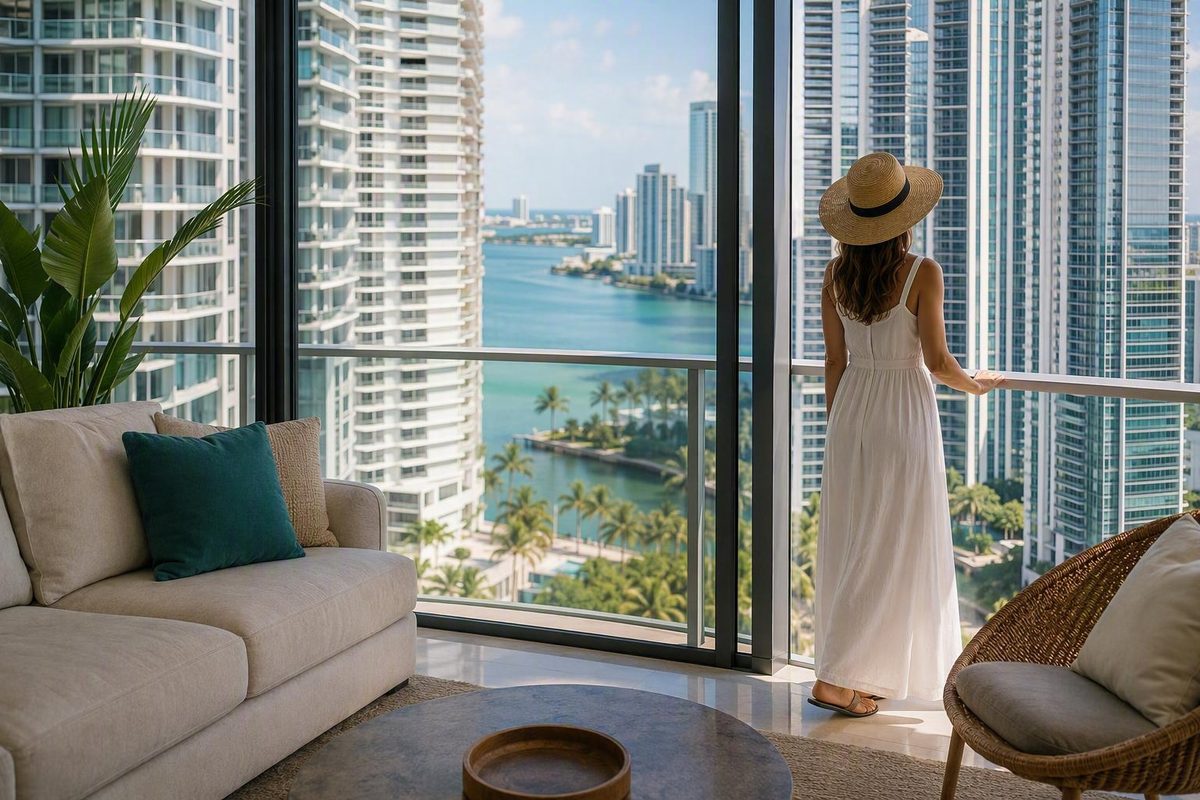
Before booking a Brickell Airbnb, check the tower, rental approval, inspection access and refund terms—especially at 1200 Brickell Bay Drive.
A Brickell Airbnb is not safe to book on the neighborhood name or a live listing alone. At The Club at Brickell Bay, 543 of 643 units—reported as 85% of the tower—were being rented nightly, and more than 200 listings remained active after Miami ordered illegal stays under 30 days to stop. Inspectors also canceled an inspection because entering private units without an owner’s permission could amount to trespassing. That combination leaves a guest exposed to denied entry, interrupted lodging and unresolved life-safety oversight even when the listing still accepts reservations (Yahoo News; AOL).
This is an address-specific warning, not a finding that Brickell as a neighborhood is unsafe. Some rentals may be properly authorized and professionally operated. The practical rule is to verify the exact tower, unit and stay length before the reservation becomes nonrefundable.
Enter the tower’s details and mark what you can verify; the checker identifies which side wins for your booking.
This is a booking-risk screen, not a legal or safety certification. The 85% reference is the reported share at The Club at Brickell Bay, not a citywide legal threshold.
| Decision Test | Lower-Risk Evidence | Shadow-Hotel Signal | Your Input |
|---|---|---|---|
| Rental concentration | Nightly-rental count is low or verified within an approved program | Rounded share reaches the reported 85% reference | High signal |
| City status | No known order affecting the stay | Active cease-and-desist or unresolved dispute | Flagged |
| Inspection access | Applicable inspections can be confirmed | Officials could not access private units | Flagged |
| Exact unit | Management confirms unit and dates | Host offers only a general assurance | Unverified |
| Entry method | ID registration and controlled credentials | Unstaffed keypad or lockbox entry | Not flagged |
| Overnight help | Staffed lobby or named access contact | No confirmed person who can restore entry | Not flagged |
| Guest turnover | Normal residential or approved hotel operation | Heavy nightly turnover across the tower | Flagged |
| Booking remedy | Written refund or relocation commitment | No clear remedy if management denies entry | Verify separately |
Sources: August 2026 reporting cited in the article. The Club at Brickell Bay figures: 643 total units, approximately 543 nightly-rental units, reported as 85%; approval reportedly covered 30 short-term-rental units. Unknowns are shown as —.
Why Travelers Assume a Live Listing Is Legitimate
The reasonable consensus is that Miami cracked down on unauthorized vacation rentals years ago, so a normal-looking listing in a staffed Brickell condominium probably passed whatever checks were required. A long review history, professional photographs and a recognizable high-rise address reinforce that impression.
The marketplace numbers make that view understandable. When reviewed, Airbnb displayed 2,780 Brickell vacation rentals, more than 107,800 verified reviews and an average rating of 4.7 out of 5. The results also included some properties labeled Downtown Miami, and individual listings disclosed construction, inaccessible balconies, pool restrictions, noise and parking charges (Airbnb’s Brickell listings).
The consensus is right in two respects. A live listing is not proof that a property is dangerous, and evidence from one troubled building should not be applied to every Brickell tower. Reviews can also reveal cleanliness, host responsiveness and recurring operational problems.
What a listing and its rating cannot establish is whether the condominium permits your exact stay, whether that permission covers the individual unit, whether inspectors have accessed it, or whether management will admit you during an enforcement dispute. Marketplace availability is evidence that a host is offering lodging, not that the city or association has approved it.
The Club at Brickell Bay Shows the Enforcement Gap
On August 11, 2026, Miami Assistant City Manager Barbie Hernandez issued a cease-and-desist letter directing The Club at Brickell Bay, 1200 Brickell Bay Drive, to halt illegal stays of fewer than 30 days. The tower has 643 units, and reporting put the nightly-rental operation at approximately 543 units, or 85% of the building.
As of August 25—14 days after the letter—more than 200 listings for the address were still available on booking sites, with advertised rates above $200 per night. The condominium board sought a 90-day grace period and denied that it was operating a hotel or lodging establishment. A resident characterized the arrangement as self-dealing (Yahoo News).
Published counts were not identical. A local television report referred to more than 300 apparent vacation rentals and said the building had approval for 30 short-term-rental units. Other reports cited approximately 540 units or 85% of the tower. Those figures may cover different dates or definitions, so they should not be treated as one precise current inventory (WPLG’s August 15 report).
The central issue is not just the number of listings. City code-compliance inspectors canceled a scheduled inspection because they lacked open access to individual units. Commissioner Damian Pardo confirmed that an inspector entering a privately owned unit without the owner’s permission could be treated as a trespasser. Residents also said earlier citations had been dismissed after hosts removed listings and promised to stop, only for rentals to resume within days (AOL).
That does not mean Miami has no fire, accessibility or lodging rules. It means enforcement inside a privately owned condominium can stall when officials cannot inspect the units allegedly being used as lodging. A city order may therefore exist while reservations continue and the underlying unit conditions remain unverified.
A 20-year-old guest died after falling from a 34th-floor balcony at the building on August 4, 2026. The death triggered greater scrutiny of the rental volume, but the supplied reporting does not establish that unauthorized rental activity, a code violation or a building defect caused the fall. It should not be used to claim more than the evidence supports.
Residents separately reported parties, noise, crowding, frequent guest turnover, security concerns, water leaks, common-area maintenance problems and elevator failures. Former board representatives disputed whether reported incidents represented normal conditions. These accounts are warning signals about building operations, not proof that every unit presents the same hazard.
A Shadow Hotel Shifts the Practical Risk to the Guest
A “shadow hotel” is a useful screening description for a residential tower where transient rentals occupy a large share of units without the transparent approvals, inspection access and guest operations a traveler would expect from a conventional hotel. It is not a legal classification.
The guest’s immediate risk is disruption. Building management may reject registration, deactivate elevator access or enforce a minimum-stay rule. City action may affect check-in after flights and other plans are fixed. The host controls the listing and much of the documentation, but the traveler needs somewhere to sleep that night.
There is no guaranteed building-level remedy if admission fails. Any refund, relocation or reimbursement depends on the reservation terms, platform policy and applicable law. Do not assume the platform will necessarily relocate you merely because the listing remained live during a building dispute.
Life-safety oversight is a separate concern. If officials say a lodging use requires fire, accessibility or occupancy review but cannot enter the relevant private units, a guest cannot infer that those units were inspected simply because the lobby looks professional. Nor does a clean apartment establish that its occupancy, sleeping layout or balcony use has been approved.
The concern becomes acute when several facts align: nightly stays across much of a residential tower, rapid guest turnover, self-entry or unclear front-desk procedures, an active city dispute and no unit-specific authorization that management will confirm.
Verify the Unit Before the Refund Deadline
Brickell towers do not share one rental policy. A July 2026 third-party real-estate guide listed some buildings as permitting daily rentals while others reportedly required minimum stays of 30 days, 90 days or three months. It also warned that association rules, zoning, hotel-program requirements and licensing can change (CondoBlackBook’s building overview).
Treat such lists as leads, not official records. Permission for longer leases does not authorize a weekend stay. Approval for a limited condo-hotel program may cover only designated units or one operator.
Ask the host for the complete address and building name while cancellation remains available. Then obtain answers to these unit-specific questions:
| Check | Evidence To Obtain | Stop Signal |
|---|---|---|
| Stay length | Current written minimum-stay rule | Your stay is shorter |
| Unit authority | Management confirmation for the unit | Only “Airbnb-friendly” claims |
| Guest entry | Registration and elevator procedure | Management will not confirm admission |
| Disruption remedy | Written refund or relocation terms | No answer for denied entry |
Ask which current lodging authorization applies, including any claimed state lodging license, Certificate of Use, Business Tax Receipt or approved condo-hotel program. Not every document necessarily applies in the same way to every property, so confirm requirements with the issuing authority rather than treating a host’s screenshot as final legal advice.
Use contact details you find independently for the condominium or government office. A number supplied only by the host could lead back to the host or an affiliated operator.
For 1200 Brickell Bay Drive, recheck the cease-and-desist status, whether the specific unit falls within the reported 30-unit approved operation, and whether management will honor the reservation. If the host and management provide inconsistent answers, choose another property.
Building Operations Matter as Much as the Apartment
A unit can be attractive and still sit inside an unreliable shared operation. Confirm whether the lobby is staffed, guests show identification, advance registration is required and elevators need credentials. Ask who can restore access overnight if a keypad, fob or guest registration fails.
High-floor stays make elevator reliability consequential. Ask how many elevators are operating and whether work is scheduled during your dates. Obtain current answers about water leaks, common-area air conditioning, alarm work, construction and balcony access.
Verify every amenity that materially affects the price. Airbnb listings reviewed for the draft disclosed exterior construction scheduled throughout 2026, inaccessible balconies, possible view obstruction, intermittent daytime noise, weekday pool restrictions and extra-cost valet parking. Those disclosures were listing-specific and may change, which is why the answer should be attached to your reservation in writing.
Occupancy deserves the same scrutiny. Ask for the permitted maximum and approved bedroom count. An unusually large capacity supported by sofa beds or divided spaces is not validated merely because previous groups posted positive reviews.
Read Reviews Across the Entire Tower
Start with the newest reviews and search the building name, not just the individual listing. Rules, elevator service, construction and access procedures can change faster than a lifetime rating.
Look across unrelated hosts for repeated references to denied entry, front-desk disputes, elevator delays, parties, crowding, leaks, construction, balcony closures, pool restrictions or unexpected parking charges. Several recent accounts describing the same building-wide condition deserve more weight than one dramatic complaint.
Reviews still cannot prove legality. They can show that previous guests entered successfully, but an old successful stay may predate a board rule or city order. Compare review claims with the host’s current written answers and management’s confirmation.
Preserve screenshots of the listing, address, occupancy, house rules, authorization claims, amenities, parking, check-in instructions and cancellation terms. Keep important exchanges on the booking platform. A record does not guarantee reimbursement, but it documents what was represented when you paid.
When a Hotel Is the Lower-Risk Choice
A hotel is not automatically in a lower-crime location, and the supplied sources do not provide a current official comparison of Brickell’s crime rate with nearby neighborhoods. Assess the blocks around the exact address for your arrival time and transportation plan.
The hotel advantage here is operational predictability: established check-in, staffed assistance and less uncertainty over whether an individual owner may rent nightly. That matters most for a one- or two-night stay, a late arrival, a first Miami visit or a trip that cannot absorb a last-minute move.
An authorized condo rental can still be practical when a longer stay genuinely benefits from a kitchen, laundry or separate living space. Brickell can also work well for a car-light itinerary when plans are grouped by area, as described in this car-free Miami planning guide.
Choose the rental only when the address is disclosed, management confirms the exact stay and unit, occupancy is credible, building operations are documented and the refund or relocation terms cover an access failure. If any of those answers remains unresolved at the cancellation deadline, a refundable hotel or clearly authorized condo-hotel is the safer booking decision.