
Plan a Day Among Shaded Trails, Historic Stonework and Oleta River Views
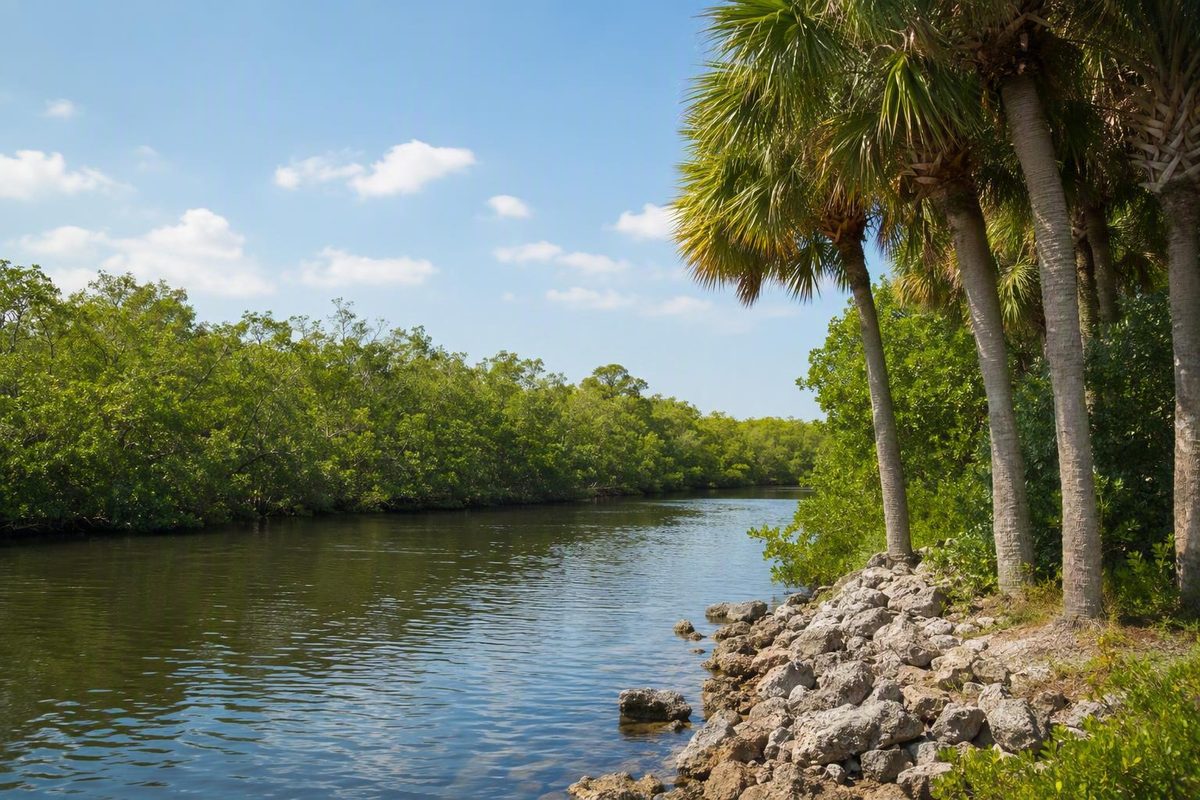
Parking is free Monday through Thursday and $10 Friday through Sunday. Match trails, launches, camping and golf to the right facility before you go.
Planning a successful visit starts with another important distinction: “Greynolds” refers to several related but separate facilities.
East Greynolds Park has the fishing dock, canoe and kayak launch, bark park and another picnic shelter. Camp Greynolds accommodates eligible organized groups with advance reservations, while Greynolds Golf Course operates as a separate golf facility.
Some visitor listings combine amenities from these locations under one Greynolds Park heading. Before navigating, match the activity you want with the correct facility so that you do not arrive expecting camping, dog facilities, water access or golf at the main park entrance.
Operational details in this guide reflect the supplied official and specialist listings. Recheck changeable fees, schedules, closures and reservation terms before departure.
Greynolds Park at a Glance: Location, Hours, Parking and Contact Details
Greynolds Park is operated by Miami-Dade County in the North Miami Beach area. Its listed main address is 17530 W Dixie Highway, North Miami Beach, FL 33160, and the park telephone number is 305-945-3425. The general park is open sunrise to sunset, the office is open daily from 9 a.m. to 5 p.m., and the golf course is listed as operating from 7 a.m. to sunset.1
Parking is free Monday through Thursday and $10 Friday through Sunday. The county describes this as a vehicle parking fee, not a general admission charge.1
Published acreage figures conflict. Miami-Dade County describes Greynolds as a 249-acre park, while specialist and historical profiles publish other totals.156 The differences may reflect how boundaries or adjoining components are counted, but the available sources do not establish a definitive explanation. Acreage is therefore less useful for planning than knowing which facility contains the activity you want.
Greynolds Park quick-planning box
- Main address: 17530 W Dixie Highway, North Miami Beach, FL 331601
- Park phone: 305-945-34251
- General park hours: Sunrise to sunset1
- Office hours: Daily, 9 a.m.–5 p.m.1
- Golf-course hours: 7 a.m.–sunset1
- Parking: Free Monday–Thursday; $10 Friday–Sunday1
- Swimming: Prohibited in the Oleta River; the river is not patrolled1
- Before leaving: Confirm closures, reservations, rentals, facility status and rules directly with the park
For a simple walk or family picnic, Monday through Thursday is the easiest budget choice because the listed parking charge does not apply. If a weekend better fits your plans, include the vehicle fee in the day’s cost.
Greynolds is primarily an outdoor destination. Heat, rain, recent storms and maintenance can affect the practicality of trails and facilities even when the park remains open. If your visit depends on a particular path, restroom, historic building or launch, check its status before leaving.
Know the Four Greynolds Facilities Before You Go
Think of Greynolds as a network rather than one all-inclusive attraction. The main park, East Greynolds, Camp Greynolds and the golf course serve different purposes and can have different entrances, rules, schedules and reservation procedures.1
| Facility | Location or relationship | What belongs here | Planning implications |
|---|---|---|---|
| Main Greynolds Park | 17530 W Dixie Highway1 | Walking paths, nature trails, two playgrounds, picnic areas, group shelters, birding habitat, historic landscape features and Oleta River views1 | Best starting point for a first visit, shaded walk or family picnic |
| East Greynolds Park | Separate park less than a mile away by road1 | Fishing dock, canoe and kayak launch, bark park and separate picnic shelter1 | Use this location for fishing, launching a boat or visiting the bark park |
| Camp Greynolds | 18601 NE 22nd Avenue1 | Cabins, dining hall, kitchen, bathhouse, tent site, campfire ring, grills and group launch1 | Advance reservations and organizational eligibility apply |
| Greynolds Golf Course | Dedicated golf operation associated with the park | Nine-hole course, tee-time booking, electric carts, club rentals, golf shop and clubhouse3 | Check tee times, fees, equipment and accommodation needs separately |
Visitors who want to explore the historic landscape on foot should begin here.
East Greynolds is a separate waterfront facility a short drive away. Miami-Dade County places the fishing dock, canoe and kayak launch, bark park and an additional picnic shelter there.1
Camp Greynolds is also distinct. Located at 18601 NE 22nd Avenue, North Miami Beach, FL 33160, it is intended for eligible scout groups, nonprofit organizations and other organized groups with advance reservations.1 It is not a conventional public campground where an individual, couple or family can expect to obtain a spontaneous campsite.
Greynolds Golf Course has its own booking and cost considerations.
The City of North Miami Beach facility directory illustrates why the distinction matters: it lists trails, camping, water activities, golf and rental facilities together, without assigning every activity to a specific Greynolds location.2 Visitors should therefore verify the address associated with their intended activity instead of relying on a combined amenity list.
Official operational information confirms launches at East Greynolds and Camp Greynolds, but it does not confirm that canoe, kayak or paddleboat rentals are currently operating.1 Do not build an itinerary around an on-site rental unless the park has verified availability, hours, prices and reservation requirements for your date.
Walking Trails, Historic Landmarks and a First-Visit Route
Greynolds does not have one uniform trail surface. Visitors can choose between paved paths and the narrower, natural-surface Hammock Trail, shaping a walk around time, footwear, weather and mobility.
A specialist hiking guide describes an approximately one-mile shaded loop passing near the Oleta River, playground areas, live oaks, strangler figs, mangroves and tropical hammock. Its route description also identifies benches, road crossings, branching side paths and a return segment near the park drive.4
The paved portions are the more straightforward option for a gentle outing. They provide access to the tree canopy and broader designed landscape while avoiding the roughest natural surfaces. Paving does not, however, mean that every segment is separated from vehicle movement or free of route choices. Pay attention at road crossings and where paths run close to the park drive.
The Hammock Trail is narrower and more enclosed. The documented surface includes roots, dark sandy soil and uneven natural ground beneath palms, ferns and dense vegetation.4 Wear stable footwear and inspect conditions at the trail entrance. The available evidence does not support describing this route as reliably wheelchair- or stroller-friendly.
The park’s character comes from more than its vegetation. Limestone structures, bridges, the stone boathouse, quarry-shaped lagoons and Outlook Mound turn a short walk into an exploration of a designed historic landscape.
A practical two- to three-hour first visit
First 30–45 minutes: Begin with a paved, shaded walk. Use this opening section to get oriented and assess the temperature, recent rainfall and everyone’s energy. Follow marked routes, use benches as needed and watch for traffic at crossings.
Next 30–45 minutes: Add the Hammock Trail if conditions suit your group. Choose the natural trail only if roots, uneven ground and narrow passages are comfortable for everyone. After rain, inspect the surface before continuing. Visitors who prefer firmer ground can remain on paved paths without missing the overall park experience.
Next 30–45 minutes: Focus on the historic landscape. Make the boathouse lagoon, limestone work, bridges and Outlook Mound area the visual center of the outing. Look at how stone structures, water, changes in grade and vegetation fit together.
Final 30–60 minutes: Picnic or use a playground. Families can finish near one of the park’s two playgrounds, while other visitors may prefer a quiet picnic or a final view toward the river.1
This is an editorial route, not an official marked itinerary. It leaves time for rest stops, photography, navigation and weather adjustments. Birders may spend the entire visit in a smaller habitat area, while families with young children may skip the natural trail and devote more time to the playground.
Do not plan around guaranteed access to the tower, boathouse interior, nature center, a particular restroom or every trail. The supplied sources do not establish that these facilities are open every day. Call ahead if the availability of one feature would determine whether the trip is worthwhile.
Family Outings, Picnics and Shelter Reservations
Greynolds Park works well for a low-key family outing built around a short shaded walk, playground time and a picnic. It does not require an all-day itinerary.
The main park has two playgrounds and picnic areas.1 Casual picnic use is different from reserving a shelter for an organized gathering. Unreserved tables may suit a small family, but their availability on arrival cannot be guaranteed.
The park lists two small shelters, Shelters 4 and 5. Each has four picnic tables, a barbecue grill and a maximum capacity of 30 people. The official listed rental rate is $200 plus tax for each small shelter.1
Large shelters accommodate up to 60 people and are listed at $280 plus tax. A $150 cleanup deposit applies to shelter rentals.1 Arrange reservations in advance and confirm the complete price, payment deadlines, cancellation terms and deposit conditions before committing to an event.
Shelter 6 requires particular attention. It has a viewing deck overlooking the boathouse lagoon, four picnic tables, a grill and an attached public restroom. Its partially enclosed lower deck adds six tables and another grill, but the lower deck is listed as not wheelchair accessible.1
The separate shelter at East Greynolds is also listed as not wheelchair accessible.1 Groups should choose a shelter based on confirmed physical access as well as scenery, capacity and proximity to activities.
A practical reservation sequence is:
- Estimate realistic attendance, including children.
- Decide whether the main park or East Greynolds better matches the gathering.
- Ask which shelter is available on the desired date.
- Confirm the rental rate, tax, cleanup deposit and payment deadline.
- Ask about the route from parking to the shelter and any documented barriers.
- Verify restroom availability and rules for grills, decorations or outside vendors.
- Review cancellation and weather procedures.
- Reconfirm the reservation shortly before the event.
Treat published prices as current listings rather than permanent quotes. Rates, taxes, deposits and booking terms can change.
For an informal family day, keep preparations simple: drinking water, portable food, sun protection, insect protection and a rain backup. A short, flexible itinerary is easier to adjust than a tightly scheduled day dependent on multiple facilities.
Birding and Nature in the Hardwood Hammock and Mangroves
The ecological foundation of Greynolds is its combination of tropical hardwood hammock, mangrove habitat and the Oleta River setting.7 Moving between enclosed forest, water margins and open parkland creates a varied nature outing without requiring an ambitious wilderness hike.
Birders should prioritize hammock and mangrove habitat while avoiding assumptions that one parking space or viewpoint guarantees results. Walk quietly, scan different vegetation levels and remain on established routes.
The Florida Birding Trail reports that more than 25 wood-warbler species have been recorded during spring and fall migration. It also highlights Yellow-crowned Night Herons around mangroves, Short-tailed Hawks overhead and Painted Buntings as possible sightings from October through March.5
Recorded diversity is not an expected checklist. Season, weather, time of day, habitat use and chance all affect what appears during a single visit. A Painted Bunting is a possibility rather than a promise, and the same qualification applies to warblers, herons and raptors.
For a focused birding outing:
- Arrive early enough to walk before the hottest part of the day.
- Begin quietly around hammock habitat.
- Pause at habitat edges instead of remaining in constant motion.
- Scan mangroves without approaching or disturbing wildlife.
- Look overhead periodically for soaring raptors.
- Bring binoculars if available.
- Carry water, sun protection and insect protection.
- Stay on established routes.
The birding profile also records unusual observations from 2011 and 2012, but those are historical records, not forecasts for a current visit.5 The strongest reason to come is the habitat itself: a compact opportunity to experience hardwood hammock, mangroves, river views and historic parkland.
Golf and Organized Camping: What Requires Advance Planning
Greynolds Golf Course is a public nine-hole, par-36 course measuring 3,100 yards, designed by Mark Mahannah in 1964. Supported facilities include tee-time booking, electric carts, club rentals, a golf shop and a clubhouse.3
A single-rider cart for a golfer with disabilities requires at least 24 hours’ advance notice.3 Make that request directly while arranging the round rather than assuming an adapted cart will be available on arrival.
Current green fees, cart charges and club-rental prices are not established in the supplied information. Check them for the intended date, along with tee-time policies and equipment availability. Promotional descriptions of difficulty, popularity or value are not a substitute for current operating details.
Camp Greynolds serves a different visitor. It is available for weekend overnight stays by eligible scout groups, nonprofit organizations and other organized groups that reserve in advance. It is not presented as a standard campground for individuals, couples or families seeking an unplanned overnight stay.1
The camp address is 18601 NE 22nd Avenue, North Miami Beach, FL 33160. Its listed accommodation and facilities include:1
- Eight cabins sleeping eight people each
- One leaders’ cabin sleeping four people
- 68 total stated sleeping spaces
- A dining hall seating 56
- A full kitchen
- An accessible bathhouse
- A tent site
- A campfire ring
- Grills
- A canoe and kayak launch
Miami-Dade County identifies Camp Greynolds as ADA accessible and lists an accessible bathhouse.1 That general designation does not answer every participant’s access needs. Organizers should ask about sleeping arrangements, surfaces and distances between buildings, bathroom configuration and access to the launch.
Before planning a camp weekend, confirm:
- Whether the organization qualifies
- Available dates and booking lead time
- Current rates, taxes and deposits
- Minimum-stay or weekend requirements
- Cabin assignments and capacity rules
- Kitchen-use requirements
- Supervision or insurance documentation
- Launch status and water-use rules
- Cancellation and severe-weather procedures
No reliable current camp rate is supplied here, so estimating a per-person cost would be misleading. Obtain a complete quote and reservation agreement directly from the park.
Safety, Accessibility and Details to Verify
Swimming in the Oleta River is prohibited, and the river is not patrolled. Do not plan a swimming stop, allow children to enter the river or treat a launch as a supervised beach.1
Paddling and swimming are not interchangeable. A confirmed canoe or kayak launch identifies a place where suitable watercraft may enter the water. It does not create a swimming area or establish that rentals, supervision or rescue services are available.
Accessibility should be evaluated facility by facility:
- Camp Greynolds: Listed as ADA accessible, with an accessible bathhouse.1
- Shelter 6: Its partially enclosed lower deck is not wheelchair accessible.1
- East Greynolds shelter: Listed as not wheelchair accessible.1
- Golf course: A single-rider cart for a golfer with disabilities requires at least 24 hours’ notice.3
- Paved paths: May be the more practical starting point for visitors avoiding natural surfaces, but no blanket accessibility guarantee should be inferred.
- Hammock Trail: Documented as narrow and natural-surface, with roots and uneven ground; do not assume wheelchair or stroller suitability.4
Mobility-conscious visitors should describe their specific requirements when calling. Useful questions concern the slope and surface between parking and the intended facility, curbs or steps, accessible restroom status, seating frequency and whether maintenance affects the route.
The current official main-park pet rule is not established in the supplied county information. A third-party hiking guide reports a restriction, but that should not substitute for direct confirmation of the current policy.4 The firm operational point is that East Greynolds has a bark park.1
Confirm before visiting
Check directly with Miami-Dade County if your outing depends on any of the following:
- Watercraft rentals: Whether any are operating, and at what location, hours and rates
- Launches: Current access and applicable requirements
- Trails: Closures, flooding, storm effects or maintenance
- Historic facilities: Whether the boathouse, tower or other structures are open
- Nature center: Current operating status
- Restrooms: Which locations are open
- Pet rules: Current policy for the main park and its trails
- Reservations: Shelter and camp availability, prices, taxes and deposits
- Golf: Tee times, fees, rentals and accessible-cart arrangements
- Events: Date, hours, location and weather-related changes
After heavy rain or severe weather, natural trails may be muddy, slippery or less practical even when no formal closure has been announced. Check conditions, use paved routes when appropriate and be willing to shorten the outing.
Watch for vehicles at road crossings and along sections near the park drive.
From Limestone Quarry to Historic Miami-Dade Landscape
Greynolds Park is more than a preserved green space.
A concise timeline explains that evolution:
- Before the park: The property was used as a limestone quarry.6
- 1933: Land donations to Dade County began, initiating the park’s creation.6
- 1930s: Landscape designer William Lyman Phillips worked with existing mangroves, hardwood hammock and quarry remnants.6
- 1936: Greynolds Park opened to the public.1
- 1936–1939: Civilian Conservation Corps labor developed major elements of the landscape.6
- 1964: A Mark Mahannah-designed nine-hole golf course was added.6
- 2009: The boathouse was renovated to restore its historic character.6
Phillips incorporated native limestone, coral and hardwood into the boathouse, picnic pavilions and camping area. Quarry pits were transformed into lakes, while an observation mound was created over buried mining equipment. The Oleta River supplied water for a lagoon accented by the stone boathouse and bridges.6
That history changes how the park reads. Outlook Mound is not simply a natural hill, and the bridges, pavilions and boathouse use materials and forms that connect the architecture to the landscape.
One historical profile characterizes Outlook Mound as a regional high point, but it does not provide a clear comparative methodology.6 It is more accurate for visitors to understand the mound as a distinctive constructed overlook than to label it definitively as South Florida’s highest point or highest publicly accessible landform.
The historic stonework gives a first visit a useful theme. Look for the relationships among water, changes in grade, native vegetation and built structures.
Greynolds also has a recurring cultural event. Miami-Dade County lists a free South Florida Bluegrass Association festival for the first Sunday of each month from 12:30 p.m. to 5:30 p.m. Normal Sunday parking fees still apply.1 Confirm the date and event status before making a special trip.
Golf, organized camping, paddling and dog-park visits require choosing the correct facility rather than assuming every Greynolds-branded amenity is at the main address.
When practical, visit Monday through Thursday to avoid the listed parking charge. Reserve shelters and organized camping in advance, never plan to swim in the Oleta River, and verify changeable rules and operating details before leaving.
Frequently Asked Questions
Is Greynolds Park actually in the City of Miami?
No. Greynolds Park is a Miami-Dade County park in the North Miami Beach area. Its listed main address is 17530 W Dixie Highway, North Miami Beach, FL 33160.1
Is Greynolds Park free, and how much is parking?
The official county policy lists a vehicle parking charge rather than a general admission fee. Parking is free Monday through Thursday and $10 Friday through Sunday.1 If holiday treatment or payment methods matter to your visit, confirm those details directly with the park.
Can you swim, kayak or launch a canoe at Greynolds Park?
Swimming in the Oleta River is prohibited, and the river is not patrolled.1 Canoe and kayak launches are listed at East Greynolds Park and Camp Greynolds, although the camp is reserved for eligible organized groups.1
Do not assume watercraft rentals are operating. The official operational information supplied for this guide confirms launch locations but not current rental hours, prices or availability.
How long should a first visit to Greynolds Park take?
Allow about two to three hours for a first visit combining a paved walk, the Hammock Trail when conditions and mobility permit, the boathouse and Outlook Mound area, and a picnic or playground stop. This is an editorial itinerary rather than an official route.
Birders, photographers and groups with reserved shelters may want longer.
Are dogs allowed at Greynolds Park?
The current official rule for dogs on the main park’s paths is not established by the supplied county information, so verify it before bringing a pet. A third-party trail listing reports a restriction, but it should not be treated as the final authority on current park policy.4
East Greynolds Park has a bark park, and it is separate from the main historic park.1 Confirm the correct destination, current operating status and applicable dog rules before departure.