
Winter Park, Florida Travel Guide: Day Trips, Weekends, and Planning Tips
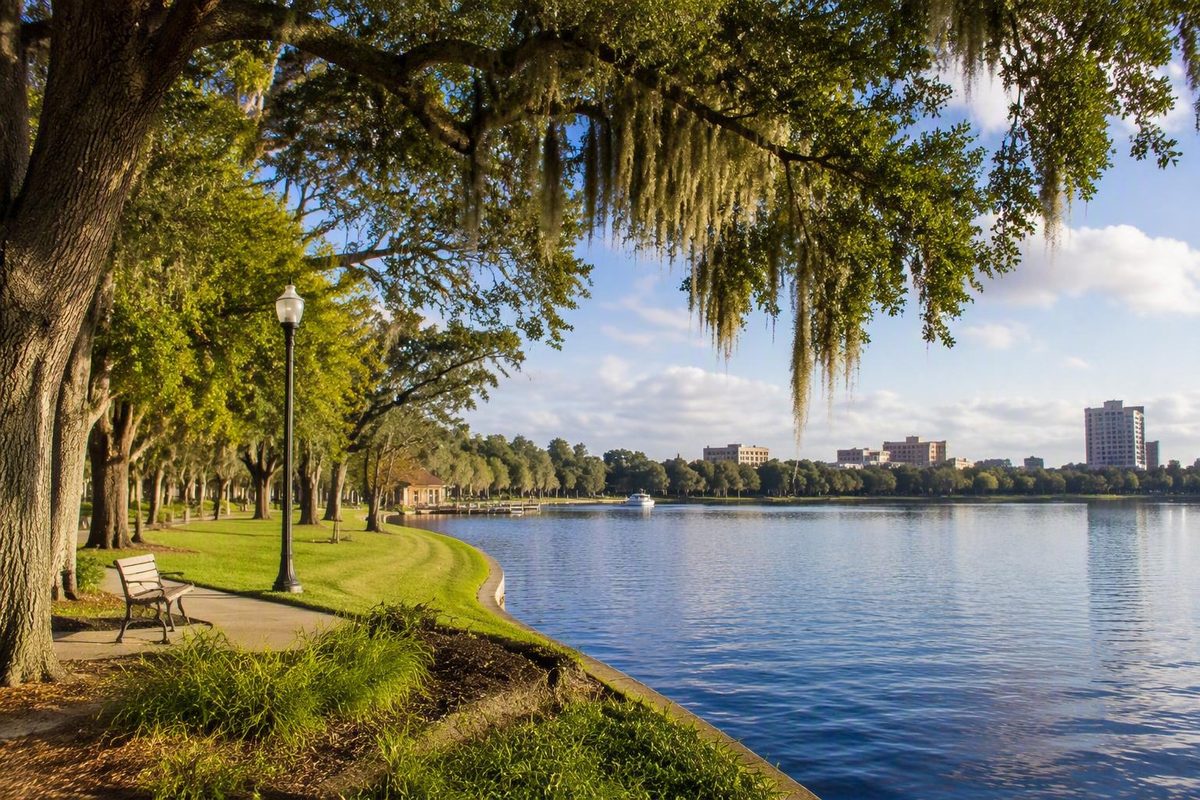
One day covers Park Avenue, the Scenic Boat Tour and a downtown meal; a weekend adds museums, Rollins College, gardens and a slower dining pace.
Overview
Winter Park works well as either a one-day trip or a two-night weekend from anywhere in the Orlando area, and the deciding factor is how much culture you want to add. One day covers Park Avenue, the Scenic Boat Tour, and a downtown meal. A weekend adds museums, Rollins College, gardens, and a slower dining pace.
The key thing to understand before you plan anything is that Winter Park is its own city, not a section of the theme-park corridor. It sits north of downtown Orlando, and its appeal is almost the opposite of the attractions area: a compact, walkable downtown built around Park Avenue, a chain of lakes you can tour by pontoon boat, and a cluster of art museums and gardens. Visit Florida describes Park Avenue as the heart of downtown, with more than 140 places to shop, dine, and explore, which gives you a sense of the density packed into a few blocks.
That distinction matters when you book. Hotel and activity searches for “Winter Park” often surface options scattered across Greater Orlando, and staying elsewhere quietly deletes the main advantage of the trip, which is walking between your hotel, your meals, and the lakefront. This guide keeps every recommendation anchored in Winter Park proper, flags which details are stable, and tells you exactly what to verify before you commit to reservations.
Best things to do in Winter Park
Your first-visit shortlist comes down to four categories: the Park Avenue downtown core, the Scenic Boat Tour on the Chain of Lakes, the museum and college cluster, and the gardens and parks that suit families or anyone who wants unstructured outdoor time. The useful move is not to see everything but to pick two or three that match your schedule and the weather. A day-tripper should prioritize Park Avenue plus the boat tour. A weekend visitor can layer in the Morse Museum, the Rollins campus, and Mead Botanical Garden. The sections below explain what each option is actually like so you can choose, and the pre-departure section later in this guide covers what to confirm before you go.
Park Avenue for shopping, dining, and strolling
Park Avenue is where you start, and for many visitors it is where most of the day happens. Cadry’s Kitchen, a firsthand trip account, describes it as one of the hubs of Winter Park: a main thoroughfare with shops, restaurants, museums, a commuter train stop, and a park, and a fun place to walk around and people watch. That mix is what makes it a practical anchor. You can arrive by car or train, browse, eat, and reach cultural stops without repositioning.
The scale is bigger than a typical small-town main street. Visit Florida counts more than 140 places to shop, dine, and explore in downtown Winter Park, and calls Park Avenue the city’s culinary hub, with restaurants serving international cuisines alongside local favorites. The green space along the avenue, Central Park, gives you a shaded place to sit between stops, and the oak-lined side streets reward wandering a block or two off the main strip.
One boundary worth respecting: the walkability here applies to the downtown core, not the whole city. Wikivoyage notes that most of downtown Winter Park is accessible by foot, and that is the honest limit of the claim. Attractions outside the core, and anything elsewhere in the Orlando area, will need a car or a ride. Plan your day so the walking portion stays within downtown and you will not need to move the car more than once or twice.
Scenic Boat Tour and the Chain of Lakes
If you add one thing beyond Park Avenue, make it the Scenic Boat Tour. It is the easiest way to see the side of Winter Park you cannot see from the sidewalk: the lakes, the canals, and the lakefront homes. Cadry’s Kitchen describes it as an hour-long excursion on 18-person pontoon boats departing from Lake Osceola, traversing three of the seven area lakes through manmade canals. Expedia’s Winter Park guide adds useful context: the Scenic Boat Tour is one of Florida’s oldest attractions, and it travels through three of the lakes in the chain.
The logistics are what make it pair so well with downtown. Per Cadry’s Kitchen, the dock is a few blocks from Park Avenue, which means you can walk from lunch or shopping to the boat without driving. The one-hour duration is also easy to slot into a day plan: it is long enough to feel like a real excursion and short enough that it does not consume an afternoon.
The caveat is that the supplied sources describe the experience, not the current schedule. Departure times, ticket prices, and whether you can simply walk up or need to plan ahead are the kinds of details that change, and none of the sources in this guide verify them as current. Check the tour’s official information before you build your day around a specific departure, especially if you are visiting on a busy weekend. Treat the tour as a confirmed-worthwhile experience with an unconfirmed timetable.
Museums, Rollins College, and local culture
Winter Park’s cultural cluster is strong enough that art-focused visitors sometimes come for the museums alone. Visit Florida names three anchors: the Charles Hosmer Morse Museum of American Art, which it describes as home to the world’s most comprehensive collection of works by Louis Comfort Tiffany; the Albin Polasek Museum & Sculpture Gardens; and the Rollins Museum of Art at Rollins College. Each fills a different niche. The Morse is the headline stop for decorative arts and Tiffany glass. The Polasek combines a sculpture collection with gardens, so it doubles as outdoor time. The Rollins Museum of Art sits on the college campus and suits a shorter, lower-commitment visit.
The Rollins campus itself is worth the walk even if you skip the galleries. Mikaela J’s weekend guide notes that the campus sits directly on Lake Virginia and has a curated art museum on site that is free to the public. A campus stroll plus the lakefront view is one of the better no-cost additions to a Winter Park day, and it connects naturally to the south end of the Park Avenue area.
If you want to go beyond the most repeated upscale recommendations, put the Hannibal Square Heritage Center on your research list. It sits on the west side of downtown and focuses on the history of Winter Park’s historically Black Hannibal Square community, a layer of local heritage the standard Park Avenue circuit skips. None of the sources in this guide verify its current hours or operating status, so confirm those directly before you plan a visit. The same verification rule applies to all three museums: admission prices, open days, and any reservation policies change, and you should confirm them close to your travel date rather than trusting older write-ups.
Gardens, parks, and family-friendly outdoor time
If your group includes kids, or you simply want green space between meals and museums, Winter Park has more to offer than its downtown polish suggests. The standout is Mead Botanical Garden. Wikivoyage describes it as a 47.6-acre park encompassing several ecosystems, with an amphitheater, a butterfly garden, a discovery barn, and a recreation center, and notes that many structures there are more than 100 years old and that entry is free. A free garden of that size is a genuinely useful budget lever for a trip where downtown dining runs upscale.
Families have more structured options too. Visit Florida points to the city’s seven playgrounds for outdoor fun with young children, and notes that family-friendly boat tours give visitors a close-up look at Winter Park’s scenic waterways. That second point matters for planning: the boat tour is not just an adult sightseeing activity, and an hour on the water is a manageable length for most kids.
Central Park, along Park Avenue itself, handles the low-effort version of outdoor time. It is the spot for a shaded break, a takeaway coffee, or letting kids burn energy between stops without leaving the downtown core. The practical split works like this: Central Park needs no planning, Mead Botanical Garden needs a short drive or ride from downtown, and the playgrounds are scattered across the city, so pick one near your route rather than making a special trip. As with everything else, confirm current access details for Mead Botanical Garden before you go, since event schedules and facility hours can affect what is open on the day.
Where to eat and stay near downtown Winter Park
Your food and lodging decisions come down to one principle: keep both inside walking distance of Park Avenue and the whole trip gets simpler. Wikivoyage characterizes Winter Park’s downtown restaurant scene as cosmopolitan, with Asian and Mediterranean cuisines common and downtown options generally upscale with above-average prices, so budget accordingly. The two sections below organize the named options by meal occasion and by lodging location, which is more useful than a flat list. Every business named here appeared in the supplied sources, but open status and service patterns change, so confirm before you book.
Dining choices by meal and occasion
Match the restaurant to the occasion and you will spend your limited meals well. For breakfast or a casual daytime stop, Briarpatch is the long-tenured Park Avenue option. The restaurant’s own site says it has called Park Avenue home for nearly 40 years, with posted hours of 7:30 AM to 4 PM Monday through Friday, 7:30 AM to 5 PM Saturday, and 8 AM to 5 PM Sunday, which makes it a daytime-only plan. For coffee and lighter breakfast bites, the Winter Park hotel roundup at winterpark.org points to Barnie’s Coffee & Tea Co. as a cozy local café near Park Avenue.
For dinner, the supplied sources converge on a few names:
- Prato for Italian. Visit Florida recommends it for Italian fare in a chic setting, and the Suzanne and Chad Team’s restaurant guide describes handcrafted pizzas, homemade pasta, and locally sourced ingredients on Park Avenue. The winterpark.org roundup notes reservations run through Resy.
- The Ravenous Pig for modern American. Visit Florida frames it as modern American with a Southern twist, and the Suzanne and Chad Team guide describes gastropub fare, signature Gruyère biscuits and shrimp and grits, and craft beer brewed in-house.
- Hamilton’s Kitchen for contemporary Southern food. The Suzanne and Chad Team guide places it inside The Alfond Inn, with a modern take on Southern comfort food, which makes it the natural pick if you stay there.
- The Wine Room on Park Avenue for wine and small bites. The winterpark.org roundup describes wine-tasting machines, gourmet bites, and a relaxed atmosphere, good for a low-commitment evening stop.
For a family treat, the same roundup mentions Jeremiah’s Italian Ice as a local favorite for Italian ice and soft-serve. Confirm current hours and reservation policies for any of these before a special-occasion meal; the Briarpatch hours above come from its own site but everything on this list is subject to change.
Stay in Winter Park proper for downtown access
If you stay overnight, the location decision matters more than the amenity list. Book inside Winter Park proper and you can walk to dinner; book elsewhere in Greater Orlando and you have converted a walkable weekend into a driving trip. Search results for “Winter Park hotels” routinely mix in properties across the Orlando region, so verify the actual address before you commit.
Two named options sit squarely in the downtown zone. The Alfond Inn is the best-supported choice for downtown access. Wikivoyage lists it at 300 E New England Ave as a 112-room hotel with a AAA four-diamond rating, and the winterpark.org hotel roundup describes it as a boutique hotel steps from the Rollins College campus, with art-filled interiors, a rooftop pool, pet-friendly rooms, a philanthropic mission supporting Rollins scholarships, and Park Avenue a short walk away. Mikaela J’s weekend guide reinforces the practical point: the hotel is walking distance to most of the area’s bars, restaurants, and shopping.
The Park Plaza Hotel is the historic alternative directly on the avenue. Wikivoyage lists it at 307 S Park Ave as a classic hotel built in 1922, with 3 PM check-in and noon check-out. Staying there puts you as close to the shopping and dining strip as it is possible to be.
Neither source verifies current rates or availability, and room prices move too much to quote usefully here. Check both properties directly, and if they are booked, filter any alternative by a Winter Park address rather than an “Orlando area” label.
Getting to Winter Park and getting around
Your transportation plan has two separate parts: getting to Winter Park, and moving around once you arrive. The good news is that the second part is easy, because most of downtown is walkable per Wikivoyage and the Scenic Boat Tour dock is a few blocks from Park Avenue per Cadry’s Kitchen. The arrival part takes more thought, especially if you are landing at Orlando International Airport or basing yourself in the theme-park area, and the parking situation downtown deserves a plan of its own. The two sections below work through both.
From MCO, Orlando, and the theme-park area
The most common planning mistake is assuming you can ride a train straight from the airport to Park Avenue. You cannot. Visit Florida explains that the SunRail commuter train serves Winter Park from the Sand Lake Road station near the airport, but visitors need to take a bus, ride-share, or taxi from MCO to the Sand Lake Road SunRail station first. The same source notes that SunRail runs weekdays only, with no regular weekend service in the description supplied. That combination makes the train a realistic option for a weekday day trip, and a poor fit for a Saturday-Sunday visit unless you confirm special service. The payoff for weekday riders is real, though: the Winter Park station sits right at Park Avenue, which Cadry’s Kitchen lists among the avenue’s features, so you step off the train into the middle of the destination.
If you cannot or do not want to ride the train, Visit Florida lists the alternatives plainly: rent a car, use a ride-sharing service, or take a taxi. For travelers who prefer not to drive, a ride-share from the airport or from a theme-park-area hotel is the simplest door-to-door option, and once you are downtown you will not need wheels again until you leave.
One thing this guide deliberately will not give you is a single universal drive time. Travel time depends heavily on your starting point, whether that is MCO, downtown Orlando, or the attractions corridor, and on Orlando traffic conditions at the hour you travel. Map your specific route on the day rather than trusting a generic estimate, and pad your schedule if you have a boat tour or dinner reservation waiting.
Downtown walking, driving, and parking
Once you arrive, the honest picture is this: downtown Winter Park is genuinely walkable, and almost nothing outside it is. Wikivoyage states that most of downtown Winter Park is accessible by foot, which covers Park Avenue, Central Park, the nearby museums, the Rollins campus at the south end, and the Scenic Boat Tour dock a few blocks east per Cadry’s Kitchen. If your whole plan lives inside that zone, you can park once, or arrive by train or ride-share, and walk the rest of the day.
You will still want a car or a ride for anything beyond the core. Mead Botanical Garden, the scattered city playgrounds, and any stop elsewhere in the Orlando region sit outside comfortable walking range, and stitching them into the same day means driving between zones rather than strolling between blocks. Plan those as separate legs, not as extensions of the Park Avenue walk.
Drivers should also take the parking warning seriously. Wikivoyage notes that parking is difficult in downtown Winter Park, and pairs that with the summer heat as a reason to favor cooler months. What the supplied sources do not provide is current municipal parking specifics: which lots or garages exist, what they cost, and what time limits apply. Those details change, so check the City of Winter Park’s current parking information before you drive in, especially for a weekend visit when demand is highest. If parking friction worries you, the weekday SunRail option or a ride-share drop-off removes the problem entirely.
Best time to visit Winter Park
Season changes this trip more than most Florida destinations, because the core experience is walking outdoors. Visit Florida recommends the cooler months from November to April, describing pleasant weather with mild temperatures and lower humidity that suits outdoor activities and exploring the city’s attractions. Wikivoyage lands in nearly the same place from the opposite direction: it warns that the Park Avenue outdoor walk is not well protected from heat and can be unbearably hot at the peak of summer, adds that downtown parking is difficult, and concludes that the best time to visit is during the cooler months outside June through September.
Read those two sources together and the planning logic is straightforward. In the November-to-April window, the walking-heavy version of this guide works as written: stroll Park Avenue, walk to the boat dock, wander the Rollins campus, and linger in Central Park. In the summer months, do not cancel the trip, but restructure it. Front-load outdoor time in the morning, treat the air-conditioned museums as your midday block, and remember Wikivoyage’s observation that stepping indoors is a relief during the summer walk. The hour-long boat tour also puts you on open water rather than hot pavement, which makes it a comparatively good summer pick.
None of this is a weather guarantee. Florida delivers rain and heat outside expected patterns, so check the forecast for your specific dates and keep the indoor options from the trip-fit section below as your fallback.
Choose activities by budget, weather, and group needs
The same shortlist of Winter Park experiences sorts very differently depending on who is traveling and what the day throws at you. It is worth matching options to your group before you go rather than improvising on the sidewalk.
For budget-conscious visitors, the low-cost core is stronger than the upscale Park Avenue reputation suggests. Wikivoyage lists Mead Botanical Garden, at 47.6 acres with an amphitheater and butterfly garden, as free. Mikaela J’s guide notes the art museum on the Rollins campus is free to the public, and the lakefront campus stroll costs nothing. Window-shopping Park Avenue and sitting in Central Park round out a genuinely inexpensive half day. The budget pressure point is food: Wikivoyage describes downtown restaurants as upscale with above-average prices, so a casual daytime stop like Briarpatch or a treat from Jeremiah’s Italian Ice stretches further than a second sit-down dinner.
For families, the anchors are the seven city playgrounds and family-friendly boat tours that Visit Florida highlights, plus the one-hour boat format that fits young attention spans.
For less ideal conditions, plan around these swaps:
- Rain: shift to the museum cluster (Morse, Rollins Museum of Art, Albin Polasek) and long lunches; save the boat tour and gardens for a clear window.
- Heat: follow the summer structure from the season section, outdoor mornings and indoor middays.
- Limited walking tolerance: concentrate on a short stretch of Park Avenue and one nearby stop rather than the full downtown loop, and use a car or ride between zones. The supplied sources do not document specific accessibility features at individual attractions, so contact any venue directly about mobility access before relying on it.
None of these adjustments require abandoning the trip; they just change which two or three items from the shortlist you pick.
Check current hours, reservations, and service before leaving
Most of what could go wrong with a Winter Park plan is a schedule assumption, not a bad choice of destination. The sources behind this guide reliably describe what each place is like, but they do not collectively verify what is open, what it costs, and what needs booking on your specific dates. Run through this sequence in the final week before you travel:
- Attraction operating days and hours for the Morse Museum, Rollins Museum of Art, Albin Polasek Museum & Sculpture Gardens, Mead Botanical Garden, and the Hannibal Square Heritage Center, directly from each official site.
- Scenic Boat Tour departures and tickets, including whether advance booking is needed for your date.
- Winter Park Farmers’ Market schedule, if your visit includes a Saturday, since Mikaela J’s guide frames it as a Saturday activity but the current schedule needs confirming.
- Restaurant status and reservations, especially for dinner at Prato, The Ravenous Pig, or Hamilton’s Kitchen; note that Briarpatch’s posted hours end at 4 PM on weekdays, so it is not a dinner option.
- Hotel address, confirming your booking is in Winter Park proper, not elsewhere in Greater Orlando.
- SunRail service for your travel day, remembering the weekday-oriented service described by Visit Florida, plus current City of Winter Park parking guidance if you are driving.
Ten minutes of checking here protects the whole itinerary, particularly the time-sensitive pieces like the boat tour and a Saturday market visit.
Day-trip and weekend itinerary frameworks
The strongest structural fact in the whole evidence set is proximity: Park Avenue, the Scenic Boat Tour dock, the museums, and the Rollins campus all sit within or beside one walkable downtown core, per Cadry’s Kitchen and Wikivoyage. That means your itinerary should be a sequence of short walks, not a driving loop. The two frameworks below are deliberately conditional: they give you an order of operations, and you supply the exact times after verifying hours, departures, and reservations from the checklist above. Adjust for weather using the trip-fit swaps.
One day around Park Avenue and the lakes
A first-time day trip works best as three blocks of time strung along one walkable line. Arrive in the morning, ideally before the heat builds if you are visiting outside the cooler months, and start on Park Avenue. Cadry’s Kitchen describes the avenue as a hub with shops, restaurants, museums, a train stop, and a park, and the morning is the time to browse it and settle in with coffee or breakfast; Barnie’s Coffee & Tea Co. and Briarpatch, which opens at 7:30 AM most days per its own site, both fit this slot.
Your midday block is the Scenic Boat Tour. Walk the few blocks from Park Avenue to the dock on Lake Osceola, per Cadry’s Kitchen, and plan around the tour’s documented one-hour length across three of the seven area lakes. Do not assume a departure time; confirm the current schedule and, if possible, tickets before you travel, then fix lunch on either side of your confirmed slot.
The afternoon block is one cultural stop, singular. Choose the Morse Museum if Tiffany glass and decorative arts appeal, per Visit Florida’s description of its collection, or walk the Rollins campus and its free-admission art museum on Lake Virginia, per Mikaela J. Trying to fit two museums into a day trip usually means rushing both.
Close with an early dinner on or near Park Avenue, at Prato, The Ravenous Pig, or the Wine Room depending on appetite and reservations, then head out before you are navigating unfamiliar roads late. If you came by weekday SunRail, check the last departure before dinner, not after it.
A weekend for culture, gardens, and downtown dining
A two-night weekend keeps the day-trip core as day one and uses day two for the culture-and-nature layer that a single day cannot fit. Base yourself downtown, at The Alfond Inn or the Park Plaza Hotel per the lodging section, so both days start on foot.
Day one follows the day-trip framework: Park Avenue morning, Scenic Boat Tour midday, one cultural stop, dinner downtown. Since you are staying over, you can push dinner later and add the Wine Room on Park Avenue for a relaxed evening stop, per the winterpark.org roundup’s description.
Day two is the culture-and-nature route. If it is a Saturday, start with the Winter Park Farmers’ Market, which Mikaela J’s guide recommends as a Saturday activity; confirm the current schedule beforehand, and skip this step entirely on other days. Then work through the museums you did not visit on day one. A workable sequence is the Morse Museum in the late morning, the Albin Polasek Museum & Sculpture Gardens for a stop that mixes art with outdoor space, and the Rollins Museum of Art plus a Lake Virginia campus walk in the afternoon, using Mikaela J’s note that the campus museum is free to the public to keep costs down. Slot Mead Botanical Garden, free per Wikivoyage and a short drive or ride from downtown, wherever the weather is best, often the cooler part of the day.
Treat this whole route as conditional until you have verified each stop’s current opening days and any admission fees; the free-admission points above are the documented pieces, not a promise that the entire day costs nothing. Finish with the dinner you did not have on night one, Hamilton’s Kitchen at your hotel if you are at the Alfond, and leave Sunday morning unscheduled for a final Park Avenue walk before checkout at noon if you are at the Park Plaza, per Wikivoyage’s listed checkout time.