
Build a Festival Look That Can Handle the Entire Day
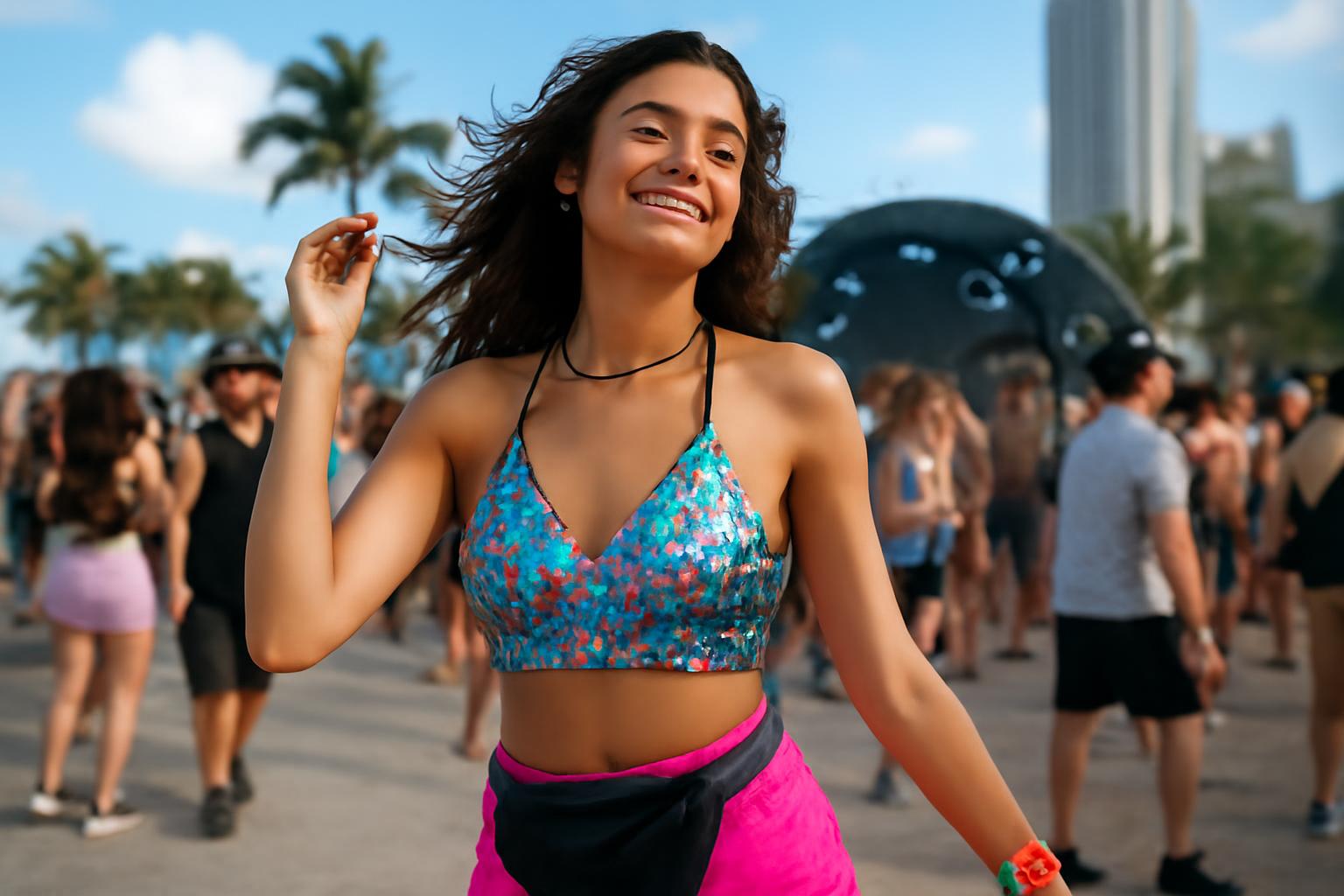
Use tested shoes and a secure, lightweight base. Add one visual anchor and a compact layer, then check bags and accessories against your year's Ultra rules.
The best Ultra Music Festival outfits do more than look good in a mirror. They stay secure while you dance, remain manageable when conditions change, and do not leave you carrying half a costume by evening.
A reliable formula is straightforward: a breathable or lightweight base, a secure bottom, broken-in footwear, a compact layer, a compliant small bag, and one memorable statement element. That statement could be a neon print, holographic top, dramatic makeup, metallic overlay, glowing accessory, or bold pair of sunglasses. It does not need to be the entire outfit.
This approach works across revealing, moderate-coverage, masculine, feminine, and gender-neutral presentations. It also makes shopping easier: solve the functional decisions first, then use color, texture, makeup, and accessories to create the aesthetic.
A note on evidence: official Ultra pages control all entry-policy claims in this guide. Editorial articles, retailer guides, and attendee accounts are used only for styling ideas and practical prompts. Their garment-performance claims are not treated as independent product testing.
Start with a practical Ultra outfit formula
Begin with the components most likely to affect your experience after the first few hours:
- Lightweight base: A tank, fitted tee, crop top, bodysuit, jersey, graphic shirt, or another top that allows comfortable movement.
- Secure bottom: Biker shorts, technical shorts, cargo shorts, leggings, lightweight pants, a fitted skirt with appropriate underlayers, or another bottom that stays in position.
- Tested footwear: Cushioned sneakers, trail-style shoes, or practical boots that you have already worn for extended periods.
- Compact layer: A thin windbreaker, light long-sleeve top, or lightweight hoodie when the forecast supports carrying one.
- Compliant bag: A small option that meets the official policy for your festival year.
- One visual anchor: Neon, reflective fabric, an iridescent overlay, a dramatic print, wearable glitter, or another distinctive detail.
Mobility and a secure fit are better starting criteria than spectacle alone. You should be able to walk, stand, sit, raise your arms, and dance without repeatedly pulling up a top, adjusting a waistband, or untangling an accessory. Distraction Magazine’s 2022 fashion article similarly recommended balancing statement dressing with light, flexible clothing, although its advice reflects contributor opinion rather than universal performance findings.
Test the complete outfit rather than assessing each garment separately. A top that feels secure while you stand still may shift when you lift your arms. A waistband that seems fine for five minutes may pinch when you sit. Sequins, buckles, straps, and appliqués can rub against adjacent garments or skin. Long jewelry may swing while dancing, while loose straps can catch on a bag.
During the test, check:
- whether the top stays in place with both arms raised;
- whether the bottom rolls, slides, pinches, or restricts your stride;
- whether seams or decorative edges rub;
- whether an overlay tangles with the bag strap;
- whether jewelry strikes your body when you move;
- whether every pocket or closure remains secure;
- and whether you can sit and use the restroom without dismantling the look.
Terms such as moisture-wicking, quick-drying, breathable, and durable are useful features to look for in garment specifications, but they are not guarantees. Retailer descriptions may reflect marketing rather than independent testing. Fabric weight, construction, fit, weather, and individual tolerance can all change how a garment performs.
Choose clothes you are willing to expose to sweat, sunscreen, dirt, crowded conditions, and possible rain. Delicate luxury pieces, difficult care requirements, or finishes that cannot tolerate moisture may create more anxiety than enjoyment.
Keep three categories of information separate while planning:
- Official rules are requirements for the dated festival edition. Recheck the organizer’s current policy before packing.
- Fashion aesthetics are inspiration. Neon, celestial, cyberpunk, mesh, streetwear, and all-black looks are options, not objective rules.
- Retailer claims require scrutiny. A collection labeled for Ultra is not necessarily affiliated with the festival, approved for admission, or independently tested for Miami conditions.
Six outfit formulas, from neon cyberpunk to relaxed streetwear
Neon, cyberpunk, holographic, reflective, celestial, mesh, and all-black styling recur across festival-fashion collections and commercial guides. Treat them as creative prompts rather than proof that one look dominates the crowd. For example, an iHeartRaves Ultra style article presents black, reflective, holographic, neon, and cyberpunk outfits as retailer-selected ideas, not official guidance.
Each formula can be adjusted for more or less coverage and for any gender expression.
1. Neon cyberpunk
Start with a black tank, fitted tee, crop top, or lightweight jersey. Add cargo shorts, technical shorts, or lightweight pants with secure pockets. Introduce neon through one or two controlled details: a printed panel, contrasting belt, bright makeup, socks, or a small removable accessory.
Finish with comfortable sneakers and a compact layer. If you like industrial styling, create it through printed fabric, contrast stitching, or metallic-looking textile rather than assuming that chains, spikes, harness hardware, or costume equipment will be admitted.
2. Holographic or reflective
Choose a bodysuit, supportive crop top, fitted tee, or holographic panel as the focal point. Pair it with high-waisted shorts, biker shorts, leggings, or simple cargo bottoms. Broken-in shoes keep the reflective piece—not the footwear—from carrying all the visual work.
One reflective accessory is usually easier to manage than several bulky pieces. A compact belt bag, soft headband, reflective fabric panel, or makeup accent can complete the theme. Holographic and reflective materials may look different under nighttime production lighting, but they are fashion effects rather than formal safety equipment.
3. All black
Combine a lightweight fitted top with biker shorts, black cargos, technical shorts, or joggers. A mesh shirt or shrug can add depth without changing the palette, provided you wear whatever underlayer you need for coverage and comfort.
Use practical boots or sneakers, then add policy-safe metallic details through fabric, makeup, or printed graphics. An all-black look can be minimal, gothic, futuristic, athletic, or oversized; it does not have to mean faux leather, heavy layers, or restrictive clothing.
4. Celestial or fairy
Build around an iridescent matching set, soft separates, a star print, a pastel color story, or a lightweight mesh overlay. Wearable cosmetic glitter can create a celestial effect without relying on loose craft glitter.
Keep accessories soft and compact: a small fabric headpiece, hair clips, a printed scarf secured close to the body, or an iridescent bag. Do not plan around hard props or oversized wings unless the official policy for your edition expressly addresses and permits them.
5. Higher coverage
Wear an oversized graphic tee or jersey with biker shorts underneath, or pair a fitted tee with lightweight joggers or cargo pants. Add sturdy sneakers, sunglasses, and a secure fanny pack.
Coverage does not have to look plain. Use a bold print, contrasting socks, graphic makeup, a mesh long-sleeve layer, or a vivid bag to establish the theme. This formula also suits anyone who wants familiar silhouettes, reusable clothing, or fewer fit adjustments during the day.
6. Minimal streetwear
Pair technical shorts or cargo bottoms with a graphic tee, tank, or jersey and sturdy shoes. Add one festival-specific detail, such as a UV-reactive print, metallic fabric panel, brightly colored sunglasses, or bold removable overlay.
One commercial streetwear guide contrasts reusable tees, cargos, hoodies, and jerseys with more elaborate themed costumes. That distinction is subjective, but the underlying idea is useful: ordinary clothes plus one strong visual element can create an intentional Ultra look without requiring a single-use costume.
Bodysuit, romper, matching set, or separates?
The easiest garment format depends on more than appearance. Consider range of motion, layering flexibility, restroom convenience, secure fit, potential rubbing points, and whether you will wear the pieces again.
| Format | Main advantages | Main tradeoffs |
|---|---|---|
| Bodysuit | Streamlined silhouette; top stays connected to the lower section; easy to pair with several bottoms | Restroom breaks and fit adjustments can be less convenient; torso length is critical; leg openings and closures may rub |
| Romper | One-piece styling requires fewer coordination decisions; can look complete with minimal accessories | Limited ability to change only the top or bottom; restroom use can be cumbersome; one uncomfortable section affects the whole outfit |
| Matching set | Coordinated appearance with separate top and bottom; pieces can be remixed on another day | Waistband and top still need individual fit testing; distinctive prints may be harder to combine with other items |
| Separates | Maximum flexibility for coverage, layering, replacement, and reuse | Requires more planning to make the look cohesive; unsecured combinations may shift independently |
A bodysuit can be an excellent choice when the torso length, closure, neckline, and leg openings suit your body. It creates a continuous silhouette and works under cargos, shorts, skirts, or overlays.
A romper simplifies styling because its upper and lower sections are already coordinated. That simplicity can become a limitation if the temperature changes or one section starts to feel uncomfortable. You cannot replace a damp top while retaining the bottom, and adding a layer may be awkward if the romper already has sleeves or complicated straps.
Matching sets occupy a useful middle ground. They deliver a coordinated visual effect while allowing the top and bottom to be worn separately. A printed top can move to black cargos on another day; matching shorts can work with a graphic tee or mesh overlay. Retail collections marketed around festival wear illustrate the range of available formats—including sets, bodysuits, dresses, rompers, shorts, skirts, tops, leggings, and full-body looks—but their category labels do not establish comfort or event approval. One example is BADINKA’s commercial Ultra collection.
Separates provide the most flexibility. They let you change coverage, replace a damp item, modify the nighttime version of an outfit, and build from clothes you already own. A fitted tee, jersey, technical top, cargo pants, biker shorts, leggings, technical shorts, or lightweight joggers can all function as the base.
Texture and seam placement also affect how it feels. Test mesh over the actual underlayer you intend to wear; do not assume it will behave the same over every bodysuit, bralette, swimwear-inspired top, or tee.
Whichever format you choose, conduct a full pre-travel try-on. Wear every underlayer and practice walking, squatting, sitting, raising your arms, and using the restroom. If the outfit requires complicated assistance, frequent retightening, or a private place to reconstruct it, decide whether the visual effect is worth the inconvenience.
Choose your shoes before building the rest of the look
Footwear should be the first purchasing and testing decision, not the finishing touch. An otherwise practical outfit becomes difficult to enjoy when the shoes cause pressure, instability, or constant distraction.
Cushioned sneakers and practical boots are more conservative default categories than heels, flip-flops, delicate sandals, or unstable platforms. That is not a universal guarantee of comfort or safety. Exact fit, condition, construction, weight, flexibility, and grip matter more than the category name.
Sneakers usually offer familiar flexibility and coordinate easily with streetwear, matching sets, or bodysuits. They vary widely in cushioning, ventilation, sole grip, and toe-box shape. A fashion sneaker that looks substantial may not feel supportive during extended wear.
Combat-style boots can create an all-black, cyberpunk, or utilitarian look. Check whether the upper rubs the ankle and whether the sole bends naturally as you walk.
Trail-style shoes may provide a textured outsole and secure lacing, but they can feel stiffer or look more technical. Test them on hard surfaces and stairs, not only on soft ground.
Platforms add height and visual impact, but their weight, flexibility, sole shape, and stability vary significantly. Treat them as a higher-testing option rather than assuming a padded insole makes them suitable for a long festival day.
Different fashion sources recommend sneakers, combat boots, trail-style shoes, or platforms. The defensible takeaway is not that one category is universally best, but that the shoe should fit securely and already be tested during prolonged movement. A commercial outdoor-rave footwear guide favors broken-in, closed-toe options while cautioning against sandals, flip-flops, heels, and unstable platforms; this remains retailer advice rather than a performance guarantee.
Wear the exact shoe-and-sock combination for extended periods before traveling. Do not debut new footwear at the gate.
Use this test:
- Walk continuously on hard surfaces.
- Climb and descend stairs.
- Stand without sitting for a meaningful interval.
- Dance and make side-to-side movements.
- Check for heel lift, toe pressure, rubbing, hot spots, and shifting socks.
- Inspect the sole for instability, damage, separation, or unusual slipperiness.
- Confirm that the laces or closures stay secure.
Choose shoes you are willing to expose to sweat, dirt, and light rain. If preserving a pristine finish is the priority, they may not be the right shoes for the event.
Plan for daytime, nighttime, and changing weather
Do not build an outfit around a generic claim about Miami temperatures. Conditions vary, and retailer weather descriptions are not event-week forecasts. Check an authoritative Miami forecast close to the festival and make final clothing decisions from that information.
For the daytime version of your outfit, use a lightweight base and a secure fit. Sunglasses or a hat can add coverage while supporting the look. If the applicable event-year policy permits it, carry sunscreen in the required form and condition.
When the forecast supports a layer, choose one that compresses into your permitted bag or can be worn without becoming a burden. Options include:
- a thin windbreaker;
- a lightweight hoodie;
- a light long-sleeve top;
- or a compact overshirt.
Avoid bulky outerwear that becomes uncomfortable to carry once removed. Long trailing fabric can be difficult to manage in crowded movement, while heavy jewelry and oversized accessories create their own storage problems.
For rain risk, favor a compact wearable layer and clothing that is quick to dry or easy to change after returning to your accommodation. Under Ultra’s official policy for March 26–28, 2027, umbrellas are prohibited, while sealed non-aerosol sunscreen is acceptable subject to the listed conditions and gate screening. Policy reviewed July 30, 2026; verify it again for your exact edition.
Reflective, holographic, glowing, metallic, and UV-reactive details may take on a different visual effect as daylight fades and stage lighting becomes more prominent. Use them for styling and photography, not as substitutes for visibility precautions or formal safety equipment.
Weather planning can extend beyond the festival outfit. Miami Finder’s flexible rainy-day planning guide offers a broader itinerary structure built around indoor anchors and short outdoor windows. It is not a festival forecast, clothing authority, or statement of Ultra policy.
Create three looks from one capsule wardrobe
You do not need to buy three unrelated Ultra Music Festival outfits. A capsule can produce three distinct looks while reusing the most important practical items.
A workable capsule includes:
- three tops;
- two bottoms;
- one matching set or one-piece option;
- one mesh overlay;
- one compact layer;
- one fully tested pair of shoes;
- and one compliant bag.
You can reduce that list further if the matching set contributes one of the tops or bottoms.
Day one: colorful coordinated look
Wear a matching set or combine a bright top with the first bottom. Keep accessories minimal so the print or color remains the visual anchor. Add tested shoes and the same event bag you plan to use all weekend.
For more coverage, use a vivid jersey with technical shorts or a fitted tee with colorful cargos. Coordination can come from repeated colors rather than exposed skin or a specialized festival garment.
Day two: black streetwear with one statement element
Use a black tee, tank, or bodysuit with black cargos, biker shorts, or joggers. Add one neon, metallic, holographic, or reflective element. This could be a mesh overlay, removable fabric panel, makeup, or an illuminated accessory permitted by the applicable policy.
Because the base is simple, you can change the mood without changing the functional clothing. Oversized proportions feel relaxed; fitted separates feel sleek; a mesh layer makes the same base more dimensional.
Day three: remixed one-piece or graphic look
Pair a bodysuit, graphic top, or swimwear-inspired top with the alternate bottom. Add the mesh overlay if it remains comfortable and clean enough to wear again. A different makeup palette or hairstyle can separate this look from the first two days.
If swimwear inspires the top, assess it as clothing rather than assuming it is festival-ready. Check support, coverage, closures, strap security, and how it interacts with your bag.
Color, cosmetics, removable overlays, and one small accessory can change a theme more efficiently than replacing every garment. A black base becomes cyberpunk with neon makeup, celestial with iridescent accents, or minimal streetwear with a graphic layer.
Before shopping, pull possible components from your existing wardrobe. Graphic tees, workout tops, biker shorts, lightweight cargos, leggings, jerseys, and trusted sneakers may already solve most of the practical requirements. Specialized festival clothing should fill a genuine gap rather than replace functional pieces merely because they lack a festival label.
Photograph each complete outfit before traveling. The image makes combinations easier to remember and can expose missing details such as:
- visible or uncomfortable underlayers;
- unsuitable socks;
- transparent areas;
- loose closures;
- an awkward bag strap;
- or a layer that does not fit into the intended bag.
Keep one spare lightweight top or bottom at your accommodation. It can replace something that becomes uncomfortable or difficult to clean before the next day. Do not treat it as an on-site backup: Ultra’s official 2027 security policy states that re-entry is not permitted, so what you wear and carry must serve you for that entry period. Confirm the rule for your own edition before attending.
Check accessories against Ultra’s official rules
Accessories are where an outfit inspired by a retailer can collide with entry restrictions. A product being marketed as rave wear—or even placed in a collection labeled for Ultra—does not mean gate security must admit it.
The following table summarizes Ultra’s official prohibited and acceptable items list for March 26–28, 2027, reviewed July 30, 2026. It should not be assumed to apply unchanged to an earlier or later edition. The organizer also reserves discretion to reject additional items.
| Allowed or conditionally allowed under the official 2027 policy | Prohibited under the official 2027 policy |
|---|---|
| Clear plastic, vinyl, or PVC bags no larger than 13 by 17 inches | Backpacks, purses, or bags outside the listed exceptions |
| One-gallon clear plastic zip-top bags | Large chains and chained wallets |
| Fanny packs | Spiked jewelry |
| Hand-sized clutch bags, with or without a handle or strap | Loose glitter, confetti, and streamers |
| Hydration packs that are not backpacks and are empty upon entry | Glow sticks |
| Illuminated or glowing jewelry and costumes | Hard poles, sticks, and totems |
| Wearable cosmetic glitter and powdered makeup | Nonmedical face masks and helmets |
| Hats and sunglasses | Aerosol and flammable items |
| Earplugs | Weapons |
| Sealed non-aerosol sunscreen | Umbrellas |
| Flags or banners without corporate branding or hard poles | Flags or banners with corporate branding or hard poles |
Cosmetic glitter must be wearable; loose glitter is prohibited under this policy. If glitter is central to your look, apply an appropriate cosmetic product rather than carrying loose material into the venue. See the official list’s distinction between wearable cosmetics and prohibited loose glitter.
Glowing jewelry and costumes appear on the acceptable list, while glow sticks are prohibited. Do not assume every illuminated object will be treated in the same way. Consider battery housings, loose components, hard extensions, and how the item is worn, then verify the current wording for your year on Ultra’s official security and safety page.
Flags or banners are permitted only when they lack corporate branding and hard poles. A soft banner and a rigid costume prop are not interchangeable under the official 2027 rules. Review the organizer’s acceptable-item conditions before packing one.
Do not infer that wings, capes, harnesses, armor, large headpieces, or other elaborate wearables are permitted simply because a retailer sells them as festival fashion. If the current policy does not expressly address an item, ask the organizer if possible and prepare for final gate discretion. A soft, compact visual substitute is usually easier to manage than a rigid or oversized costume component.
All attendees and their belongings are subject to screening. Policies may change without notice, additional items can be prohibited, and gate security has the final decision. Recheck the official page shortly before leaving rather than relying on an old screenshot, retailer article, or previous year’s experience.
Shop early, then conduct a full dress rehearsal
Festival collections offer a broad range of formats: bodysuits, matching sets, dresses, rompers, shorts, skirts, tops, leggings, full-body looks, and accessories in many colors and aesthetics. That range is useful for comparison, but a collection name is not evidence of official Ultra affiliation, approval, admission, or garment performance.
Avoid organizing your shopping around a temporary sale price. Focus on information that affects whether the garment will work:
- garment measurements rather than the size label alone;
- the retailer’s size chart and fit notes;
- fabric and lining descriptions;
- closure placement;
- care instructions;
- return and exchange terms;
- production time;
- shipping estimates;
- and whether you will have time for a second try-on.
Work backward from your departure date. Your schedule may need to accommodate production, shipping, possible duties, a first try-on, an exchange, a return window, stock changes, and a final rehearsal.
As a dated retailer example, BADINKA stated when reviewed on July 30, 2026 that approximately two-thirds of its items were made to order with a production period of four to six business days. That is a seller claim and may change. Verify the current production and delivery terms directly before purchasing, and do not mistake production time for total delivery time.
When the order arrives, do not limit the try-on to a few mirror photos. Conduct a complete dress rehearsal with:
- every intended underlayer;
- the exact shoes and socks;
- cosmetics;
- all accessories;
- the compact weather layer;
- and the event bag filled as you intend to carry it.
Then walk, climb stairs, dance, sit, raise your arms, use the restroom, put on the layer, and remove it again. Confirm that the bag does not pull the outfit out of position and that cosmetics or decorative finishes do not transfer unexpectedly onto clothing. Move enough to determine whether clips, straps, laces, closures, and accessories remain secure.
If something requires constant adjustment at home, the problem is unlikely to disappear at the festival. Modify it, replace it, or simplify the look.
Complete a final check during the 48 hours before you leave:
- Check an authoritative forecast for the event period.
- Review the official policy for the exact festival year.
- Measure the intended bag rather than relying on a product name.
- Confirm any sealed-item requirements.
- Inspect footwear, laces, closures, and soles.
- Remove restricted or questionable accessories.
- Make sure the layer fits inside the permitted carrying option.
- Review all three outfit photographs and pack the necessary underlayers and socks.
Visitors organizing a wider trip without a rental car can also consult Miami Finder’s neighborhood-based car-free Miami guidance. It offers general trip-planning ideas and does not establish festival transportation, road-closure, pickup, or entry rules.
The final decision sequence is simple: choose tested shoes, build a secure and lightweight base, add one visual anchor, pack only a compact forecast-appropriate layer, confirm that the bag and accessories comply with the official policy for your exact event year, and rehearse everything before traveling. An outfit you can move in all day will usually serve you better than an elaborate costume you must continually adjust, protect, remove, or carry.
Frequently asked questions about Ultra outfits
Can I wear glitter or glowing clothing to Ultra Music Festival?
Under Ultra’s official policy for March 26–28, 2027, wearable cosmetic glitter and illuminated or glowing jewelry and costumes are acceptable. Loose glitter and glow sticks are prohibited. Check the official policy for your exact edition because rules can change and security retains final discretion.
What type and size of bag can I bring to Ultra?
For the official 2027 policy reviewed here, listed options include clear plastic, vinyl, or PVC bags no larger than 13 by 17 inches; one-gallon clear zip-top bags; fanny packs; and hand-sized clutches. Hydration packs are acceptable only when they are not backpacks and are empty upon entry. Measure your bag and verify Ultra’s current clear-bag rules before traveling.
What shoes should I wear to Ultra Music Festival?
Start with cushioned sneakers, trail-style shoes, or practical boots that fit securely and have already been worn for extended periods. The individual shoe matters more than its category. Test the exact shoe-and-sock combination by walking, standing, climbing stairs, and dancing, then check for rubbing, heel lift, toe pressure, damaged soles, and instability.
Do I need three completely different Ultra outfits?
No. Reuse one tested pair of shoes and one compliant bag while rotating three tops, two bottoms, a coordinated or one-piece option, a mesh overlay, and a compact layer. Different colors, makeup, overlays, and one small statement accessory can give each day a distinct theme.
Are chains, spikes, masks, wings, and costume props allowed?
Under Ultra’s official policy for March 26–28, 2027, large chains, chained wallets, spiked jewelry, nonmedical face masks, hard poles, sticks, and totems are prohibited. The policy does not provide blanket permission for wings or every type of costume wearable. Do not assume that wings, capes, harnesses, armor, or props are allowed merely because a retailer markets them for festivals. Check the official prohibited-items rules for your year and remember that gate security makes the final decision.